Author attribution not recorded
Why the Privileged Class Won’t Be Replaced by Robots (Yet)
Prelude: the party no-one wants to leave
Generative AI can already pass the bar exam, summarise radiology scans, draft patent filings, write elegant code, and politely mansplain your own profession back to you.¹ If a machine can outperform newly minted graduates on day one, why do the corner offices of law, finance, medicine, and academia remain stubbornly human?
Anthropologist David Graeber offered a clue long before ChatGPT’s debut. In Bullshit Jobs: A Theory he catalogued work that is “so completely pointless, unnecessary or pernicious that even the employee cannot justify its existence.”² The punchline: many of these roles cluster inside the very sectors we call “elite.”
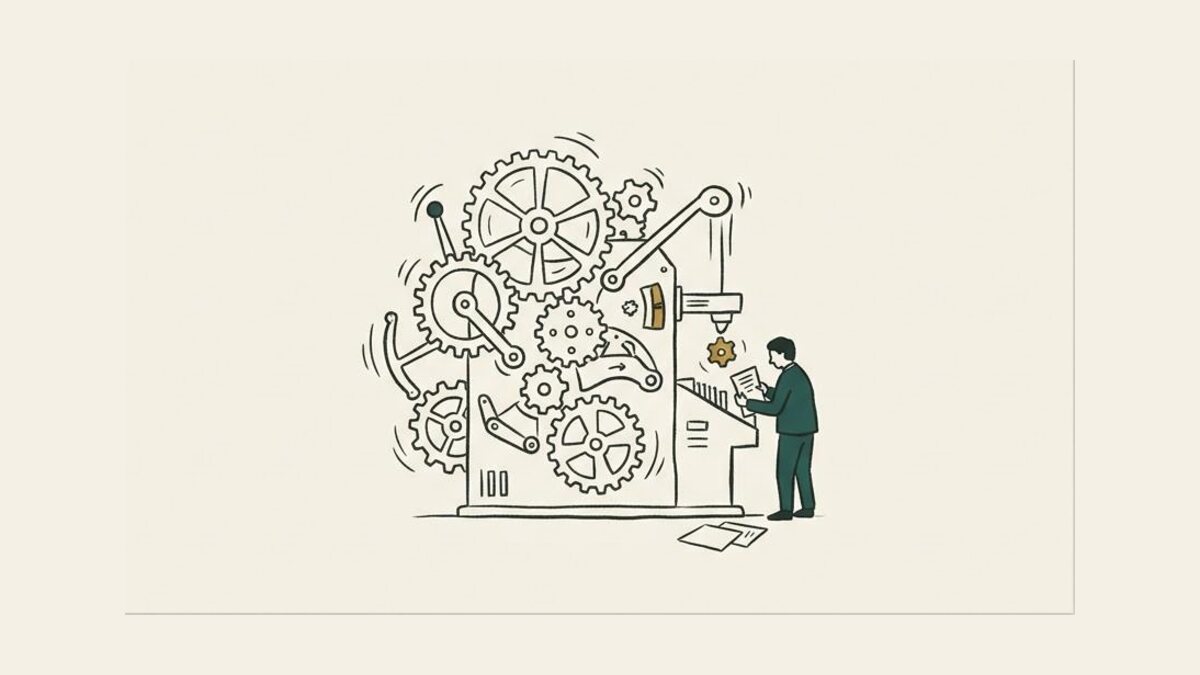
This essay argues that professional and executive positions are protected from automation—not because AI can’t do them, but because a sprawling ecosystem of bullshit work acts as Kevlar. The elites, who design the economy and sign the cheques, are unlikely to code themselves out of relevance.
Evidence that the machines are already better
Professional benchmarks. GPT-4 scores in the 90th percentile on the Uniform Bar Examination and aces advanced placement tests ¹ .
Clinical decision-making. Multimodal models now match (and sometimes beat) radiologists in detecting lung nodules, melanoma, and diabetic retinopathy.³
White-collar risk. The World Economic Forum’s Future of Jobs Report 2025 projects that “analytical, legal and administrative roles face the largest task-displacement pressure before 2030.”⁴
Taken at face value, elite work should be first against the wall. Yet hiring data show otherwise: across 21 OECD countries, employment grew 18 % in jobs at low risk of automation—but still rose 6 % in “high-risk” roles over the past decade.⁵ Something is jamming the gears.
The Graeber lens: bullshit as ballast
Graeber’s taxonomy—flunkies, goons, duct-tapers, box-tickers, taskmasters—thrives in large bureaucracies.² These functions:
Absorb surplus labour. Hiring another “strategy officer” is easier than admitting the last one added no value.
Project status. A managing partner who commands teams of associates signals power; slimming to an algorithm undermines the aura.
Diffuse accountability. When outcomes sour, blame is distributed across layers of PowerPoint.
Bullshit roles therefore cushion professionals. The junior lawyer reviewing AI-generated contracts still bills 0.1-hour increments because a partner must “sign off.” The consultant validates the AI’s forecast with a deck that no board chair reads. The cycle is self-reinforcing: every new workflow invites an overseer, a compliance clerk, and a communications liaison.
Elite self-preservation in three moves
Institutional inertia
Firms have invested decades in human capital hierarchies. Scrapping them means writing off sunk cost, severing alumni networks, and risking regulatory backlash.
Regulatory capture
Bar associations, medical colleges, and finance watchdogs draft scope-of-practice rules. Guess who sits on the committees? Elites convert professional licensing into a moat that algorithms cannot cross without human “supervision.”
Narrative control
Mo Gawdat’s “white-collar bloodbath” forecast grabs headlines, but executives reassure shareholders that AI is merely “augmenting talent.”⁶ The story buys time to rearrange the org chart while keeping payrolls intact.
Case studies: when better isn’t enough
In law, algorithms now draft airtight briefs and review hundred-page contracts in seconds, yet partners insist “Only a licensed attorney can exercise judgment”—even when that judgment is basically a glorified ctrl-F.
In medicine, models read X-rays, MRIs and even predict looming sepsis hours before it strikes, but we’re told “Patients need the empathy of a doctor,” delivered, of course, in a brisk seven-minute consult.
In finance, code can spot arbitrage opportunities long before human quants finish their coffee, yet fund brochures remind us that “Regulators require a named portfolio manager.”
And in academia, large language models churn out literature reviews and statistical scripts while you sleep, but journals protest that “Peer review must remain human”—all while impact factors flat-line.
These justifications aren’t real safety features; they’re bullshit camouflage designed to keep the professional moat intact.
The administrative moat around medicine
Healthcare illustrates the moat vividly. Radiology AI can flag tuberculosis from chest X-rays at rural clinics, yet adoption crawls. Hospitals must integrate with legacy electronic records, appease malpractice insurers, satisfy procurement committees, and train staff. Every hurdle spawns coordinators, change-management leads, and ethics panels—each a bullshitty speed bump.
Result: The attending radiologist continues to dictate reports while an algorithm whispers the answers in her earpiece. Billable hours remain unscathed.
Why shareholders tolerate the charade
Contrary to techno-optimist lore, capital does not always chase maximal efficiency. Boards balance three forces:
Reputation risk: A mis-diagnosis or wrongful conviction by “robo-counsel” could trigger lawsuits.
Social licence: Mass redundancies invite regulators—or pitchforks.
Signalling: High head-count suggests stability; investors reward perceived robustness.
Thus, a 2 % productivity boost from AI may not justify a 30 % cut in professional staff if the brand or social contract erodes.
The macro paradox: productivity up, wages stuck
Graeber predicted that bullshit jobs suppress wage demands by flooding labour markets with ostensibly “skilled” roles that are, in fact, non-essential.² In parallel, AI’s deflationary pressure on genuine expertise stops short of the C-suite. CEOs award themselves retention bonuses for “navigating technological transformation” that they quietly resist.
A thought experiment: the self-disruption test
Ask of any professional service: Would the partners voluntarily halve their income if AI let clients self-serve?
Tax returns? Perhaps—already commoditised.
Corporate mergers? Not a chance.
The decisive variable is the concentration of power, not the capability of AI. Where decision rights sit with a guild, automation threatens identity, status, and gatekeeping rents. Expect trench warfare, not surrender.
Implications for the rest of us
Workers in genuine, manual, or care roles (nurses, plumbers, teachers) remain underpaid because they cannot conjure bullshit to mask productivity gains.
Start-ups and Global South firms may leapfrog incumbents by deploying AI ruthlessly—unless visa regimes and IP laws block them.
Policy thinkers flirt with universal basic income, but as Graeber noted, elites prefer expanding pointless payrolls over writing unconditional cheques.²
Cracks in the dam
Despite elite inertia, three trends threaten the moat:
Open-source models make expert-level output cheap, eroding billable hours from below.
Auditability breakthroughs (model interpretability, cryptographic proofs) undercut the “black-box liability” defence.
Demographic crunch: Retiring Boomers shrink the professional labour pool; clients may accept AI when human wait-lists hit years.
When all three converge, the bullshit buffer thins and self-preservation becomes self-delusion.
Finale: choosing friction or freedom
Graeber closed his book by asking why societies cling to pointless toil instead of embracing life outside work.² The arrival of AI revives the question with keener urgency. Elites can either weaponise bullshit to defer redundancy, or re-architect institutions so that automation funds universal leisure, creative science, and—dare we say—better medical care.
If they choose friction, professionals will cling to inflated job titles while algorithms ghost-write their deliverables. If they choose freedom, tomorrow’s radiologist may become a medical mythbuster, sculpting care pathways that no neural network can quite feel under its non-existent fingertips.
The outcome is political, not technological. AI already does the job; whether it gets the job title is up to us.
References
OpenAI. GPT-4 Technical Report. 2023. OpenAI
Graeber D. Bullshit Jobs: A Theory. New York: Simon & Schuster; 2018. Wikipedia
Pesheva E. Does AI help or hurt radiologists’ performance? Harvard Medical School; 19 Mar 2024. hms.harvard.edu
World Economic Forum. The Future of Jobs Report 2025. Geneva: WEF; 2025. World Economic Forum
OECD. What Happened to Jobs at High Risk of Automation? Paris: OECD; 2024. OECD
New York Post. Ex-Google exec warns AI will create 15 years of ‘hell’. 4 Aug 2025. New York Post