Author attribution not recorded
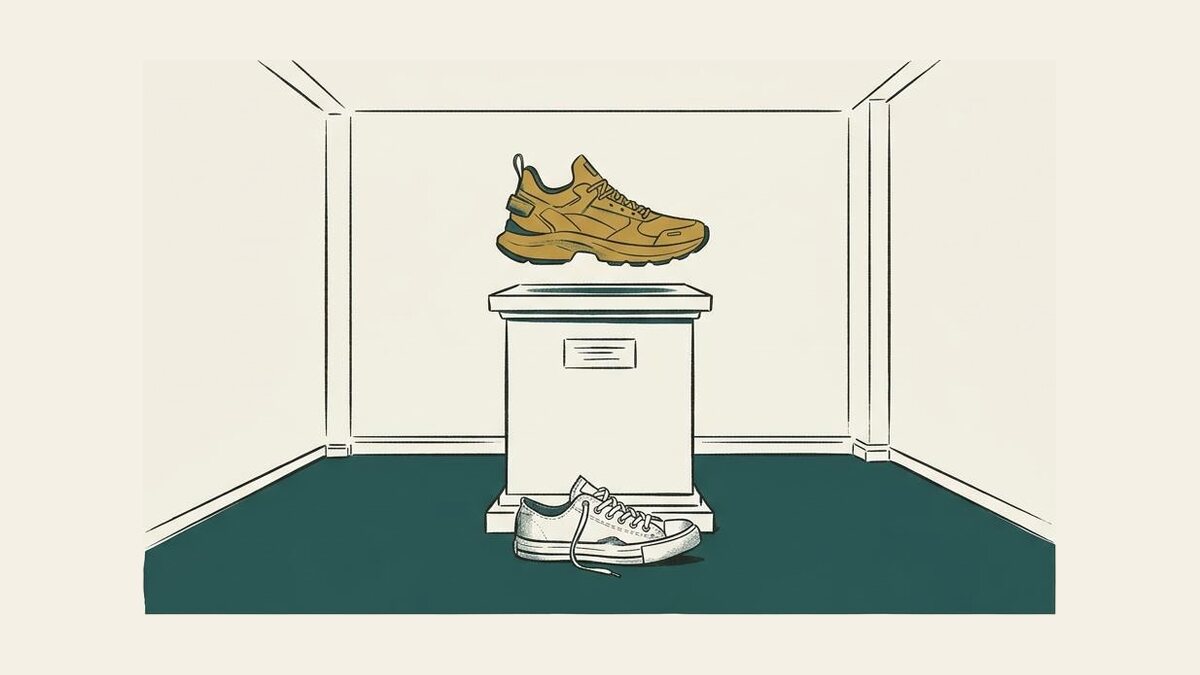
By a cranky-but-caring podiatrist who remembers when “gear” meant a singlet that still smelled like last week’s intervals.
The good old get-out-the-door days
When I started running, training plans were written on the back of a café napkin and the price tag on my shoes was smaller than the stack height of today’s midsoles. You laced up whatever worked, jogged down the driveway and discovered, shock horror, that running was free. No rewards-program points, no wait-lists for limited “drops,” and certainly no need for a second mortgage to buy foam thicker than a lamington.
Enter the $4 billion brain-wash cycle
Fast-forward to 2025 and Nike alone spends about US $4.3 billion a year on “demand creation” (that’s marketing to you and me). The result? We’ve been convinced that speed lives in a shoe box and PBs can be charged to Afterpay. It’s capitalism dressed in Flyknit.
Supershoes: rockets for the few, rorts for the many
Take the Alphafly 3: AU $370 worth of carbon plate, twin airbags and a launch-video starring someone who averages 200 km a week. The advertising implies Kipchoge’s world records were courtesy of the shoe rather than, say, two decades of monastic mileage. Meanwhile Barry from accounts thinks dropping four hundred bucks will magic away the four kilos gained at Friday-night pizza. Spoiler: a kilogram off your waist is worth more than a gram off your footwear.
When the spaceship bites back
Performance gains come at a price, and not just at the checkout. A 2023 case series flagged navicular bone-stress injuries in five elite runners after switching to carbon-plate models. Plate-stiffened rockers load the midfoot differently; great for economy, less great if your bones weren’t forged in the Rift Valley.
Marshmallow nation
Daily trainers have followed suit, bloating to 40 mm of soft ZoomX in the heel (hello Invincible 3) because plush sells on the shop floor. The paradox? Research on 800+ recreational runners showed that while softer shoes can lower certain injury metrics, they simultaneously increase peak impact forces per step—science is undecided, your Achilles is unconvinced. From a prescribing standpoint, it’s like fitting orthotics into a cheesecake.
Designed to make you heel
Thick cushioning and towering heel-to-toe drops don’t just protect heel-strikers—they create them. Modern midsoles encourage a backwards-leaning, brake-before-you-roll gait linked to shin splints, plantar fasciitis and knee pain. Shoe companies then sell “stability” features to fix the very problem their geometry introduced. It’s the podiatric equivalent of pushing someone over and charging for the band-aids.
Teenage retail prophets
Walk into any “sports”retail shop and a nineteen-year-old in a hype-brand tee will extol “energy return” while fitting you into the most expensive colourway in stock. The softer the step-in feel, the quicker the sale. Unfortunately, that pillow-ride disappears by kilometre five, leaving you with a $180 wobble board and me with an overuse injury to rehab.
Why it matters to clinicians
As shoe geometry veers further from human anatomy, tailoring footwear around orthotics, pathology or gait quirks is increasingly like playing Jenga with jelly. Patients expect magic foam to outrun poor sleep, extra kilos and patchy training. When it fails, we pick up the pieces—and the podiatry, radiology and time-off-work bills mount.
The barefoot (ish) truth
Lose the marketing weight before you lose the wallet weight.
Pick shoes that let you dictate your gait, not vice-versa: moderate stack, moderate drop, flex in the forefoot.
Rotate pairs, retire them at 600 km, and remember that consistency—of mileage, drills and recovery—trumps chemical-engineered Pebax every single time.
Running is still the simplest sport on earth. The industry just hopes you’ll forget that. So ignore the billboards, pocket the $400, and go for a jog. Your feet and your overdraft will thank you.