If medicine were a dinner party, traditional practice was once the loud uncle who told everyone to finish their peas because his great-grandmother always did. Evidence-Based Care (EBC) crashed that party wearing a lab coat and carrying a stack of systematic reviews, politely asking for the p-value before passing the salt. What follows is a ramble (with occasional bad jokes) through how EBC came to be, why it matters, how to do it well, and how to keep it fun.
Author attribution not recorded
If medicine were a dinner party, traditional practice was once the loud uncle who told everyone to finish their peas because his great-grandmother always did. Evidence-Based Care (EBC) crashed that party wearing a lab coat and carrying a stack of systematic reviews, politely asking for the p-value before passing the salt. What follows is a ramble (with occasional bad jokes) through how EBC came to be, why it matters, how to do it well, and how to keep it fun.
From “Eminence” to Evidence
Long before databases and Cochrane were a twinkle in anyone’s eye, clinical wisdom flowed from the most silver-haired guru in the room. (“I trained with Hippocrates, trust me.”) Then, in 1996, Canadian internist David Sackett called time-out: Evidence-based medicine is the conscientious, explicit and judicious use of current best evidence in making decisions about the care of individual patients.”¹
Cue collective gasp. The new rule implied that personal anecdotes, no matter how glorious, now had to queue behind randomised controlled trials (RCTs). At first, the movement was hailed as either a messiah or a meddling bureaucrat²—but it stuck, because the data stubbornly kept people alive.
The Three-Legged Stool (Hold the Wobble)
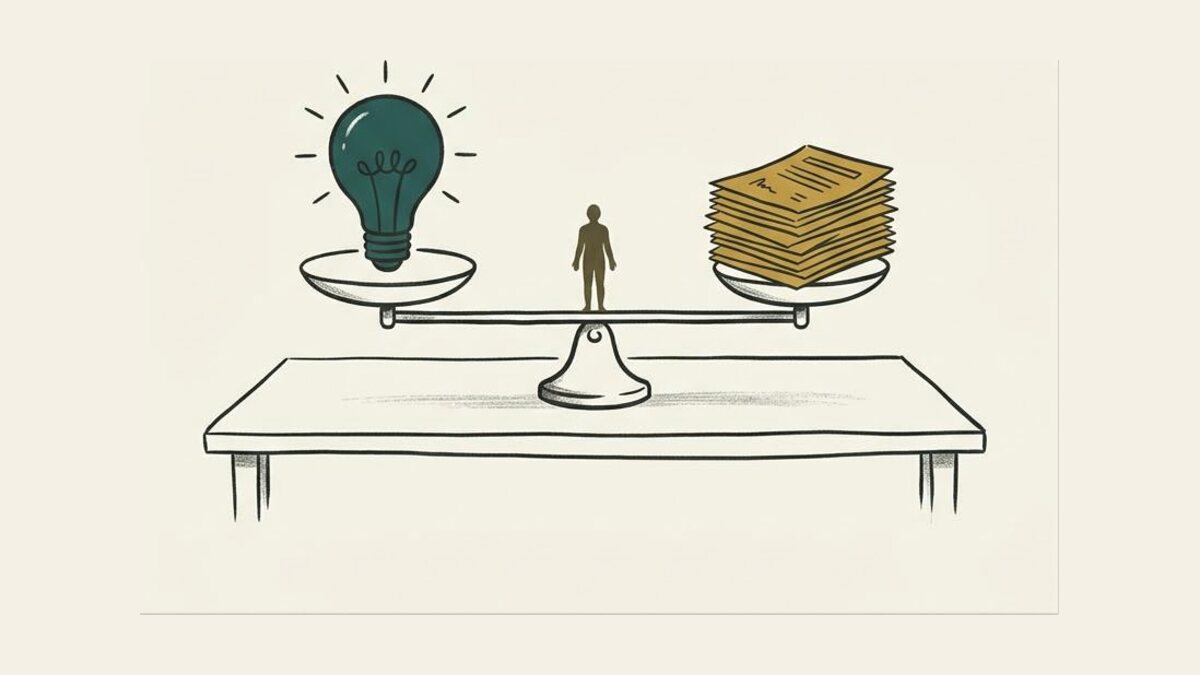
EBC sits on a tripod—knock out any leg and the patient ends up on the floor:
Best external evidence (systematic reviews, RCTs, meta-analyses)
Clinical expertise (the grey hairs you earned, not just dyed)
Patient values & preferences (a.k.a. “the bit the algorithms haven’t automated—yet”)
Think of it as a stool with Wi-Fi: you still need craftsmanship, but every leg is networked to PubMed.
Reading the Tea Leaves: How We Judge Evidence
Not all data are created equal. The GRADE working group devised a pointy instrument to stab holes in weak studies so you don’t have to.³ With GRADE, certainty can plummet faster than a crypto coin—very high, high, moderate, low, very low—depending on risk of bias, imprecision, inconsistency, indirectness and publication bias (the Voldemort of research; everyone knows it exists, nobody likes to say the name).
Handy tip: downgrade your enthusiasm for a study faster than you upgrade your phone. Your patients will thank you.
Living Guidelines: Like Netflix, but for Clinicians
Traditional guidelines age about as gracefully as unrefrigerated sushi. Enter living guidelines: perpetually updated documents refreshed whenever a relevant new trial drops. Australia’s Living Evidence Collaboration now hosts living recommendations in areas from stroke to COVID-19, ensuring no one’s quoting a floppy-disk era study by accident.⁴
Analogy time: regular guidelines are printed road atlases—useful until the highway opens a new exit to “Randomised Trial Parkway”. Living guidelines are Google Maps yelling, “Re-routing!” the minute a paper hits The Lancet.
Evidence at Work: COPD, Osteoporosis … and Cornflakes?
Let’s zoom in on Chronic Obstructive Pulmonary Disease (COPD). The 2024 GOLD Report distilled a mountain of papers into crisp practice points like “triple inhaler therapy for frequent exacerbators—yes please.”⁵ Meanwhile, Australia’s COPD Clinical Care Standard cross-checks every statement against the best available data, compiling an evidence spreadsheet longer than a Netflix user agreement.⁶
Across the hall, GPs juggling bone-density scans cling to the 2022 RACGP Osteoporosis guideline.⁷ It reminds everyone that calcium supplementation without vitamin D is like installing a security system but leaving the front door open.
And cornflakes? A 1940s experiment claimed they cure baldness. Turns out, the only thing cornflakes evidence-based-ly cure is an empty bowl. (Nobody did GRADE back then.)
The Five A’s—A.K.A. “Alexa, Find Me the Meta-Analysis”
Ask – Craft a PICO question: In adults with plantar fasciitis, does night splinting reduce pain compared with placebo socks?
Acquire – Don’t Google “plantar pain miracle”. Hit the Cochrane Library instead.
Appraise – Is the trial double-blinded or double-blundered? Read past the abstract.
Apply – Interpret the risk difference, then translate “Number Needed to Treat” into English the patient’s grandmother understands.
Assess – Did it work? If not, rinse, revise and retry.
Yes, that’s iterative. No, you can’t skip straight to “Apply” because Karen on Facebook said so.
Myths & Misadventures: Comedy of (Medical) Errors
First up is the classic quip that evidence-based medicine is just “cookbook” practice. Picture a harried contestant on MasterChef dutifully following a recipe line-by-line once, then serving it forever without a single tweak. Ridiculous, right? Real chefs season to taste, and great clinicians do the same—adapting solid evidence to the individual in front of them.
Next comes the lament that randomised trials ignore individuality. Apparently your pancreas is a snowflake of such exquisite uniqueness that a study of thousands could never relate. In truth, stratified analyses, subgroup data, and—most importantly—shared decision-making keep medicine personal, even when it’s powered by big numbers.
Then there’s the belief that guidelines are gospel. History reminds us what happens when we treat “gospel” as infallible: we end up with leeches and bloodletting. Guidelines are guides, not holy writ; they don’t know your patient’s Netflix password, let alone their frailty score. Clinical judgement still gets top billing.
Finally, skeptics cry, “But there’s no RCT for my exact scenario!” True—there’s no randomised trial for parachute use, yet you still strap in before skydiving. When the perfect study doesn’t exist, use the best available evidence, sprinkle in analogy, and finish with common-sense seasoning.
Barriers—A.K.A. “Reasons I Didn’t Do My Homework”
Information overload: PubMed adds ~2 papers per minute. By the time you finish this sentence, someone has trialled avocado for scabies.
Time pressure: You have 10 minutes per consult and Excel still won’t open. Solution? Pre-appraised resources and smartphone synopses.
Bias & spin: Headlines announcing “miracle cure” often omit “in mice”. Train your click-bait detector.
Cost: Some journals charge more than a weekend in Bali. Open-access is catching up. Otherwise, beg your librarian—librarians are the original hackers.
Humour as a Cognitive Enhancer (Yes, Really)
Humour is the sugar that helps the evidence medicine go down. Studies on educational recall show jokes improve retention—just don’t use ones you wouldn’t tell your grandmother (or your hospital CEO during accreditation). When teaching evidence appraisal, slip in a meme about p-hacking—colleagues may groan, but they’ll remember the lesson.
Case Study: When Evidence Wins the Pub Quiz
A podiatry clinic debates shockwave therapy for heel pain. Half the team loves it, half prefer stretching plus taped profanity. A 2023 meta-analysis shows moderate evidence for shockwave reducing pain at 12 weeks. Cue: clinic buys a new machine, after ensuring patients like the zapping soundtrack. Three months later, satisfaction soars—except for one patient who misses the free tape art. Evidence one, anecdote nil (but tape did add ambiance).
Future-Proofing: AI, Big Data and Other Buzzwords
Large-Language Models (LLMs) like yours truly can trawl abstracts faster than you can say “ChatGPT.” The danger? Hallucinations—machines occasionally invent citations the way toddlers invent imaginary friends. Always verify. Still, AI may soon autocomplete GRADE tables while you’re on coffee break, freeing humans to be—well—human.
Putting It All Together Without Losing Your Mind
Subscribe to an evidence digest (Cochrane, BMJ EBM, “What-Fresh-RCT-Is-This?” newsletter).⁸
Schedule a journal club—wine optional, but enthusiasm mandatory.
Standardise with clinical pathways—write them in pencil for easy updates.
Celebrate fails—publish your negative results. Remember, “It didn’t work” is data.
Stay curious—the day you stop questioning is the day you become an anecdote.
Final Thoughts (a.k.a. The Punchline)
Evidence-Based Care isn’t about strangling clinical flair with red tape. It’s about ensuring your brilliant hunches survive a head-on collision with reality. When the best-available data, your hard-won expertise and the patient’s goals sing in harmony, you’re basically the Freddie Mercury of healthcare—only with more hand sanitiser and slightly less spandex.
So next time you’re tempted to prescribe leeches—or the 21st-century equivalent—pause, open that systematic review and ask yourself: “What would the data do?” If it could speak, it would probably say, “Relax, I’ve got receipts.”
Now go forth, appraise aggressively, and may your confidence intervals be ever narrow.
References
Sackett DL, et al. Evidence based medicine: what it is and what it isn’t. BMJ. 1996. BMJ
Evidence-based medicine: tools not rules. Eur J Hosp Pharm. 2012. ejhp.bmj.com
Holmer HK, et al. Introduction to the GRADE tool. J Clin Epidemiol. 2023. ScienceDirect
Australian Living Evidence Collaboration. Living guidelines. 2024. livingevidence.org.au
Global Initiative for Chronic Obstructive Lung Disease. GOLD Report 2024. goldcopd.org
Australian Commission on Safety and Quality in Health Care. COPD Clinical Care Standard 2024. Safety and Quality Commission
Royal Australian College of General Practitioners. Osteoporosis guideline 2022. RACGP
BMJ Evidence-Based Medicine (homepage). 2025. BMJ