Author attribution not recorded
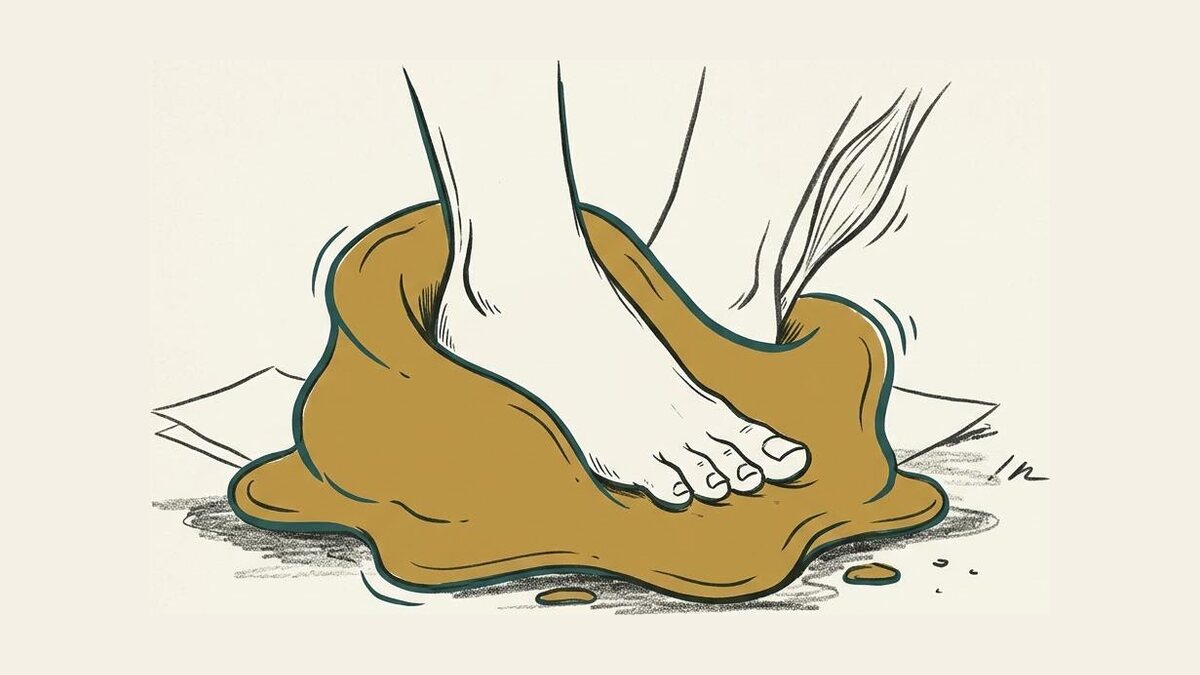
Why the cushion arms race is making our feet (and choices) floppier than a week-old marshmallow—and what to do about it.
If you’ve walked into a shoe store lately, you’ll know the new sales ritual. A smiling attendant hands you something that looks like a cross between a moon boot and a marshmallow factory accident. You slip it on, sink five centimetres, and say “Wow, that’s comfy,” with the same reverence people reserve for heated car seats. You take three bouncy steps on a piece of fake astroturf, nod solemnly at your reflection, and hand over your card. Congratulations: you’ve purchased a small trampoline.
Somewhere along the way, soft became synonymous with good; squish became a proxy for science; and the fastest-growing KPI in footwear seems to be “how far can we sink a human before they complain.” The marketing is glorious: clouds, pillows, feathers, space-age foams with names that sound like pharmaceutical trials. You’re not buying shoes; you’re adopting a mattress for each foot.
As a podiatrist, I like comfort. I’m not anti-joy. I’m anti-abdication—the silent trade where we outsource function to foam and then wonder why the machine (you) needs ever more padding to get through a normal day. Comfort is a wonderful servant but a terrible boss. And right now, comfort is running HR.
This essay isn’t a call to burn your Hokas on a minimalist pyre or to start sprinting on gravel in Roman sandals. It’s a plea for proportion, for context, for a little spine in our soles. It’s for clinicians trying to keep patients moving, for runners trying to stay uninjured, and for anyone who’s realised that the more cushion we add, the more cushion we seem to need.
Let’s talk about the softness spiral, the biology it dulls, the money it vacuums, and the practical ways out. Bring your sense of humour—and your metatarsals.
The Comfort Creep (A Love Story Between Foam and Fear)
Modern life has engineered out most minor inconveniences. Coffee arrives at exactly the temperature of hope. Cars brake for us. Phones finish our words. The body, remarkably adaptive, does what bodies do when the world goes soft: it adapts downward. Muscles decondition. Tendons forget their job description. Skin thins where it’s cushioned and hardens where it’s stressed. Then we take our deconditioned feet into a shop and… add more cushion to solve the weakness that cushion helped create.
That’s the comfort creep:
Life gets softer.
Feet work less.
Feet tolerate less.
We buy softer shoes to “protect” them.
Repeat steps 2–4 until your arches file for redundancy.
In clinics, we see the results: people who can walk fine in their daily moon boots but wince barefoot on kitchen tiles. Runners who can clock 10 km on a super-stack but get sore walking the dog in flats. The environment became the gym, and then we turned the gym into a pillow fort.
What Softness Takes Away (And Why Your Brain Cares)
Your feet are dense with sensors: cutaneous receptors, joint mechanoreceptors, and the fascia-tendon network that acts like a live biofeedback loop. Those sensors help your brain decide “how hard is the ground, how fast is the foot moving, what does the ankle need to do next, and where is the lion?” (The lion is now a scooter, but the reflexes are ancient.)
When we interpose vast foam:
Signal is filtered. The ground becomes ‘approximate’. You move confidently until you don’t.
Timing drifts. Muscles fire a hair late. Tendons become more passenger than spring.
Load re-distributes oddly. We don’t remove load; we relocate it. Cushion can decrease peak pressure under a sore spot while increasing lever arms or tibial rotation elsewhere. If you’re unlucky, the invoice arrives as knee pain or Achilles grumble, stamped “Paid in foam.”
This isn’t moral panic; it’s physics and physiology with a punchline. If you wear earplugs every day, your hearing doesn’t improve. If your shoes are sensory earplugs, your foot’s “hearing” will follow suit.
But They Feel Amazing—Isn’t That the Point?
Short answer: sometimes. Long answer: it depends what problem you’re trying to solve.
Soft shoes solve immediate comfort. They often reduce perceived hardness from surfaces designed by people who hate cartilage (hello, polished concrete). They can keep you on your feet for long shifts, and that matters for nurses, retail workers, and anyone chained to the floor by capitalism.
But if the problem is capacity, not contact—weak calves, underpowered intrinsic foot muscles, grumpy plantar fascia—it’s like fixing a lazy dishwasher by ordering more paper plates. You’ll get dinner done; you won’t fix the dishwasher.
The Cushion Arms Race (A Brief History of Puff)
Shoe brands are not evil masterminds; they’re competent capitalists. If customers reward squish, companies manufacture squishier things, name them after meteorology (“Nimbus,” “Cloud,” “Float,” “Hyperburst”), stack them higher, and paint them like sherbet. The market votes with its forefoot. And let’s be honest: the first step in a soft shoe does make you smile. (So does the first bite of pavlova. We still need vegetables.)
What starts as comfort engineering becomes identity: “I’m a soft shoe person.” Then the lobby of softening pressures—sore feet, clever marketing, hard floors, habit—convinces you that everything else is “unsupportive”. You try a firmer shoe and call it “harsh” because your feet are calibrated to pillows.
That isn’t proof that firm is bad; it’s proof that you’ve habituated. The dose became the diagnosis.
The Minimalist Hangover (Or: Why the Pendulum Keeps Whacking Us)
Some will object: “Didn’t we do this a decade ago with minimalism? Didn’t people get hurt?” Yes, because pendulums don’t have brakes. We went from bricks to ballet slippers with no transition plan, because humans love absolutes and Instagram loves a foot selfie.
Minimal didn’t fail; abruptness did. The same fate awaits maximal if we treat it like a universal prescription. The body thrives on specificity: specific person, specific problem, specific context, specific dose. The rest is footwear theatre.
“But My Pain Went Away When I Bought [Brand X]!”
Excellent. Pain relief is a valid outcome. However:
Pain relief ≠ tissue repair.
Pain relief ≠ resilience.
Pain relief ≠ permission to stop strengthening.
If a shoe is a cast that you can walk in, wear it long enough to calm the riot… and short enough not to defund the police. The goal is to use devices to buy time while you build capacity, not to rent capacity forever.
The Soft-Mind Problem (It’s Not Insult, It’s Incentive)
When I say “soft minds,” I don’t mean weak people. I mean the mindset where comfort becomes the first solution and the last. Where the question “What shoe will fix this?” replaces “What can my foot learn to do?” where we accept the sunk-cost of foam rather than invest in tendon.
It’s the mindset that demands “no discomfort” from rehab, a “five-minute fix” from pain, and a “cushioned life” from a body designed for periodic difficulty. The body is a negotiation. If we ask nothing challenging of it, it eventually offers nothing back.
What Softness Is Great For (Because Nuance Exists)
Acute pain or flare (plantar heel pain, stress-y metatarsals, cranky sesamoids): target the sore bit with a short-term softer ride under that area, not a city skyline of foam under everything.
Hard, long shifts on unforgiving floors: there’s only so much your sole can do against terrazzo. Trade some sensory detail for survival.
Bony prominences and fat-pad loss: cushion is kind to the elderly, the post-surgical, and the “calcaneal pad has left the chat” crowd.
Certain neuropathies where distribution of pressure beats the untidy reality of nerves.
Specific running events where a soft/stack combo suits your gait, pace, and training load.
Softness has a place. The problem is that it took the throne.
The Hard Stuff That Works (Capacity, Not Cosmetics)
If your feet were a business, cushion would be a government subsidy. Helpful in crisis, perilous as a lifestyle. Revenue still needs to come from operations—muscle, tendon, fascia.
Here’s the boring, unsexy, clinically effective core:
Calf capacity: two straight-knee calf raises per second to a crisp end range—work up to 25–30 reps, 3 sets, then add load. Progress to bent-knee (soleus). If your Achilles rolls its eyes at this, start with isometrics (5×45s mid-range holds) and creep forward.
Toes that do stuff: short-foot, toe yoga, towel drags if you must, but better—heavy isometrics for the big toe flexors (press the hallux into a scale or under a belt). We want force, not origami.
Foot shape under load: ask the arch to deform and recoil with light hopping and controlled landing progressions once pain allows. This restores spring timing that foam often hijacks.
Midfoot strength: slow loaded step-downs from a modest height, teaching the foot to find the floor and the hip to control the knee.
Barefoot minutes on friendly surfaces: kitchen cork or lawn > airport terrazzo. We’re re-introducing signal, not auditioning for a Flintstones reboot.
Every minute invested here is a minute you don’t have to buy from a shoe.
How to Buy Shoes Without Buying a Story
You don’t have to become a materials scientist to shop smarter. Try this three-minute street-wise test in the store:
1) The Twist and Bend Test Pick up the shoe. Can you wring it like a wet towel? Does it bend in the midfoot as if auditioning for a taco commercial? For most people, especially if you’re spending long hours walking, you want torsional control and a bend point roughly at the forefoot (where your toes actually bend). Uncontrolled midfoot flex is chaos with a logo.
2) The Heel Counter Check Press the heel cup. If it collapses like jelly, your heel will party when you’d prefer it to lead. You don’t need a steel bucket, but a little backbone there helps guide the subtalar drama queen.
3) Stack Reality Stack height isn’t evil. But the higher you go, the more you ride a balcony. If you wobble in the shop, the pavement won’t be kinder. Side note: if you must go skyscraper, prioritise a stable base. Some stacks are marshmallow towers; some are actually engineered platforms.
4) The Upper Tolerance Your foot is not a sausage. If the upper squeezes the forefoot “for security,” it may also squeeze nerves “for hobby.” Aim for room over the toes and no angry seams over bony landmarks.
5) The 30-Step Reality Check Walk 30 brisk steps on a firm surface. Try a gentle jog if it’s a running shoe. Notice trajectory: do you feel guided forward, or are you digging your way out of a beanbag?
If a salesperson tells you, solemnly, that a shoe is “good for pronation,” nod kindly and ask them which specific part of pronation they’re referring to and during which phase of gait. This will produce either an excellent discussion or an urgent appointment elsewhere.
Runners: A Word About Super Shoes (And Super Expectations)
Super foams and plates changed race-day economics. They can be magical, especially at faster paces where energy return actually has energy to return. But magic costs: training variance, tendon tolerance, and masking of fatigue signals you should probably hear.
A simple heuristic: train most miles in something a little more honest than your race-day spaceship. Use variety—one firmer daily trainer, one moderate stack, optional plush for recovery days if you love it. Your tissues will learn to tolerate a spectrum rather than a single, curated reality.
And if you’re moving from very soft to relatively firm (or vice versa), transition like you’d introduce hot sauce to a toddler: incrementally, with towels nearby, and don’t blame the sauce for being sauce.
Clinicians: Script the Journey, Not Just the Shoe
Patients want “the one.” Give them a timeline instead:
Phase 1 (Settle): Offload the hotspot. Use cushion strategically (not religiously). Pair with isometrics and peace-and-love tissue care.
Phase 2 (Rebuild): Dial down reliance—shoe stiffness and cushion come back toward middle as strength and tolerance improve. Add plyometrics, graded exposure to firmer surfaces.
Phase 3 (Maintain): Two strength touchpoints per week; variety in shoes and surfaces; comfort when it’s kind, not when it’s king.
When you write “wear cushioned shoes,” add “…for the next 2–4 weeks while we build your engines.” The sentence after the dot matters.
Everyday People: Five Micro-Habits That Outperform Foam
Ten Barefoot Minutes: on safe, clean, forgiving surfaces daily. Think lawn, cork, timber—not pebbledash driveways from 1983.
Stair Calves: every time you meet a staircase, do 6 controlled raises. Don’t announce it; just become the weirdo who is strangely springy.
Stand Like You Mean It: spread your toes inside your shoes once an hour; reclaim space from uppers that think they’re corsets.
Alternate Pairs: even if both are comfy, make them differently comfy. Variety is vitamin.
Digital Detox (for feet): spend 15 minutes each evening without shoes or slippers. Let the receptors talk to the brain unmoderated.
These look trivial. So does compound interest.
Objections I Can Hear From Here
“But my floor is hard!” Yes. Humans invented floors specifically to annoy podiatrists. Use practical cushion where needed. Just don’t confuse “this floor is hostile” with “my foot needs a duvet to function forever.”
“Isn’t pain the body telling me to stop?” Pain is the body telling you to change something. Sometimes that’s load; sometimes it’s tissue capacity; sometimes it’s your shoe auditioning for burlesque. We iterate, we don’t capitulate.
“I tried firmer and it hurt, so it’s wrong for me.” Or it was introduced too quickly, paired with too much volume, or chosen in a model that was firm and unstable. The dose makes the medicine; the context decides the side effects.
“But the soft shoe fixed my plantar fasciitis.” Great. Keep the win. Now build in enough strength and variety that your next win can be a smaller, cheaper, less specific shoe rather than a lifetime subscription to a single foam.
A Middle Path (The Goldilocks Clause)
The body thrives on the Goldilocks principle: not too much, not too little, and changing over time. A reasonable starting point for most, most of the time:
Moderate stack (not race-stack, not pancake).
Decent torsional control with flex near the forefoot.
Upper that allows toes to splay without drama.
Heel counter that nudges, not bullies.
Weight you can forget about after 10 minutes.
Then you add variety. This is not radical; it’s just suspiciously unmarketable.
A Tiny Bit of Science Without Killing the Mood
Cushion reduces peak pressure under specific zones; it does not remove force (mass × acceleration remains stubbornly itself). Forces get spread out over time/area or rerouted along different tissue paths.
Proprioception isn’t mystical; it’s mechanoreception integrated centrally. Less input can mean later or lazier output. Softness is, functionally, a low-pass filter.
Tendons adapt best to high-tension, low-creep loading. That means we need phases of life where we ask tendons to carry firm truths, not just elastic rumours.
That’s enough lab talk. Back to comedy.
The Wallet Test
Soft shoes often cost more. Layered foams, proprietary blends, fancy plates—it adds up. If the extra dollars buy you either meaningful miles (you perform better, recover nicer) or meaningful days (you work a double shift and don’t cry), excellent purchase.
If the extra dollars buy the same experience you could have had in a saner shoe with some homework (strength), consider investing the difference in a kettlebell and a smug expression.
Transitioning Without Drama (A Two-Month Nudge)
If you’re currently living in marshmallows and want to reclaim some ground feel, try this:
Weeks 1–2
Keep your soft pair for long days.
Add one firmer outing every second day: 10–20 minutes of easy walking on friendly surfaces.
Start calf isometrics and toe presses daily.
Weeks 3–4
Firm-shoe outings 30–40 minutes, alternate days.
Begin light pogo hops or tiptoe holds (pain-free).
Keep soft pair for load spikes only.
Weeks 5–8
Choose footwear by task: firmer for errands/short walks, moderate for most days, plush only for “concrete jail” shifts or recovery moods.
Maintain strength twice weekly; sprinkle brief barefoot minutes on safe surfaces daily.
If anything flares beyond “this is new,” back off 20% and repeat the week. Bodies are generous if you treat them like colleagues rather than interns.
For the Record (I Like Nice Things)
I own cushioned shoes. I also own rude, honest, slightly stern shoes and a few pairs that look like they were designed by a Scandinavian philosopher. I rotate them the way a chef uses pans: different tools for different dishes, and nothing gets so precious that it never sees heat.
This isn’t about denying comfort. It’s about earning it.
Closing: Hard Truths for Soft Shoes
The human foot is a masterpiece of brutally clever engineering, built to flex, splay, spring, and learn. It does not require a throne to function, just a fair workplace and the occasional memo. Shoes should be partners, not bodyguards who demand a retainer.
Major brands will keep selling softness as salvation because softness sells. We don’t need to boycott the marshmallow. We just need to stop treating it like medicine for a disease called “being alive.”
Make your shoes prove their worth beyond the first five steps. Make your feet do something that would make your great-grandparents proud. Build a little callus on your soul and a little strength in your sole. Save the pillows for bedtime. And if you must buy the shoe that feels like a cloud, promise me you’ll also do your calf raises.
Comfort, yes. Capitulation, no. That’s not a hard line. It’s just not a soft one.