Why that painful heel might have nothing to do with the bony spike on your X-ray.
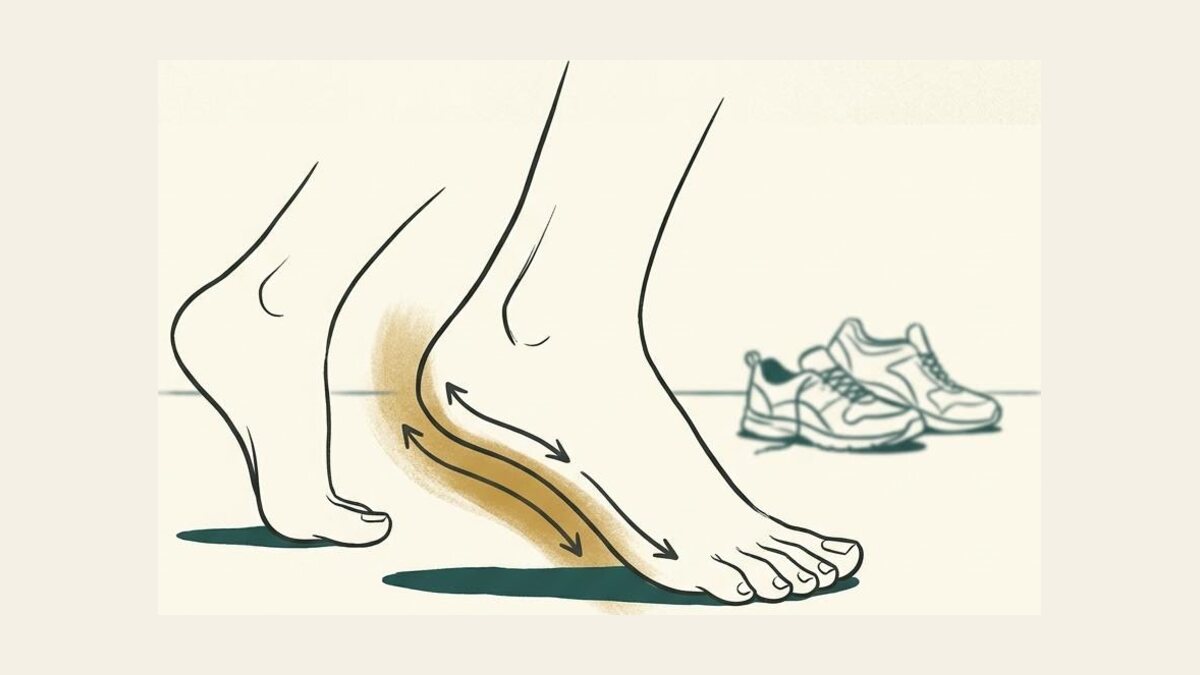
You get out of bed in the morning, put your foot on the floor, and suddenly it feels like someone has driven a nail through your heel.
You hobble towards the kitchen. A few minutes later, it starts to settle.
Sound familiar?
Welcome to the wonderful world of plantar heel pain.
And if you've had an X-ray, there's a reasonable chance someone has pointed at a little spike of bone on your heel and said, "There's your problem."
Except there's a catch.
That heel spur might have absolutely nothing to do with your pain.
The innocent heel spur
Heel spurs are remarkably common. Plenty of people have them without experiencing a single day of heel pain.
They're bony projections that develop around the heel, often associated with longstanding changes where connective tissues attach to bone.
But finding a spur on an X-ray doesn't establish that it's causing your symptoms.
Think of it like finding grey hair on someone with a headache. Both might be present, but one doesn't necessarily explain the other.
The spur is often an innocent bystander.
And removing it isn't generally necessary to treat plantar fasciitis.
So what actually hurts?
Running along the underside of your foot is a thick band of connective tissue called the plantar fascia.
It runs from your heel towards your toes and plays an important role in supporting your foot and managing the forces of walking and running.
Think of it as a tough, slightly elastic band.
Every time you take a step, it stretches and transmits force. It helps your foot behave like a spring.
But like other ties in your body, it has limits.
When the demands placed on it exceed what it can comfortably tolerate, it can become painful, particularly around its attachment to the heel bone.
This is commonly called plantar fasciitis.
The name is slightly misleading. The ending "-itis" suggests inflammation, but persistent plantar heel pain can involve more complicated tissue changes than simple inflammation alone.
You might also hear the term plantar fasciopathy.
Different name. Broadly the same clinical problem.
Why does it hurt so much in the morning?
This is one of the characteristic features of plantar heel pain.
After you've been sitting or sleeping, those first few steps can be particularly uncomfortable.
As you start moving, the pain may ease.
But spend too long on your feet, and it can come roaring back.
This pattern is sometimes called first-step pain.
It's an important clue, but it isn't definitive proof of plantar fasciitis. Other conditions can produce heel pain too.
Five things worth knowing
1. You don't necessarily need expensive orthotics.
Foot orthoses can be helpful, particularly when combined with exercises and other treatments. But they're not a universal cure, and expensive custom devices aren't automatically better for everyone.
2. Resting completely isn't usually the solution.
Reducing aggravating activity can help. But the long-term aim is to rebuild your ability to tolerate movement and load, not avoid using your feet indefinitely.
3. Stretching can help.
Gentle stretching of the calf muscles and plantar fascia is supported by clinical evidence.
Progressive strengthening of the foot and calf muscles can also form part of rehabilitation.
4. Your shoes matter, but there's no perfect shoe for everyone.
Comfortable, well-cushioned footwear may reduce symptoms. Some people benefit from additional arch support; others find it uncomfortable.
The best option is one that suits your feet and symptoms.
5. Recovery can take time.
This isn't always something that disappears after a week of rest.
Some cases improve relatively quickly. Others take months of consistent management.
Slow progress doesn't automatically mean permanent damage.
What can you do today?
If your symptoms sound like typical plantar heel pain, a sensible starting point is to reduce activities that consistently aggravate it without abandoning comfortable movement altogether.
Try gentle calf and plantar fascia stretches. Wear footwear that makes walking more comfortable. Avoid suddenly increasing your walking, running or standing time. As symptoms settle, gradually build strength and activity tolerance.
If the pain is persistent, worsening or limiting your daily activities, arrange an assessment with a podiatrist.
And importantly, not every painful heel is plantar fasciitis.
Stress fractures, nerve problems, heel fat-pad disorders and other conditions can cause similar symptoms.
Pain after a significant injury, inability to bear weight, marked swelling, fever, or new numbness warrants prompt assessment. People with diabetes should be particularly cautious about new foot wounds or skin changes.
The Footnote
Here's the point.
Finding something on a scan isn't the same as finding the cause of someone's pain.
And giving a condition a complicated medical name doesn't necessarily mean we fully understand what's happening.
Good healthcare starts with asking better questions, not simply accepting the first explanation that sounds convincing.
Your heel spur might look impressive on an X-ray.
That doesn't make it guilty.
The Bullshit Clinic is a patient education series from The Footnote. We challenge common health myths, explain the evidence and make foot and ankle medicine easier to understand.
This article provides general health information and is not a substitute for individual medical advice.