Author attribution not recorded
There is a particular kind of LinkedIn comment that appears to have been written by a human being but contains no evidence that a thought occurred during its production.
It usually begins:
“A thought-provoking perspective.”
This is LinkedIn’s equivalent of an NPC turning toward you in a medieval village and saying, “Strange weather we’re having.”
It confirms that an event has occurred. It does not reveal whether the speaker understood it, agreed with it, read it or was conscious at the time.
The phrase can be placed beneath almost anything.
A post about artificial intelligence destroying human creativity:
“A thought-provoking perspective.”
A post announcing 600 redundancies:
“A thought-provoking perspective.”
A photograph of a man staring through an airport window beneath the words Leadership begins where certainty ends:
“A thought-provoking perspective.”
A confession that the author accidentally killed a swan during an executive retreat:
“A thought-provoking perspective. Trust and transparency have never been more important.”
The opening is usually followed by several sentences assembled from the approved corporate vocabulary.
Trust.
Transparency.
Innovation.
Personalisation.
Authenticity.
Human-centred outcomes.
These words can be placed in almost any order and still produce the sensation of professional intelligence.
“Perhaps the real question isn’t whether technology is changing us, but whether we can build a trusted, transparent and human-centred future.”
Perhaps.
But that was almost certainly already the question in the post.
The LinkedIn NPC is not contributing to the discussion. It is appearing within the discussion.
That is a different activity.
The comment is a small public flare announcing:
I am visible. I recognise the approved concepts. Please associate me with intelligence.
The formula is remarkably reliable.
First, congratulate the post for existing.
Then restate its argument at such a high altitude that no identifiable claim survives.
Finally, connect it to your company.
“This is exactly the future we’re working toward at GenomicSynergisticWellnessSoft.”
Of course it is.
Every company on LinkedIn is building precisely the same future. It is ethical, inclusive, personalised, scalable, sustainable and powered by insights.
Nobody can explain what happens there, but apparently the team is incredibly excited.
The company plug must arrive gently, like a sponsored defibrillator.
A post may be about grief, loneliness, war or the collapse of democratic institutions. Somewhere underneath it, a founder will emerge to explain why this validates his subscription-based workplace optimisation platform.
“My father died last week, and it made me reconsider what really matters.”
“Powerful reflection, Sarah. At DeathLoop, we believe loss should be transparent, data-driven and human-centred. Let’s connect.”
The most impressive feature of these comments is not merely their emptiness.
It is their adaptability.
They can respond to anything while saying nothing about it.
“Important perspective.”
“Much-needed conversation.”
“This really resonates.”
“Couldn’t agree more.”
“Such an important reminder.”
The reminder is never identified.
The agreement has no object.
The resonance produces no sound.
Occasionally the NPC attempts something more ambitious.
“It’s the ideas and insights of the posts that are important to me.”
Which ideas?
What insights?
Important in what way?
We will never know.
The sentence is not designed to convey information. It is designed to identify the speaker as a person who values information.
This distinction is central to corporate life.
You do not need to demonstrate curiosity. You need to say that curiosity matters.
You do not need to act ethically. You need to attend an ethics workshop.
You do not need to understand a problem. You need to call it complex.
You do not need an original thought. You need to recognise one as “thought-provoking.”
LinkedIn did not create these people
The polite explanation is that intelligent people are merely adapting to the incentives of a professional platform.
No.
LinkedIn did not create the corporate NPC.
It gave it broadband.
Anyone who has worked in healthcare has met these people away from the screen. We have sat beside them in meetings, workshops, strategy days and compulsory sessions on workplace culture.
They speak exactly like this in real life.
They enter a room containing people who understand the service, the patients and the work, then begin producing sounds.
“We need to think strategically.”
“We need better stakeholder engagement.”
“We need to bring people on the journey.”
“We need to move beyond silos.”
“We need to embed a culture of innovation.”
Three hours pass.
Nothing has been identified.
Nothing has been decided.
Nobody has demonstrated any knowledge of the actual problem.
Then the person who produced the greatest volume of vapour is thanked for their leadership.
Six months later they are promoted.
The LinkedIn comment is not a disguise worn by a vivid private intellect. It is the corporate mind speaking in its native tongue.
These people are often stupid.
Not endearingly stupid. Not absent-minded-professor stupid. Institutionally dangerous stupid.
They are fluent without being knowledgeable, confident without being competent and socially perceptive without being intellectually curious.
They know which phrases attract approval. They recognise those phrases in others. They repeat them back. Then, mistaking the echo for intelligence, they promote one another.
Cheeseballs select cheeseballs.
Soon the entire leadership team consists of people who can facilitate a workshop on excellence but could not recognise excellence if it repaired the system in front of them.
This is how corporate life reproduces itself.
Not through a conspiracy of geniuses, but through the dumb luck of people whose defects happen to match the institution’s selection criteria.
They are vague, so they cannot easily be proven wrong.
They are agreeable, so they do not threaten anyone above them.
They are confident, so incompetence initially resembles authority.
They are enthusiastic about process, so they can remain permanently busy without producing anything.
They are excellent at recognising others like themselves.
This is not adaptation by the clever.
It is natural selection for bullshit.
Healthcare knows the species well
Medical professionals will recognise the creature immediately.
It is the person standing above a failing service asking clinicians to identify “quick wins.”
It is the executive asking exhausted staff to become more resilient.
It is the consultant explaining that patients must be placed at the centre of a service that has just removed half its clinical workforce.
It is the HR representative who rejects the excellent candidate because their answer did not contain enough examples of “values alignment.”
It is the manager asking why waiting lists are growing after deliberately leaving positions unfilled.
It is the strategist announcing an “exciting new model of care” that consists of fewer clinicians seeing more patients with less time.
When the service survives, the clinicians receive a morning tea.
Management receives a case study.
The language is always uplifting because the reality is not.
Cuts become efficiencies.
Understaffing becomes workforce optimisation.
Loss of expertise becomes transformation.
Centralisation becomes integration.
The removal of clinical autonomy becomes standardisation.
A demand that healthcare workers do more with less becomes an opportunity to innovate.
A catastrophe becomes a learning.
And when the workers somehow prevent the catastrophe from becoming fatal, corporate leadership runs to the front for the photograph.
The LinkedIn NPC belongs in this environment because it has mastered the primary corporate skill: detaching language from reality.
An opinion-shaped object
The NPC rarely says:
“I disagree.”
It says:
“There are several perspectives worth considering as we navigate this evolving landscape.”
It does not say:
“That is false.”
It says:
“The conversation may benefit from a more nuanced and holistic framing.”
It does not say:
“Your company fired 200 people and replaced them with software while publishing essays about human potential.”
It says:
“The challenge will be ensuring innovation remains aligned with people-first values.”
There is nothing solid enough to attack.
The NPC has no hitbox.
Tell it that “people-first values” means nothing and it will reply:
“Absolutely. That’s why defining what people-first truly means is so important.”
Point out that it has merely repeated your criticism and it will say:
“Exactly. Sometimes repetition helps reinforce the ideas that matter most.”
Suggest that it may not understand the subject and it will thank you for contributing another valuable perspective.
This is why these people often survive failure.
A person who makes a specific claim can be shown to be wrong.
A person who says, “We need to continue exploring opportunities for meaningful collaboration,” can remain employed indefinitely.
The sentence contains no proposition.
It is an opinion-shaped object with no opinion inside it.
A live demonstration of synthetic thought
This becomes particularly funny when the original post is about artificial intelligence homogenising human language.
Someone writes an essay arguing that generative AI is flattening expression, sanding away individual voice and causing everyone online to sound as though they attended the same corporate communications workshop.
Within minutes, the comments arrive.
“A timely and thought-provoking perspective.”
“AI should augment humanity, not replace it.”
“Trust will be the defining currency of the next decade.”
“This is exactly what we’re building.”
“Let’s connect and exchange ideas.”
The warning has been consumed by the thing it warned against.
It is like publishing an essay called The Swarm Is Learning to Imitate Us and watching the swarm gather underneath it to comment:
“Insightful take. The future belongs to those who embrace authentic human connection.”
The best examples contain a company advertisement.
The post says that human communication is becoming a smooth arrangement of predictable concepts.
The founder responds with trust, transparency, science, personalisation, informed decision-making and shared vision.
Then he invites everyone to connect.
The man has answered a warning about synthetic conformity by assembling himself from the most statistically probable next words on LinkedIn.
It is not a counterargument.
It is a live demonstration.
This is the real problem with AI-generated prose. It did not invent this language. It learned it from institutions already drowning in it.
AI sounds corporate because corporate communication had already reduced human thought to predictive text.
The machine was trained on the NPCs.
The NPCs are now using the machine to become more efficiently themselves.
The frontline of epistemic collapse
This would be merely funny if these people were confined to writing comments beneath airport photographs.
They are not.
They increasingly run institutions.
The emptiness of their language is not harmless. It is part of a broader epistemic collapse in which words cease to describe reality and become signals of tribal and professional membership.
A statement is no longer judged by whether it is true.
It is judged by whether it sounds appropriate.
Does it affirm the correct values?
Does it use the accepted vocabulary?
Does it preserve organisational comfort?
Does it flatter the people who matter?
Does it avoid naming responsibility?
The successful corporate sentence does not illuminate reality. It protects the speaker from it.
This is how obvious institutional failures persist in plain sight. Everyone is speaking, but nobody is saying anything. Everyone is consulting, but nobody is listening. Everyone is committed to transparency, but no one can obtain a straight answer.
The people most capable of describing the failure are dismissed as negative, difficult or insufficiently strategic.
The people who helped create it are praised for their constructive leadership.
In healthcare, that inversion has consequences.
Clinical knowledge becomes one stakeholder perspective among many.
Evidence competes with messaging.
Professional judgement is subordinated to policy written by people who could not perform the work.
The clinician who says, “This will harm patients,” is treated as resistant to change.
The executive who replies, “We acknowledge there may be implementation challenges as the model matures,” is treated as the adult in the room.
One person has described reality.
The other has managed it.
Guess who gets promoted.
The corporate open world
Much of LinkedIn is not conversation. It is professional identity maintenance performed in public.
The post is merely the maypole.
Around it dance the consultant, the founder, the executive coach, the wellness entrepreneur and the person whose headline says Helping Leaders Unlock Their Human Advantage.
Each performs the dialogue appropriate to their class.
The consultant speaks about transformation.
The founder speaks about vision.
The executive coach speaks about vulnerability.
The wellness entrepreneur speaks about trust.
The HR leader congratulates everyone on bringing their whole self to work, provided the correct whole self has been selected through a seven-stage behavioural interview.
Occasionally two NPCs encounter one another.
“A powerful reminder that leadership begins with vulnerability.”
“Absolutely, Mark. Vulnerability is often our greatest strength.”
“Couldn’t agree more, Helen. It takes courage to be vulnerable.”
“So true. Courageous leadership has never been more important.”
This can continue forever.
No external energy source is required.
It is a perpetual-motion machine powered by mutual professional affirmation.
The comments do not even need to relate to the post. They only need to resemble the expected emotional response to a post of that approximate category.
Grief post: Powerful.
Leadership post: Important.
AI post: Human-centred.
Mental-health post: Thank you for your vulnerability.
Photograph of coffee beside a notebook: Clarity begins with stillness.
Photograph of someone climbing a mountain: The summit is never the real destination.
Photograph of an airport: Growth happens outside the comfort zone.
Photograph of a person beside a Lamborghini: Success is not about material things.
LinkedIn is a vast corporate open-world game.
Walk near a founder and he will tell you that failure is feedback.
Approach a leadership coach and she will explain that empathy is a superpower.
Enter the range of a recruiter and you will hear that your career is a journey.
Somewhere in the distance, Simon Sinek has another why.
You can see the exclamation mark now
The comforting fiction is that somewhere beneath all this jargon lies a hidden world of insight and intelligence.
Sometimes there does.
Often there does not.
Sometimes the empty comment is simply the product of an empty thinker operating in an environment that cannot distinguish language from thought.
That environment does more than tolerate them.
It promotes them.
The people who understand the work remain occupied doing it. The people who understand the vocabulary move upward to manage them.
Then they redesign the service.
Then they congratulate themselves.
Then they publish a post about courageous transformation.
The rest of us are left dealing with the consequences.
Once you recognise the script, it becomes impossible not to hear it.
“A thought-provoking perspective.”
“A timely reminder.”
“Trust has never been more important.”
The phrases still appear, but the magic has gone.
The costume is visible.
The dialogue option is showing.
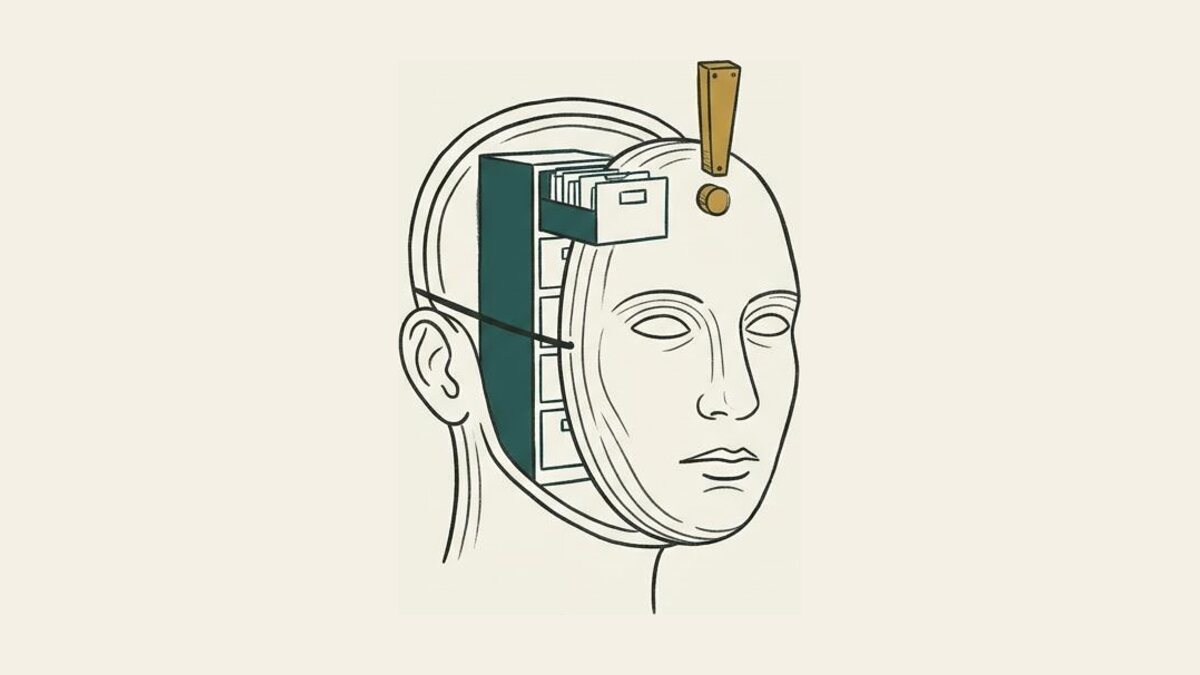
And every time one of them turns toward you and says, “Authenticity is the future of leadership,” you can see the little yellow exclamation mark floating above its head.