Author attribution not recorded
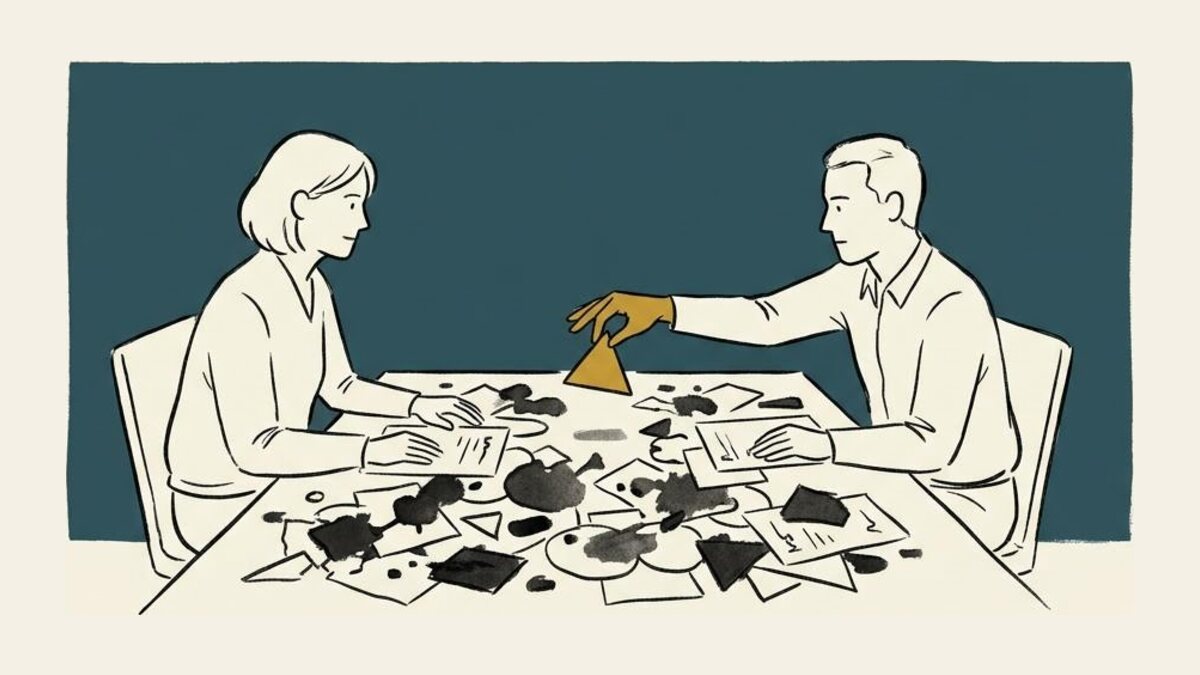
A stroll through the minefield of modern debate, courtesy of The Footnote
If Socrates crash-landed into your average LinkedIn comments thread, the paramedics would find him unconscious beneath a pile of ad hominems, straw men, and triumphant GIFs of wrestling slams. The ambulance would be delayed—because the driver and dispatcher would still be on Slack, “respectfully disagreeing” about who first called the ambulance.
Welcome to 2025, where we are drenched in information yet somehow parched for reason. We tweet, post, reel and meme, but when it comes to argument—the disciplined contest of ideas—many of us swing opinions like pool noodles. We mistake winning for understanding, heat for light, and the dopamine spike of a “Gotcha!” for the slow-burn satisfaction of landing closer to the truth.
This article is a whistle-stop tour (with occasional snark) of why we’ve forgotten how to argue, how ego hijacks evidence, and—most importantly—how to recalibrate the intellectual GPS before we all drive off a logical cliff. Pack snacks.
Argument ≠ War Paint
The English word argument shares a Latin root with arguere, “to make clear.” That root has been buried beneath centuries of gladiatorial metaphors: “destroy,” “own,” “slaughter,” “drop mics.” We’ve reframed clarity as combat, forgetting that an argument’s first purpose is illumination, not obliteration.
Contest of ideas, not identities. A surgeon doesn’t duel the scalpel; she partners with it to expose what hides beneath. Likewise, a healthy argument is two minds using reason to reveal truth. When your opponent becomes a target instead of a teammate, the scalpel turns into a shiv.
Ego as personal bodyguard. The human ego misreads disagreement as a social eviction notice: Disagree with my view and you dismiss my worth. Evolution hard-wired that reflex when tribes were small and exile meant saber-tooth dinner. Online tribes now number in the millions, but the amygdala never got the memo.
Side-effect: We treat arguments like image management exercises. The aim shifts from test the idea to protect my status, spawning rhetorical duck-and-weave maneuvers: changing definitions mid-stream, cherry-picking data, or the ever-popular pivot to a tangential “truth” that feels impressive but proves nothing about the original claim.
The Premise—That Thing We Forgot to Name
Before evidence can be “for” or “against” something, we must first declare what that something is. This shockingly unsexy step—stating the premise—often vanishes under the neon distractions of debate.
Invisible Premise Syndrome (IPS). Consider the exchange:
A: “Artificial sweeteners are poison.”
B: “Stevia is plant-based and safe.”
Notice how A never defines poison. Acute toxicity? Long-term metabolic disruption? Carcinogenicity at 5 g/kg in mice? Undefined premises let both parties fling “facts” that never intersect. They talk at each other like two GPS units arguing different continents.
Shape-shifting thesis. Worse, some argonauts sense their premise wobble and stealth-edit it mid-conversation. The debate becomes like nailing custard to a wall—you think you’re targeting claim A, but suddenly you’re accused of ignoring revised claim B.
Fix:
Label the claim. State it plainly, preferably in a single sentence. If you can’t, you don’t yet have a claim.
Bracket the scope. Under which conditions is this claim asserted? Time frame, population, context.
Agree upfront. Both sides sign the intellectual prenup: “We are debating this proposition, no substitutions.”
Evidence: The Currency That Inflates Fast
In a data-rich age, we presume evidence flows like tap water. Yet quantity ≠ relevance. People lob isolated facts as if truth were Lego bricks—any piece will fit, surely! They skip the crucial inferential link that shows how a fact supports a premise.
Random Truth Fallacy. A classic cocktail-party move:
“Climate models are unreliable; remember that incorrect COVID projection in 2020.”
Both statements might be “true,” but the second doesn’t logically erode the first unless you prove a structural parallel. Without that bridge, you’ve simply changed the subject—aka the Red Herring.
Data Without Diagrams. In science, we speak of internal validity (did the study answer its own question?) and external validity (does it generalise?). Lay arguments rarely inspect either axis. We trade in screenshot-length stats, severed from methodology.
Fix:
Ask for the warrant. “Show me the step where this fact underwrites the leap to your conclusion.”
Trace the study lineage. Not all citations are created equal; meta-analyses outrank single anecdotes.
Spot the denominator. Numbers without context conceal scale. “20 cases of X” may be trivial or catastrophic depending on the base population.
Fallacy Bingo (No Dabber Required)
Instead of listing every logical fallacy (there are dozens, and your coffee will go cold), let’s highlight five that dominate LinkedIn dogfights:
Ad Hominem (Attack the person). “Of course you’d say telehealth is effective—you sell webcams.” Core idea: sidestep argument by impeaching character.
Straw Man. Re-present opponent’s claim in its weakest form, then torch it. “Oh, so you want zero medical oversight in podiatry?”
Appeal to Popularity. “Everyone in the comments agrees, so it must be true.” Spoiler: truth doesn’t crowdsource.
False Dichotomy. Force a binary where dozens of nuanced positions exist: “Either you support unlimited healthcare spending or you’re anti-patient.”
Motte-and-Bailey. Defend a modest, defensible position (motte) until safe, then sneak out to the wild, sweeping claim (bailey) once criticism subsides.
Print this list, laminate it, and next time you’re in a heated thread, play silent bingo. You’ll have a full house by lunch.
Why Winning Feels Better Than Being Right
The internet doesn’t reward nuance; it rewards engagement metrics. Platforms measure success in clicks, shares, watch-time—biological proxies that humans evolved to interpret as social capital. Winning an online argument lights up the brain’s reward pathways like arcade machines. Being correct produces a quieter glow.
Social Identity & Tribal Signalling. Positions become badges. You defend them, not because evidence compels you, but because they signal you belong to Team A and not dreaded Team B. This explains why two strangers can argue ferociously over the glycaemic index of quinoa—they’re subconsciously staking identity territory.
Echo Chamber Algorithm. Your feed learns you prefer one narrative and serves more of it. Confirmation bias, once a cognitive quirk, becomes an engineered business model.
Intellectual Humility: The Secret Sauce
Humility isn’t meekness; it’s epistemic risk management. It means recognising your beliefs are probabilistic bets, not sacred relics. Scholars call this Bayesian updating—every new data point should move the dial of certainty slightly, never catapult it to absolute.
Practise public revisions. When shown better evidence, model the sentence “I was wrong.” It’s an underrated power move—like discovering CTRL-Z for your intellect.
Steel-manning. Before rebutting, restate your opponent’s case in its strongest version. If they reply, “Yes, that’s exactly my point,” you’ve earned the right to critique. Anything less is shadowboxing.
Debate as Jiu-Jitsu, Not Boxing. In Jiu-Jitsu, you exploit your opponent’s momentum. Similarly, use their evidence charitably: “Assuming your data are correct, here’s how I reconcile them with my position…” Paradoxically, generous engagement often dissolves conflict faster than frontal assault.
A Practical Toolkit for Grown-Up Arguments
Define the Premise (1 sentence). Post it at the top of the thread.
Clarify Stakeholders. Who is affected if the claim is true? Boundaries matter.
Lay Out Evidence Hierarchy. Meta-analysis > RCT > cohort > case report > anecdote > meme.
Keep a Logical Ledger. For each premise, list supporting evidence and contradicting data. If the contradicting column grows heavy, update your stance.
Pause When You Feel Heat. Physiological arousal (heart pounding, sweaty palms) is a cue your ego hijacked the cockpit. Step away, breathe, re-read.
Use “Because” Sparingly. Studies show the word tricks us into accepting weak justifications. Ask, “Is that because robust or filler?”
Accept Partial Convergence. Agreement is rarely all-or-nothing. Stating “We now both concede X, still differ on Y” is progress.
The Comedy of Ingroupies
You’ve seen it: two people from the same ideological tribe engaged in what resembles a mating ritual come rap-battle. They seek micro-distinctions to prove superior purity, shifting premises like quicksand. Observers applaud whichever comment garners more claps, unaware they’re witnessing what sociologists call ingroup signalling—the intellectual version of peacocks flashing feathers.
Why it feels weird. Onlookers expect arguments between opposing camps. Watching an internal duel seems dysfunctional—until you realise status currency is often scarcer within tribes. The dance may look absurd, but it obeys ancient rules: Rank matters, even among allies.
Lesson: When you spot this, don’t join the melee. Offer an outside-view synthesis: “You both appear to share premise X; your disagreement lies in assumption Y.” Nine times out of ten, nobody asked for a referee—but you’ll be the adult in the room.
Reclaiming the Public Square
Arguments, done well, are democracy’s immune system. They weed out viral misinformation before it infects policy. Poor arguments, however, mutate faster than herd immunity can keep up. The stakes go beyond bruised egos or wasted lunch breaks; they shape legislation, healthcare protocols, even whether your Aunt buys into pyramid crypto schemes.
In healthcare (The Footnote’s stomping ground), sloppy reasoning isn’t just annoying; it’s lethal. Bad arguments justify ineffective treatments, derail funding, and erode public trust. The cost is counted in amputated limbs, not lost Twitter followers.
The Take-Home Footnote (Pun Intended)
Detach ego; attach curiosity. Your reputation survives admitting ignorance.
State the premise, guard its perimeter. Moving goalposts bury truth.
Demand relevance, not just accuracy. Random truths are rhetorical confetti.
Spot your fallacies before theirs. Self-skepticism is armour.
Update beliefs publicly. Normalise intellectual course corrections.
Master these, and argument transforms from intellectual cage-match into collaborative mountain-climb—the view from the summit is clearer, and fewer people are bleeding on the trail.
Call to Action
At The Footnote we’re building a community that prizes how you think over what you think. Drop a comment with the worst logical fallacy you’ve witnessed this week, or—in true Socratic spirit—challenge an idea above. Bonus points for charity and citations.
And if you found a sliver of value (or at least a grin) in these words, hit subscribe, share with your resident debate champ, and let’s upgrade the world’s arguments one premise at a time.
Endnote: No actual egos were harmed in the making of this article, though several were mildly inconvenienced.