Author attribution not recorded
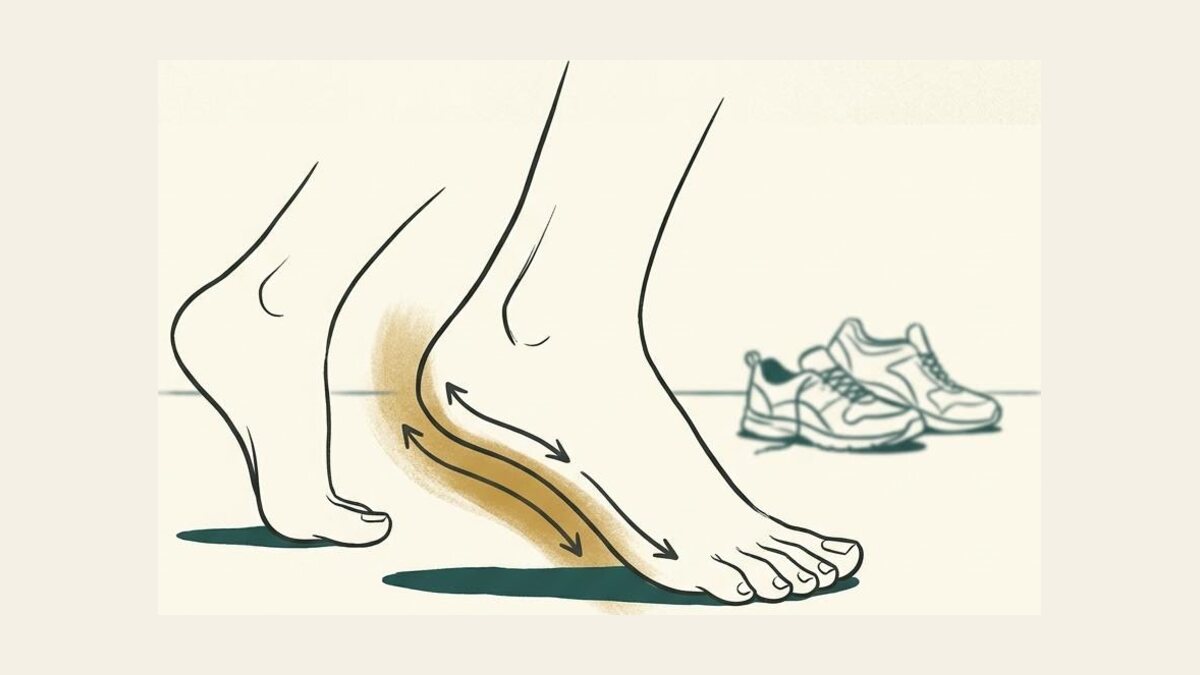
A slow-motion clip of elite marathon runner Sebastian Sawe recently went viral online. To many runners, his gait looked alarming. His feet rolled inward aggressively with every stride, the exact movement pattern generations of runners were taught to fear.
There was only one problem.
Sebastian Sawe runs faster than almost every human being on Earth.
Again watch Eliud Kipchoge in slow motion and you will also see it clearly. His foot rolls inward aggressively after contact. To generations of runners raised on gait analysis videos and shoe-store biomechanics, it looks almost wrong. Severe, even. The kind of thing once circled in red on a treadmill screen before someone disappeared into the stockroom and returned carrying a pair of expensive “stability shoes.”
And yet this supposedly dysfunctional movement pattern carried a man through a marathon in under two hours.
This should unsettle us more than it does.
Not because pronation is fake. It is real. Every podiatrist, physiotherapist and sports physician has seen patients where excessive motion contributes to tissue overload. Tibialis posterior tendinopathy exists. Progressive Collapsing Flat Foot is real. Pain is real. Dysfunction is real.
But the confidence with which modern running culture transformed pronation from a normal human movement into a biomechanical villain now deserves serious scrutiny.
Pronation is not an error. It is a feature of human locomotion. The foot is designed to roll inward after contact. This motion absorbs force, adapts to terrain and allows the body to transition from a flexible shock absorber into a rigid lever for propulsion. Without pronation, walking and running become stiff, awkward and inefficient.
Human beings evolved to pronate.
Somehow, however, an entire generation of runners came to believe that movement itself was pathological.
The timing of this transformation is revealing. As recreational running exploded during the 1970s and 1980s, shoe companies faced a problem familiar to every mature industry: how do you keep selling increasingly expensive products for an activity that fundamentally requires very little equipment?
Running is dangerously simple. A pair of shorts. A road. A human body. That simplicity leaves little room for product differentiation. So the body itself gradually became the product problem.
Feet were no longer merely different. They became flawed categories requiring intervention. Neutral feet. High arches. Overpronators. Underpronators. Stability needs. Motion control needs. Corrective technologies. The modern running shoe industry did not merely sell footwear. It sold reassurance. It transformed natural anatomical variation into a series of manageable consumer identities.
For years the message was delivered with extraordinary certainty. If your arch collapsed inward, your body was allegedly drifting toward injury. Shoes would correct this. Orthotics would stabilise this. Technology would save you from yourself.
The science, unfortunately, never fully cooperated.
Large bodies of research repeatedly failed to demonstrate that matching shoes to static foot types consistently reduced injury risk across broad populations. Some heavily pronated runners remained injury free for decades. Some runners with “ideal” biomechanics broke down constantly. Elite athletes often displayed mechanics that would horrify a retail gait assessment.
This is because human movement is not an engineering diagram.
Biomechanics has always suffered from a seductive illusion: the belief that if movement looks unusual, it must therefore be harmful. Freeze-frame analysis encourages this instinct. Slow motion makes living tissue appear mechanical rather than adaptive. But the body is not a bridge or a crane. It is a biological system constantly adapting to stress, history, fatigue, conditioning and environment.
A movement can look ugly and function brilliantly.
The deeper problem is that modern medicine and commerce increasingly struggle to tolerate normal variation. Difference itself begins to feel pathological. Flat feet become defects. Ageing becomes a disease. Sadness becomes a disorder. Restlessness becomes a syndrome. The body is no longer viewed as a resilient, adaptable organism but as a perpetual maintenance problem requiring continuous correction.
Running culture absorbed this mentality perfectly.
There is also an irony bordering on absurdity. Many modern running shoes became progressively softer, taller and less stable because softness feels wonderful in a shop. Thick compliant foam creates an immediate sensation of luxury underfoot. Yet highly cushioned shoes can also increase instability by elevating the foot further from the ground and reducing proprioceptive feedback. In some cases the same industry that introduced instability then sold technologies designed to manage the instability it had created.
Even more revealing is the rise of the modern super shoe.
For decades runners were warned obsessively about “excessive motion.” Suddenly the industry’s priorities changed. Massive stack heights, aggressive rocker geometries and highly compliant foams became acceptable because they improved running economy and race performance. Stability rhetoric quietly softened as speed became more marketable than correction.
The underlying logic shifted almost overnight.
This alone should make runners pause. Was pronation truly an urgent biomechanical crisis, or was it simply useful language for selling a particular era of footwear?
None of this means all shoes are pointless or all interventions are scams. Some runners clearly benefit from stability shoes. Some patients genuinely require orthotic intervention. Pathology exists. Tissue overload exists. Clinical reasoning matters.
But certainty should not exist where evidence remains mixed and human variability is enormous.
The most dangerous thing about the pronation narrative was never the shoes themselves. It was the worldview underneath it: the quiet assumption that the natural human body is fundamentally inadequate without constant technological correction.
That idea now extends far beyond running.
Modern life increasingly encourages people to distrust their own bodies, perceptions and adaptive capacities. Every discomfort becomes a market opportunity. Every variation becomes a category. Every inefficiency becomes a consumer problem awaiting optimisation.
Meanwhile, somewhere in Kenya, a man pronates violently through history itself.