We explored how our brains cast everyone into character roles. “The student,” “the senior,” “the patient,” “the boss.” And how when someone improvises, we panic—not because they’re wrong, but because they’ve broken character. Like a junior who dares quote a meta-analysis, or a patient who shows up with a spreadsheet of their symptom trends.
Author attribution not recorded
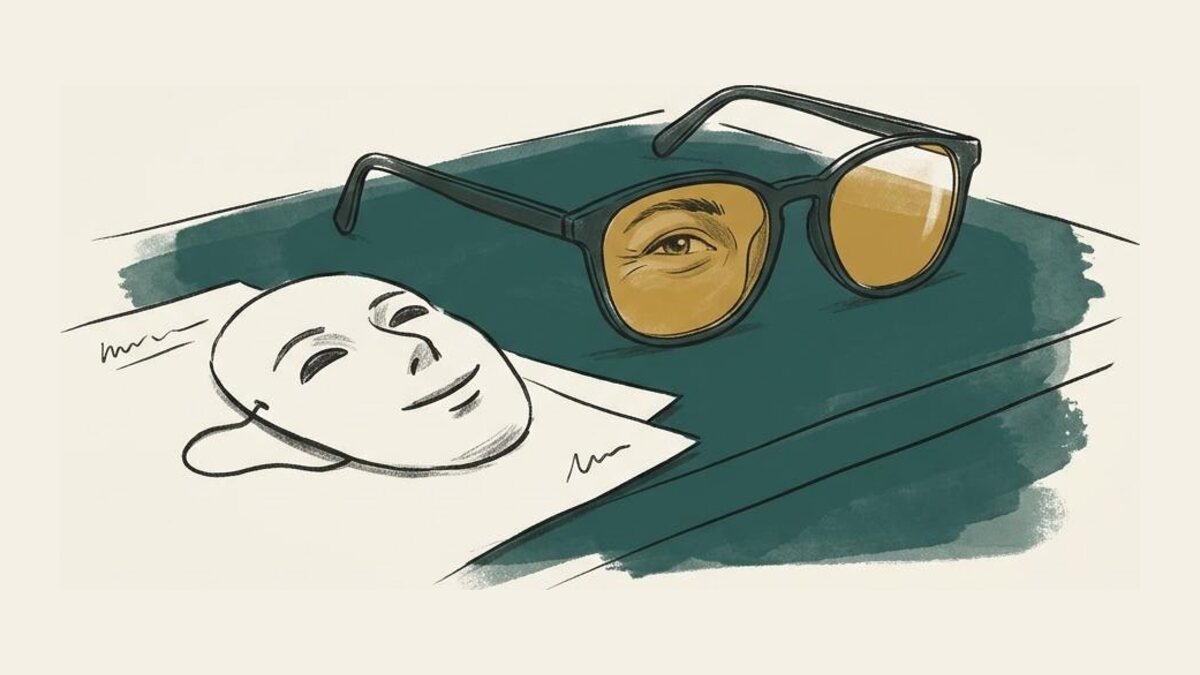
Previously on "All the World’s a Stage”
We explored how our brains cast everyone into character roles. “The student,” “the senior,” “the patient,” “the boss.” And how when someone improvises, we panic—not because they’re wrong, but because they’ve broken character. Like a junior who dares quote a meta-analysis, or a patient who shows up with a spreadsheet of their symptom trends.
That article struck a nerve. Because let’s face it: most of us didn’t get into healthcare to perform identity theatre. We signed up to help people, stay curious, and occasionally wield a scalpel with just enough flair to look cool but not terrifying.
But today’s sequel goes deeper: What happens when you realise you’ve been playing a character, too?
Act I – Who Are You When No One’s Watching?
Here’s a spicy question for your next reflective practice hour:
🧠 “Is my professional identity a genuine extension of myself, or just the most socially acceptable version of me that gets through grand rounds without raising eyebrows?”
In healthcare, we’re often rewarded for performing certainty even when we're inwardly unsure. We’re taught to hide vulnerability, suppress curiosity that could "waste time", and speak in 3rd person passive ("the patient was managed"—by whom? The narrative gods?).
But every time you bury a question or downplay a breakthrough insight because it might “make you look unprofessional,” you add another layer to your mask.
Act II – The Mask Is Heavy, and It Leaks
Let’s name some common disguises:
The Untouchable Consultant: Wears silence as armour. Admits nothing, reveals nothing. Thinks vulnerability is contagious.
The Always-Humble Junior: Downplays their ideas so hard they need a chiropractor. Smiles through micro-dismissals.
The “Chill” Colleague: Makes jokes instead of naming injustice. First to brush off racism/sexism/classism with “that’s just how it is.”
The Heroic Allied Health Worker: Picks up the slack quietly, even when their scope is stretched like a 90s pager battery.
These characters keep the peace… but at a cost. The more we suppress real thoughts, real questions, and real connection, the more disconnected we become from the thing that made us love this work in the first place.
Act III – The Patient Wears One Too
Ever had a patient who doesn’t tell you the full story until 40 minutes in?
That’s because they’ve been cast, too: The Compliant Patient. They think the script goes: “Nod. Don’t ask too many questions. Don’t tell the doc you stopped taking the meds after day 3 because it gave you fire diarrhoea and made your dreams turn French.”
They’re waiting for you to drop character first.
Here’s a secret: 🧠 The more authentic you are, the more human they feel allowed to be.
You say, “You seem worried about something I haven’t asked yet.” They say, “Actually… I googled my symptoms and now I think I’m dying.”
Boom. Scene shift. Now you’re co-authors in this story, not just actor and audience.
Act IV – Dropping the Act Without Dropping Professionalism
You might be thinking: “Sounds great. But I can’t walk into theatre in sandals and say ‘let’s vibe this surgery.’”
Correct. Professionalism matters. But so does authenticity. The trick is not to discard the mask entirely—but to make it translucent.
Here’s how:
🎭 1. Narrate Your Thinking
Instead of pretending omniscience, model clinical reasoning:
“There are a few ways we could go here. I’m leaning toward X, but I want to rule out Y.”
This invites curiosity and collaboration. It also gives juniors and patients permission to speak up.
🎭 2. Embrace the “I Don’t Know”
It’s not a flaw. It’s the prelude to discovery.
“I’m not sure, but let’s look it up together.” Isn’t that what we want our juniors to learn anyway?
🎭 3. Share Select Vulnerabilities
Tell your student, “I remember being terrified of wound care too.” Tell your team, “That case rattled me a bit.” Tell your patient, “That’s a fair question—I’d be wondering the same.”
These moments don’t weaken you. They magnetise connection.
🎭 4. Laugh at the Roleplay
Use humour to defuse the absurdity of character policing:
“I know I’m supposed to be the Serious Consultant now, but can I have a moment of human?”
Self-awareness disarms hierarchy.
Epilogue – The Real Character Arc
We often think of professionalism as a costume we put on. But what if true professionalism is more like a well-stitched version of our real self?
One that’s honest, flexible, skilled, and safe—but still recognisably you.
If you want to lead, teach, or care in a way that people remember—let them see a real person under the white coat.
After all, no one gives a standing ovation for someone who never took a risk.
So go ahead. Step into the light. Drop the mask just enough to smile.
The world’s still a stage.
But the best performances are real.