Author attribution not recorded
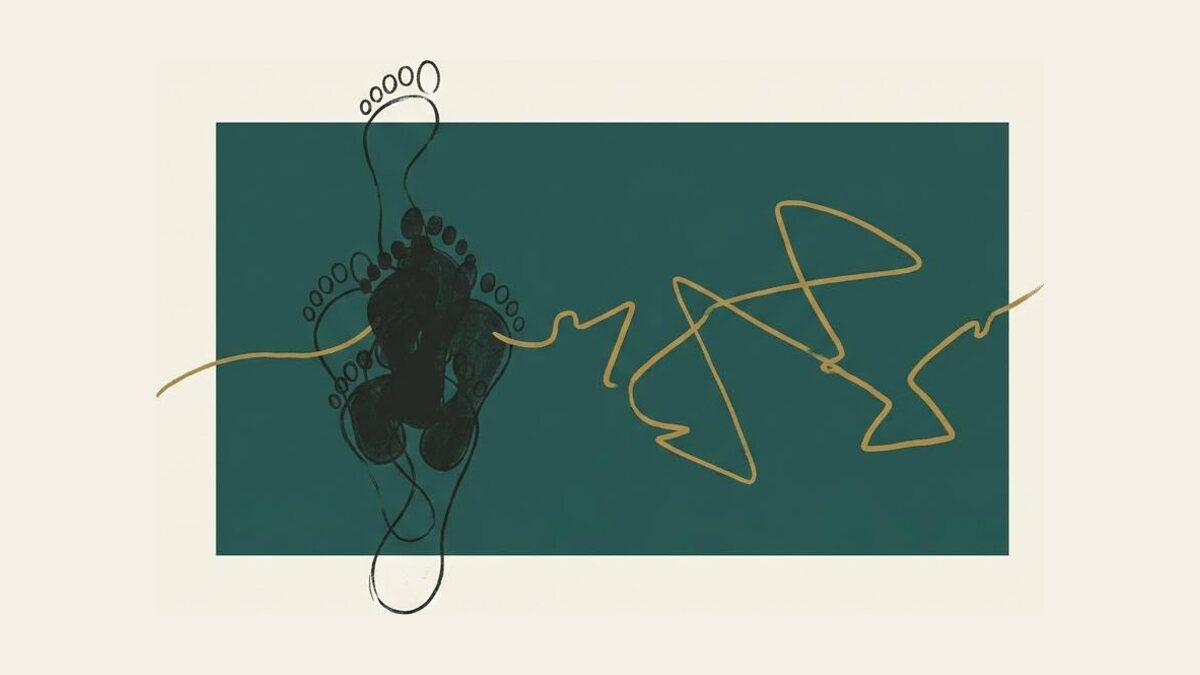
It’s a question that doesn’t quite fit the story we tell patients.
Callus is supposed to mean overuse. Too much pressure. Too much time on your feet. The body “protecting itself” from excessive load.
That explanation sounds right.
It just doesn’t match what shows up.
The thickest, driest, most fissured heels rarely belong to runners. They’re not the feet of people training for marathons, or even those walking long distances each day. They’re far more likely to belong to someone who spends most of their time off their feet, moving in short, repetitive bursts between long periods of sitting.
That’s not a criticism. It’s just what shows up.
So the question starts to shift.
If callus is a response to load, why don’t the people with the highest loads have the most of it?
Maybe the problem is how we think about load.
We treat it like a volume problem. More steps, more pressure, more callus. Less movement, less of everything.
But the foot doesn’t experience load as a number. It experiences it as a pattern.
A heel that is loaded slowly, repeatedly, in the same way, in the same place, will adapt. The skin thickens. It hardens. It becomes less elastic. Eventually, it starts to split.
Not because the load is extreme.
Because it doesn’t change.
Stand. Walk a little. Stand again. Same contact point. Same pressure. Same mechanics. Day after day.
The body doesn’t see variety.
It sees monotony.
And it responds by building armour.
Now compare that to running.
The forces are higher, but the pattern is different.
Contact is brief. Load moves quickly. The foot transitions rather than settles. Even in a heel striker, time on the heel is short, and the load is redistributed almost immediately.
The tissue is stressed, but it isn’t trapped.
And clinically, that seems to matter.
Because runners can develop callus, but not commonly in this way. Not the thick, dry, fissured heel that walks into clinic from a far more sedentary pattern of use.
There’s another layer that becomes hard to ignore.
Footwear.
The worst heel callus is often living in open-backed shoes. Thongs. Sandals. Hard edges. Minimal structure.
The heel isn’t just being loaded.
It’s being sheared.
Caught between the ground and the edge of the shoe. Pulled, stretched, compressed — right at the margin where the skin is least able to tolerate it.
That’s where the cracks form.
Not from impact.
From friction layered onto repetition.
At some point, it stops being convincing to describe callus as a simple response to “too much use.”
It starts to look more like a response to how the foot is being used.
Or more accurately, how little that pattern ever changes.
I had heel callus once. Thick enough to crack.
It disappeared when I started running every day.
That was the only thing that changed.
Not less load.
A different pattern.
The heel stopped being a place where force accumulated and became a place force passed through.
So maybe the better question isn’t whether someone is doing too much or too little.
Maybe it’s whether anything about their movement actually varies.
Because the body seems to tolerate quite a lot provided it isn’t the same thing, in the same place, applied the same way, indefinitely.
And that leaves us with a quiet inversion.
The people most protected by their callus are often the ones least exposed to meaningful load.
And the ones placing the greatest demands on their feet are often the ones whose skin never needed to protect itself in the first place.
So when someone asks why their heels are cracking, it might be worth pausing before answering.
Not to ask how much they’re doing.
But to ask a quieter question.
What, exactly, is their foot doing all day?
And does it ever do anything different?