Author attribution not recorded
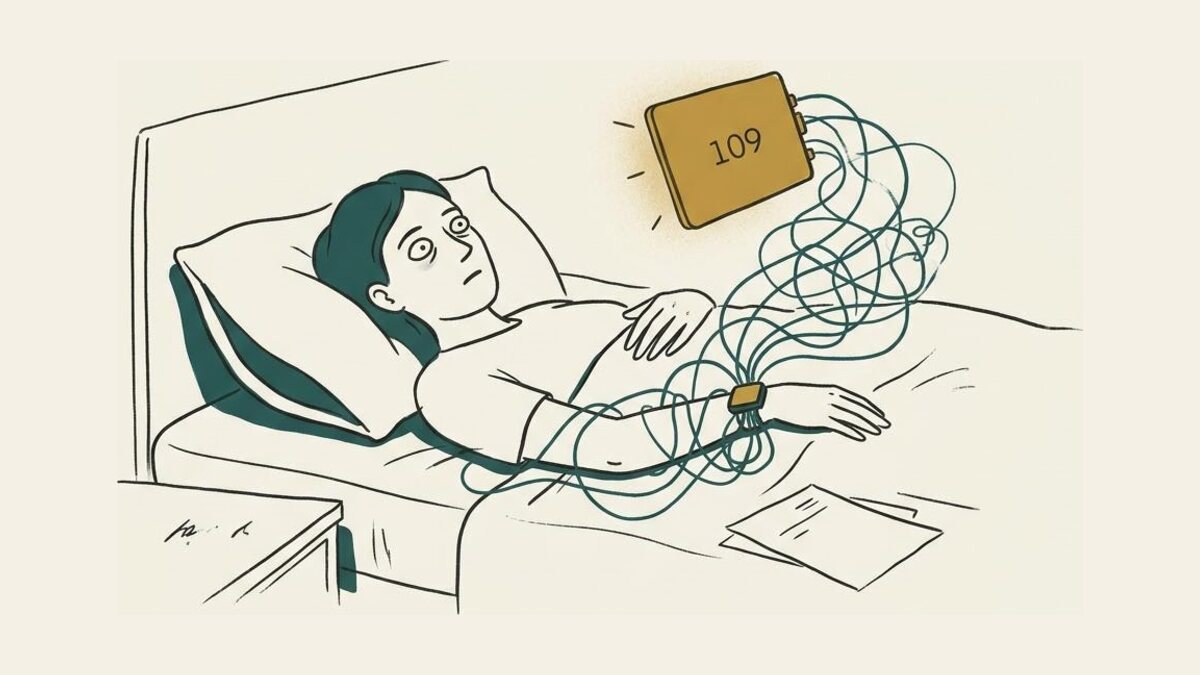
I had two hours sleep.
One hour at the start of the night before the chaos started. One broken hour sometime after dawn, drifting in and out of stress, adrenaline and exhaustion like a soldier passed out in a trench.
My watch congratulated me in the morning.
“Excellent recovery.”
Thank you, little glowing rectangle. Truly remarkable work.
This is the strange theatre of modern health and fitness. We have outsourced our sense of self to gadgets that barely understand what they are measuring, then wrapped the whole thing in the language of precision science. Sleep scores. Body batteries. Recovery metrics. Readiness indexes. VO₂ max estimates generated from a bloke jogging around Australind while pushing a pram and carrying emotional damage.
We have transformed wellness into a casino of biometric slot machines.
The modern wearable industry survives on a very simple trick. It takes crude proxies, runs them through proprietary algorithms nobody can inspect, gives the output a scientific sounding label, then sells certainty back to anxious people. The average person now trusts a wristwatch more than their own body.
You wake up feeling like roadkill.
The watch says “92 readiness”.
You actually pause for a second and think maybe you do feel okay.
That is how deep this goes.
None of this means the devices are completely useless. Heart rate monitoring can be helpful. Step counts can encourage movement. Trends over time sometimes matter more than absolute values. But the marketing has drifted so far beyond the underlying science that it has become absurd.
Take sleep tracking.
Most wearables do not truly measure sleep. They infer it. They look at movement, heart rate variability, pulse changes and sometimes skin temperature, then make probabilistic guesses about what state your brain was likely in. Actual sleep medicine uses polysomnography. Brain waves. Eye movements. Respiratory monitoring. Oxygen saturation. Trained interpretation.
Your Garmin is not running a sleep laboratory from your wrist while you drool into the pillow.
Yet people now speak about their “deep sleep scores” with the confidence of a neurologist reviewing a formal study.
“I only got 43 minutes of REM.”
Did you?
Or did your watch detect that you rolled over less aggressively between 2:14 and 2:57am?
Even the fitness metrics are comedy dressed as science.
VO₂ max is one of the great examples. In exercise physiology labs this requires gas analysis equipment, controlled protocols, calibrated treadmills or cycle ergometers and actual physiological testing. In the wearable world your watch estimates it from pace, heart rate and assumptions embedded in software written by people you will never meet.
Then people begin constructing identities around the number.
“My VO₂ max dropped from 54 to 52.”
Mate, your optical wrist sensor thought brushing your teeth was Zone 3 yesterday.
The optical heart rate sensors themselves are often wildly erratic. Every runner knows this. You head out for an easy jog and your watch immediately claims your heart rate is 178 while you are breathing comfortably and contemplating mulch prices at Bunnings. Five minutes later it magically “locks on” and drops 40 beats.
Apparently your cardiovascular system briefly transformed into a hummingbird before stabilising.
But the real issue is bigger than dodgy metrics.
The wearable industry reflects something much darker about modern capitalism and health itself. We no longer experience health directly. We consume it through interfaces.
Movement is no longer movement. It is steps.
Sleep is no longer sleep. It is a score.
Recovery is no longer a feeling. It is a coloured bar.
Even rest has become performance theatre.
You can see the psychology everywhere now. People pacing the house at 9:30pm because they are 800 steps short of an arbitrary target. Athletes spiralling because their “training readiness” is low despite feeling completely fine. People staring at overnight HRV graphs like medieval peasants reading tea leaves for signs from the gods.
Technology promised self understanding. Instead it often produces alienation.
We are losing the ability to inhabit our own bodies without external validation.
And the irony is extraordinary because modern life itself is increasingly engineered to destroy health in the first place. Hyperpalatable food. Sedentary work. Endless notifications. Chronic stress. Sleep deprivation. Algorithmic addiction. Cities built around cars. Social isolation. Attention fragmentation.
Capitalism creates the wound then sells you the dashboard subscription.
The same system that keeps people awake doomscrolling until midnight now offers premium sleep analytics for $14.99 a month.
Beautiful business model.
The health and fitness world has become saturated with gadgets because gadgets are profitable. Boring truths are not.
Go for a walk every day. Lift weights twice a week. Sleep properly. Eat mostly real food. Have strong relationships. Spend less time online.
That advice could fit on a fridge magnet and would outperform 95% of the biohacking industry.
But simplicity does not scale commercially. Anxiety does.
So instead we get recovery rings, glucose monitors strapped to metabolically healthy influencers, AI posture sensors, smart water bottles reminding grown adults to drink, and watches generating “stress alerts” while the actual source of stress is the relentless optimisation culture the devices themselves help create.
The funniest part is that despite all this “precision health” technology, humans are probably becoming less connected to basic physiological reality.
People can quote their resting heart rate but cannot recognise burnout.
They know their sleep score but not whether they are happy.
They track recovery status while their marriage collapses beside them.
And somewhere in a boardroom a marketing executive is preparing the next wearable innovation that will finally solve the problem created by the previous wearable innovation.
Perhaps next year the watch will directly notify your employer when you have achieved sufficient resilience for overtime.
Battery fully charged.
Human soul depleted.
Excellent recovery.