Ask any playwright (or beleaguered GP): characters make stories stick. Long before we memorised antibiotic spectra, we were children sorting the world into “heroes,” “villains,” and that suspiciously quiet kid in the corner who always had glue on their fingers. Psychologists just gave the process fancy names: schema, scripts, and attribution theory. Shakespeare called it “All the world’s a stage.”
Author attribution not recorded
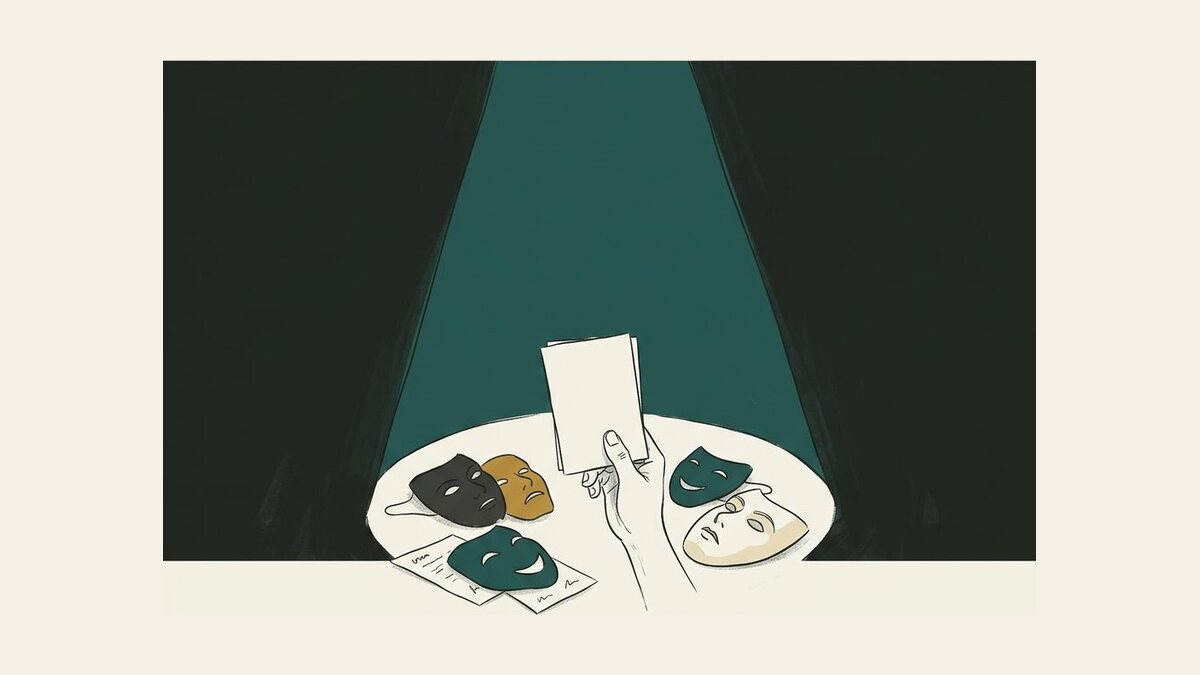
Prologue: Exit Stage Left, Enter Persona
Ask any playwright (or beleaguered GP): characters make stories stick. Long before we memorised antibiotic spectra, we were children sorting the world into “heroes,” “villains,” and that suspiciously quiet kid in the corner who always had glue on their fingers. Psychologists just gave the process fancy names: schema, scripts, and attribution theory. Shakespeare called it “All the world’s a stage.” LinkedIn calls it “personal branding.” Same wine, new leather bag.
The trouble is, once you cast someone, your brain expects them to stick to the script. When they ad-lib—say, the student quotes a paper you’ve not read—the audience in your skull gasps, clutches pearls, and demands the ushers restore order. That gut-tightening moment is cognitive dissonance wearing a feathered cap.
Act I – The Ensemble We Carry
The Expert Cloak You earned the degree(s), the CPD points, the right to frown thoughtfully at PowerPoints. Patients pay not just for treatment but for the performance of competence: the silent nod, the pen poised mid-air like Excalibur above a referral pad.
The Grateful Novice Students, registrars, and first-year associates learn quickly that humility sells. They play wide-eyed recipients of wisdom—until they don’t.
The All-Knowing Patient Armed with Dr Google and a Fitbit, they arrive convinced the rash is a herald of doom. (Spoiler: it’s detergent.)
The Invisible Technician Allied-health clinicians often get cast as extensions of machines: “the X-ray girl,” “the foot guy.” We smile, invoice, plot LinkedIn think-pieces.
Characters aren’t inherently bad; they’re shortcuts that let us navigate social traffic without reading every bumper sticker. Problems erupt when we confuse shortcut with destination.
Act II – When Scripts Collide in the Clinic
Scene 1: The Apprentice Upstages the Master Picture a teaching ward round. The senior consultant deploys a well-rehearsed lecture on diabetic foot ulcers. A final-year podiatry student politely raises a hand: “Actually, the latest Cochrane review downgraded honey dressings to low certainty.” Forty eyeballs swivel. The temperature drops two degrees. Why the chill? Because the student just pirated the consultant’s Expert Cloak mid-monologue. Cognitive dissonance screams, “Rewrite! Rewrite!”
Lazy fix: Scold the student for “tone.” Elegant fix: Thank them, then pivot: “Great catch—let’s all pull that review for journal club.”
Scene 2: The Junior With Jedi Insight Your new grad physio suggests adjusting a long-standing post-op protocol. You helped write that protocol back when fax machines roamed the earth. The recommendation is smart—but threatens the comfort of tradition (and, if we’re honest, ego). If you swat it aside, you teach the team that hierarchy beats evidence. If you embrace it, you risk feeling… dispensable.
Lazy fix: “Let’s park that idea until next quarter.” Elegant fix: Pilot the tweak on a small cohort, harvest data, and—crucially—give the junior first authorship when you present results.
Scene 3: The Patient Who Won’t Stay in Costume Mrs Nguyen arrives with what looks like textbook plantar fasciitis. You cue up the standard spiel. Halfway through, she discloses she’s a retired ballet dancer who’s read twenty journal articles and tried eccentric loading before you finished typing “eccen—”. Your internal director yells “Scene-stealer!” But the better show is co-writing a treatment plan that respects her research and your training.
Act III – Character Policing as a Gateway to Bias
Human brains dislike narrative anarchy so much that we hold casting calls for every social category: gender, race, age, accent. When someone auditions for cardiologist but arrives in a hijab, or for CEO but sports a soprano voice and a stroller, unconscious alarms blare: “Mis-cast!”
Research on stereotype incongruity shows evaluators will often:
Downgrade the newcomer’s competence (“She’s good… for a woman in orthopaedics”).
Attribute success to luck (“He must have had a leg-up; diversity hire, right?”).
Raise performance bars (“Let’s see how she handles the really complex cases”).
Sexism and racism aren’t just cartoon villains twirling moustaches; they hide in these micro re-writes of the script. The offended brain rationalises bias as “maintaining standards,” but the ledger of opportunity shifts all the same.
Act IV – Rewriting the Playbill
Name the Play, Not the Player Instead of thinking “Nurse oversteps,” think “The Nurse Knows More Than Expected trope is activating.” Once abstracted, you can critique the story without crucifying the actor.
Cultivate Script Fluidity Hold protocols like jazz charts: solid backbone, room for solos. Invite junior riffs; keep a clinical metronome so patient safety never drops a beat.
Use the Double-Take Test When you bristle at a colleague’s suggestion, ask: Would I react the same if this idea came from someone wearing my own face? If the answer is “Probably not,” bias is on stage.
Reward Plot Twists Publicly Celebrate students who out-research mentors. Broadcast how the new grad’s idea shaved two days off average length of stay. Spotlighting positive script-breaking trains the audience (and your amygdala) to crave novelty, not fear it.
Write Alternate Endings In morbidity meetings, walk through not just what happened but how assumptions about roles influenced choices. Could a “character swap” have improved the outcome?
Epilogue – The Fourth Wall Is Thin
By now you suspect I’m preaching to myself as much as to you. I once dismissed a junior’s suggestion to schedule wound reviews via telehealth on Saturdays—until our patient-no-show rate plunged the moment we tried it. My Expert Cloak felt drafty that day, but the data looked gorgeous.
If we embrace the idea that identities are costumes, not skin, we gain freedom to redress—and to let others surprise us with wardrobe changes. After all, the best theatre is collaborative; it’s the unscripted laughter, the line flub that lands deeper truth.
So next clinic, when the student quotes Nietzsche, the patient corrects your Latin, or the registrar proposes rewriting your beloved triage algorithm, resist the urge to fling tomatoes. Instead, lean in, applaud the improvisation, and remember: the curtain never really falls. We’re all on stage, always—but we can choose to turn the drama into a delightfully inclusive ensemble piece.
Take your bow. Then hand the mic to someone you least expect to bring the house down.
Fin.