Author attribution not recorded
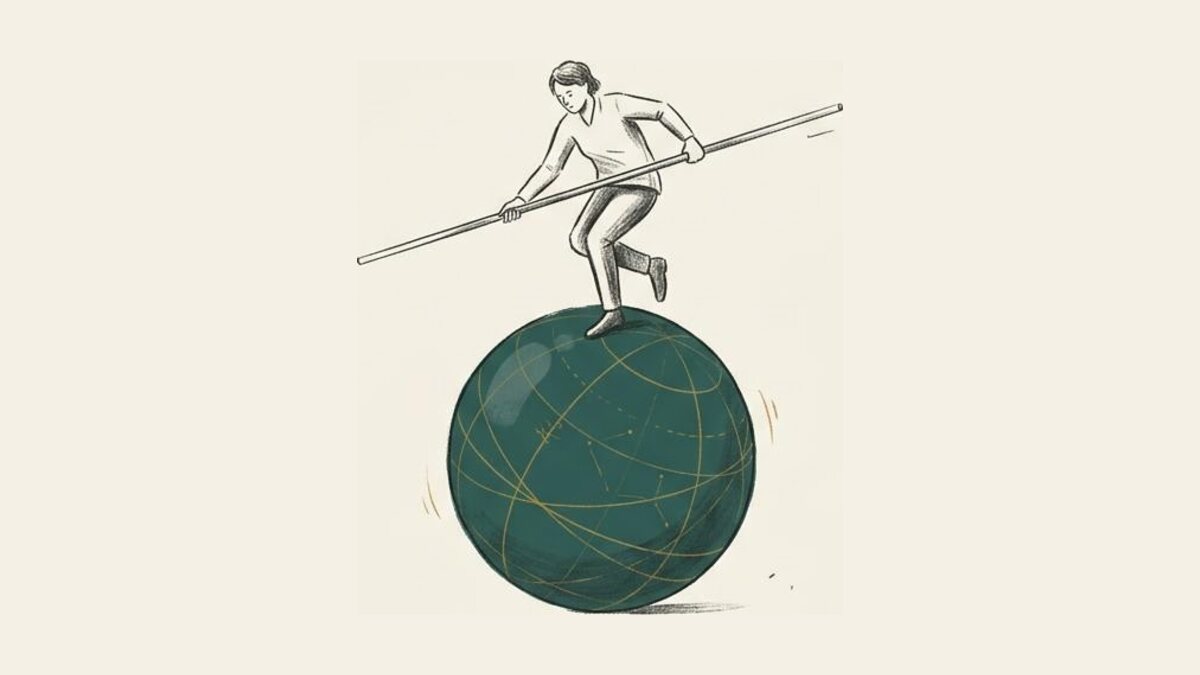
You’re Nowhere Near as Smart as You Think—And That’s the Best News You’ll Hear All Day
The Velvet Hammer of Realisation
At some point—often in the shower, mid-commute, or halfway through a sentence that sounded brilliant in your head—you’re struck by a velvet-covered hammer: I’m not nearly as clever as I assumed. The moment stings, then liberates. It is the flash when an ego built on exam scores, job titles, or word-count trophies cracks open and lets something far more useful leak in: humility.
Intellectual humility isn’t a pose (“I’m so humble—ask anyone”); it’s an operating system upgrade. It swaps the old firmware—certainty, defensiveness, A-plus addiction—for a newer build that defaults to curiosity, fallibility, and delight in being corrected before reality does the correcting.
The Great Borrowed Brain
Our private thoughts feel original, yet they’re knitted from a global, centuries-long conversation that began with cave-painter ochre and now pings between satellites. Every sentence you form is a remix of:
Language refined by billions of tongues.
Concepts debugged by philosophers, scientists, poets, coders.
Evidence gathered by strangers who calibrated instruments you can’t pronounce.
You may own the laptop, but the ideas are on permanent loan from the Library of Everyone Who Came Before. The neuroscientist vs. the novelist vs. the nail-salon philosopher are all streaming from the same cloud of collective cognition—just at different bit-rates.
Realising this doesn’t diminish personal achievement; it reframes it. Your “originality” is a duet with humanity, not a solo. The antidote to self-inflation is awe: stand in front of a giant sequoia or Maxwell’s equations, and your IQ score suddenly feels like a footnote.
Cognitive Fun-House Mirrors
If humility feels unnatural, blame the wiring. Our brains run “clever hacks” that save effort but distort self-assessment:
First, consider the Dunning–Kruger effect: when we lack competence, we often finish a task convinced we “crushed it,” unaware that low skill tends to inflate confidence while genuine expertise usually amplifies self‑doubt.¹
Next comes the illusion of explanatory depth. You may swear you “totally understand how zips work,” yet your explanation collapses after two sentences, revealing that surface familiarity masquerades as deep knowledge.²
Then there’s confirmation bias—the comforting sense that “the data obviously supports me.” In reality, we’re simply cherry‑picking the friendliest facts while ignoring discordant evidence.³
Finally, observe the fundamental attribution error. When someone else makes a mistake, we blame their character (“she’s careless”), but when we slip up, external factors (“traffic was awful”) get the blame.⁴
Humility lies in spotting these cognitive fun‑house mirrors before we fall in love with our own distorted reflections.
Narrative Glue vs. Reality
Humans are story-machines. Give us random dots; we’ll link them into constellations and name them after heroic hunters. We craft self-serving origin myths (“I got here on pure grit”) and villain arcs for rivals (“they’re clueless”).
These narratives:
Simplify chaos—handy for survival.
Sedate ego—comfort food for self-worth.
Distort truth—problematic when piloting aircraft or budgets.
Intellectual humility inserts a latency buffer: Is this story accurate, or merely flattering? The pause is tiny but powerful: reality has a seat at the table before the plot twist.
Flashing Your Brain Bling
Most professions hand out cognitive jewellery—post-nominals, lab coats, corner offices. Displaying them can reassure patients, investors, or dinner parties. The trouble begins when the bling outweighs the substance.
Common moves in the mental peacocking playbook:
Title-Dropping. “As a Senior Principal Genomicist…”
Jargon Bombing. Using “synergistic epistemological frameworks” when “we share ideas” would suffice.
Debunk-and-Dismiss. Labeling dissenters “idiots” to dodge their actual argument.
Each is a social flex that shrinks shared bandwidth. Disagreement should be a dance, not a duel. Humility swaps the rapier for a whiteboard marker: Show me how you see it; I might learn something.
Practising the Discipline of Being Wrong
Humility, like hamstrings, tightens without stretching. Five exercises:
Steel-Manning. Rebuild the opposing view in stronger form than its owner did; then critique that.
Error Journaling. Once a week, jot one belief you updated and how. It normalises course-corrections.
Reverse Mentoring. Let the intern teach you the software, the teenager teach you meme algebra, the patient teach you suffering.
Context Hopping. Read outside your silo—biology for bankers, anthropology for engineers. Strange facts puncture comfy dogmas.
Question Autocomplete. Before replying, finish the sentence, “I might be missing…”
The ROI of Shrinking Your Ego
Better decisions. Humble leaders spot red flags sooner because they invite dissent.
Stronger teams. Psychological safety flourishes when status games fade.
Faster learning. Every correction becomes a data packet, not a dent in self-worth.
Deeper influence. People trust those who admit blind spots; nobody buys from a know-it-all.
In a knowledge economy where yesterday’s expertise depreciates faster than a phone battery, adaptive ignorance beats static brilliance.
A Call to Collective Intelligence
Imagine a LinkedIn feed where:
Experts preface posts with “Hypothesis, not gospel.”
Comment threads resemble seminars over slap-fights.
Credentials signal curiosity, not condescension.
The platform would morph from résumé runway into idea greenhouse. You, reader, are a potential pollinator: like, share, question, retract, revise.
Every contribution—especially the cautious ones—nudges us toward a culture where intellect is measured not by how fiercely we defend our stance, but by how gracefully we evolve it.
Closing Loop: The Joy of Smallness
Astronomers say there are more stars than grains of sand; neuroscientists say your brain runs on the electrical budget of a dim light bulb. Somewhere between those cosmic and cortical scales sits a truth: we are tiny processors surfing an infinite data stream, and that’s exhilarating.
Because the moment you admit you’re not the smartest in the room—or on the planet, or in the comment thread—you stop guarding imaginary territory and start exploring real frontiers.
So here’s your homework: the next time someone pokes holes in your cherished idea, thank them. They’re not deflating your intellect; they’re showing you where to expand it.
And expansion, not ego, is the real proof of intelligence.
References
Kruger J, Dunning D. J Pers Soc Psychol. 1999;77(6):1121-1134.
Rozenblit L, Keil F. Cogn Sci. 2002;26(5):521-562.
Nickerson RS. Rev Gen Psychol. 1998;2(2):175-220.
Ross L. Adv Exp Soc Psychol. 1977;10:173-220.
(Feel free to fact-check; intellectual humility starts here.)