Author attribution not recorded
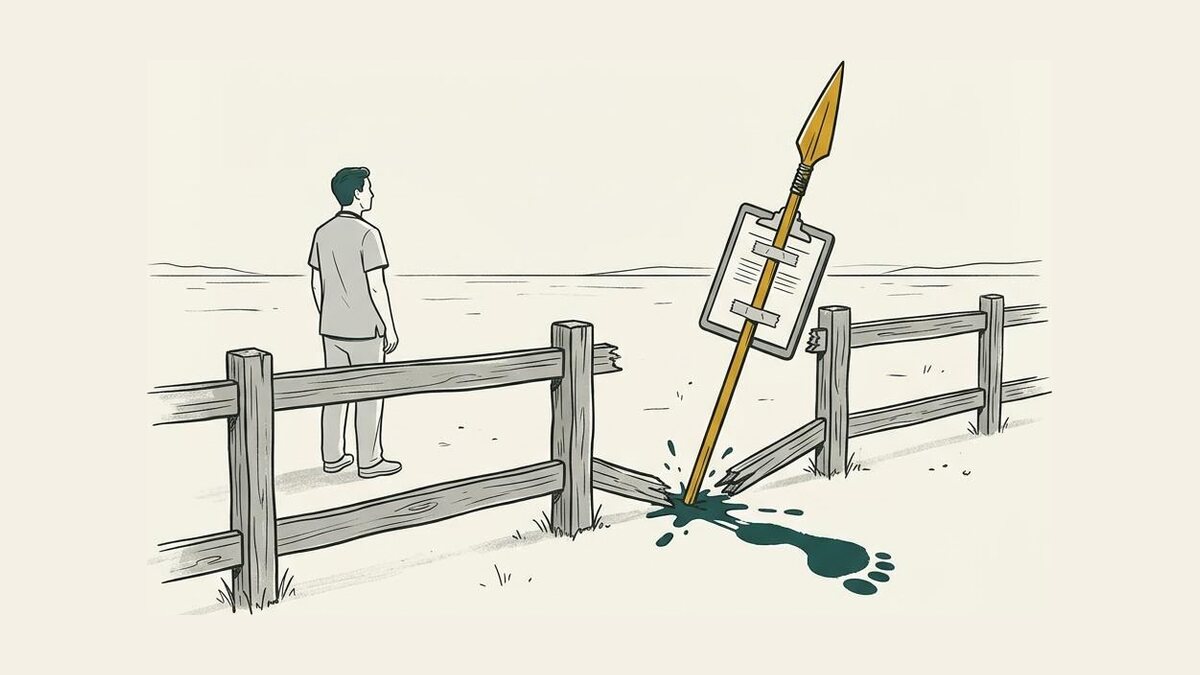
A ramble from the trenches of podiatry—and journalism—about why sitting on the fence only gives you splinters, and how The Footnote files those splinters down to points.
Prologue: Coffee-Stained Eye-Rolls
It started, as these things often do, with the angry hiss of a coffee machine failing at its one job. My colleague—let’s call him Dr R, because anonymity is chic—leaned against the bench, eyes like centrifuges spinning frustration into something dangerously close to rage.
“I’m sick of it, Steve. Every time I read a piece by some medical commentator they spend two thousand words balancing on a rhetorical tightrope, terrified they might fall on the wrong side of an opinion. Ask them a straight question and they vanish behind both-sides platitudes.”
The hiss curdled into an awkward silence. Outside the clinic window, a magpie worked a grub loose from the turf with more conviction than half the pundits in the health pages. Dr R pushed his glasses up the bridge of his nose—always the pre-rant tell.
“Why does no one commit anymore? Why can’t they just say the thing?”
I had no answer worth voicing then. But I do now, and you’re reading it.
Chapter 1: The Myth of Objective Neutrality
Journalism schools once sold neutrality as the gold standard. Hear all sides, present facts, keep the columnist’s fingerprints off the lens. In politics, that yielded bland stenography; in medicine, it produced a chorus of “on the one hand” essays that left clinicians more bewildered than enlightened.
Neutrality is tidy on paper. It is also dangerous when weaponised as evasion. When an article about, say, prescribing antibiotics for clearly viral infections “balances” the views of infectious disease experts against the lone GP who swears by it, readers exit thinking controversy equals equipoise. Meanwhile, antimicrobial resistance creeps ever forward.
True objectivity isn’t the absence of opinion; it is the presence of accountability. The moment evidence leans decisively one direction, refusing to lean with it isn’t neutrality—it is negligence dressed in grey.
Chapter 2: Why Fence-Sitting Persists
Fear of backlash tops the list. Twitter X (or whatever it is this quarter) can dog-pile faster than a step-counting app after New Year’s Day. A rookie medical journalist who dares call a spade a wildly unnecessary laparotomy may end the day with their inbox aflame.
Then there’s the false idol of access. If you need the quote again tomorrow, you hesitate to bite the hand that feeds you soundbites. The addiction runs deep in specialist beats like health, where the difference between landing and missing the next Lancet embargo is the difference between traffic spikes and editors’ sighs.
Last comes a cultural hangover I’ve dubbed credential paralysis. Clinicians, trained to hedge every statement in layers of statistical modesty, often carry that caution into prose. P < 0.05 becomes “suggests we might cautiously infer,” and suddenly your article reads like it’s apologising for existing.
Chapter 3: A Different Kind of Footnote
Enter The Footnote. Yes, we reference everything—we are hopeless bibliophiles with Vancouver on speed-dial—but we also do something scandalous: we own our stance. If a guideline is ridiculous, we say so and explain why. If a professional body hides behind weasel words, we quote them and eviscerate the logic with diagrams, metaphors, and the occasional Star Wars reference.
Our unofficial style guide runs on three axioms:
Evidence first, courage second, humility third—because bravery without facts is just volume, but facts without bravery are inaudible.
Transparency over tidiness—we show the messy process: the espresso-fuelled lit-search at 2 a.m., the Slack argument over whether an odds ratio of 1.8 is clinically meaningful, the subsequent mea culpa when a reader finds our typo in Figure 3.
No sacred cows—if podiatrists, GPs, orthopods, or indeed us are perpetuating shabby care, the holy barbecue commences immediately.
This triad doesn’t merely critique fence-sitting; it offers an alternative: evidence-anchored opinion with its receipts taped to the cover.
Chapter 4: Anatomy of a “Real” Conversation
Back to Dr R. He rattled off examples: the columnist who wrote 1,500 words on prescribing rights yet never said whether podiatrists should prescribe; the podcast host who asked zero follow-ups when an interviewee claimed their proprietary insole “cured” plantar fasciitis.
“You’re publishing that Footnote thing,” he prodded. “Why don’t you write about this?”
I laughed. “Because then I have to choose which expletive makes it past the editor.”
He shrugged. “Pick all of them. But pick something.”
So we did. We sketched the blueprint for this piece on a napkin cross-hatched with coffee rings and cheap pen. Then we drafted it, scrapped it, redrafted at midnight when the clinic lights hummed like tinnitus, and eventually shipped a version blistered with red-lined comments from our peer-review Slack channel.
Chapter 5: But What if We’re Wrong?
A fair question, and one fence-sitters deploy as a force-field. What if new evidence emerges? It will. When it does, we pivot. The trick isn’t to avoid opinions; it’s to avoid marrying them. The Footnote treats positions like running shoes: wear them hard, replace them when the tread goes.
Being forthright today doesn’t preclude mea culpas tomorrow. It simply signals that until such data arrives, clinicians and patients deserve a clear view. Uncertainty is not a reason to mute; it is a reason to declare your priors loudly so readers can judge the bias in daylight.
Chapter 6: Call to Arms (and Pens, and Keyboards)
If you read The Footnote, you’re likely part of a healthcare tribe that values clarity over comfort. Here’s the deal: we need more voices willing to risk an eyebrow singe when the sacred cows catch fire. We need you to submit, comment, rebut, amplify.
Write the op-ed on why Medicare’s item numbers reward procedural volume over preventative nuance. Draft the satire on “luxury” orthotics with in-built Bluetooth speakers. Pen the manifesto explaining why multi-disciplinary collaboration still fails when hierarchy trumps evidence. Sign it with your name—or a pseudonym if your board is delicate—but sign it with a stance.
Epilogue: Splinters Well Spent
Dr R still rants, bless him. But now when he does, I can point to this URL and say, We answered the question, picked a side, and named the fence for what it is: a convenient vantage that stinks of timidity.
Will we get things wrong? Absolutely. Will we irritate people? Weekly, if our metrics hold. But the alternative—another grey wash of “both sides have merit” where one side peddles snake-oil—helps no one, least of all the patients whose feet, limbs, or lives hang on informed decisions.
So here’s to splinters turned to spears, to journalistic courage forged in clinic corridors, and to a Footnote loud enough to make the magpies look up from their lawns and wonder who finally shouted the obvious.
Now pick a side.