Author attribution not recorded
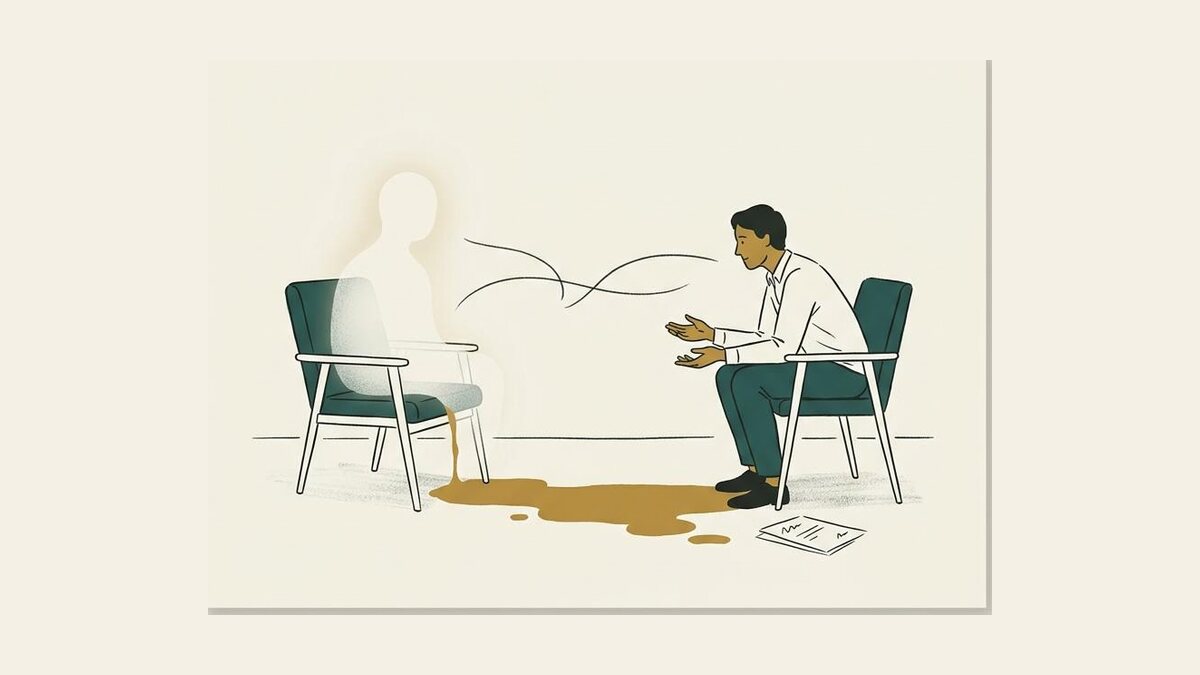
My brother had been seeing doctors for years.
Different doctors. Different appointments. The same basic problem: things were wrong, he knew things were wrong, and somehow the machinery of healthcare kept turning without getting him where he needed to go.
Eventually he started talking to ChatGPT.
It did not examine him. It did not order anything. It did not practise medicine. It gave him something much more consequential than that.
It gave him questions.
It helped him understand what his results might mean, what had and had not been investigated, what possibilities remained and what investigations might reasonably be discussed. At one point it suggested that he ask about a FibroScan.
So he did.
And eventually he got a result.
There is an enormous conversation happening in healthcare about the danger of patients arriving armed with information from AI.
I think we may be having the wrong conversation.
Because what happened to my brother was not that AI replaced his doctor.
It changed my brother.
He was no longer entirely dependent on the person sitting opposite him to determine which questions were available to ask.
That distinction matters.
For most of the history of modern healthcare, there has been an extraordinary information asymmetry between clinician and patient. Becoming a clinician required years of study, considerable sacrifice and the acquisition of an enormous body of specialised knowledge. We learned another language. Anatomy. Pathology. Pharmacology. Diagnostics. Treatment algorithms. Thousands upon thousands of associations between symptoms, signs, diseases and interventions.
That achievement is real.
I have done it.
It is fucking hard.
But something uncomfortable has happened.
A substantial part of that informational advantage can now be purchased for twenty dollars a month.
Not clinical experience. Not judgement. Not examination. Not procedural skill. Not responsibility.
Information.
An ordinary person can sit on the couch at eleven o'clock at night with their pathology results and have a remarkably sophisticated conversation about what those results mean. They can ask for differential diagnoses. They can ask what guidelines recommend. They can ask what questions they should take to their appointment. They can ask what their doctor might have missed.
AI can be wrong.
So can we.
That second sentence seems strangely difficult for healthcare to say out loud.
Warnings about AI safety are meaningless without a comparator. The relevant comparison is not AI against some imaginary omniscient clinician with unlimited consultation time, perfect recall, no cognitive biases and immediate command of every current guideline.
The comparator is us.
Real clinicians.
Working tired. Running late. Remembering something we learned fifteen years ago. Anchoring on the first plausible diagnosis. Pattern matching. Forgetting. Assuming. Occasionally bullshitting. Sometimes failing to check because we are sufficiently confident that we don't realise we should.
Anyone who has spent enough time inside healthcare has seen this.
The extraordinary thing about clinical error is not that clinicians make mistakes. Of course we do. We are human beings working with incomplete information in enormously complex systems.
The extraordinary thing is how often healthcare discusses the fallibility of every source of knowledge except itself.
Now something has arrived that changes the equation.
The patient can ask back.
That is what interests me about AI.
Not the fantasy of replacing every doctor with a chatbot.
The informed patient.
Because information creates friction.
A patient who knows nothing can be dismissed with a sentence.
A patient who understands enough to ask the next question is harder to dismiss.
Why?
What else could explain this?
Why don't you think that investigation is appropriate?
What would make you investigate it?
Is that consistent with the guideline?
Could we check?
The clinician may have excellent answers to every one of those questions.
Good.
Give them.
Expertise should survive interrogation.
What should not survive is authority that depends upon nobody being sufficiently informed to challenge it.
I hear clinicians complaining about patients arriving with diagnoses from Google and increasingly from AI.
I see the opposite almost every day.
Patients come to me saying they think they have plantar fasciitis.
Most of the time they're right.
It is common. It has a characteristic presentation. People know other people who have had it. They have searched their symptoms. They have read about it.
Fantastic.
You haven't taken anything away from me by correctly identifying your own plantar fasciitis.
You have saved us some time.
Now let's work out whether you're actually right.
And then we can get to the interesting part.
Because knowing the name of something is not the same as understanding it.
Someone comes through my door hobbling. They are sore. Often frustrated. Sometimes frightened. They may have stopped exercising. They may be worried about work. They may think something is permanently damaged. Sometimes they have already been somewhere else and come away feeling dismissed.
I have literally had a patient tell me a GP told them to get over it.
So before I start demonstrating how clever I am, I often tell them something considerably more useful.
We see this all the time.
It is treatable.
You can sometimes watch the anxiety leave their face.
That is healthcare too.
Then I explain what I think is happening.
I use metaphors. I draw things. I demonstrate things. I want the patient to leave understanding their problem well enough that the treatment makes intuitive sense.
With footwear I don't just tell someone they need a "supportive shoe."
What the hell does that mean to someone who hasn't spent years thinking about feet?
I pick up their shoe.
I bend it.
I twist it.
Then I show them what I'm looking for.
A useful shoe should do some of the heavy lifting for you. It should resist where I want it to resist and flex where I want it to flex. Now the patient doesn't just know which shoe I recommended. They understand something about why.
Next time they walk into a shoe shop, they can pick one up themselves.
That is the point.
I don't want dependence.
I want understanding.
Then we talk about treatment.
Not: here is what I have decided you will do.
Here are our options.
Here is why this one might work.
Here is how long it might take.
Here is what it costs.
This one can hurt.
This one might not work.
This is what I would try first.
This is what we can do next.
What are you trying to get back to?
What matters to you?
Then we formulate realistic goals together.
I also make a deliberate effort to tell patients what is right with them.
Healthcare has an extraordinary pathology bias. We examine people in order to identify abnormalities and then spend the consultation listing them.
Imagine being on the receiving end of that your entire life.
Sometimes I will tell someone that they have good foot structure. Their skin looks healthy. Their nails are healthy. Their circulation is good. They've bought good shoes. They've already made sensible changes. They've lost weight. They've kept active despite what has been happening.
People respond to this.
Feet in particular carry enormous embarrassment for some people. Patients apologise to me for them.
They have spent years hearing what is wrong with their bodies.
It costs me nothing to tell them what is right.
Then there is something even less sophisticated.
We chat.
I know things about my patients.
They know things about me.
Many know about my daughter, Thea. They ask how she is. I know about their holidays and their grandchildren and the caravan and the operation their husband had and whether they finally managed to get back to bowls.
There are consultations happening around me where almost none of this occurs.
Everything is business.
Question. Answer. Examination. Treatment. Next.
Perhaps it is efficient.
But if healthcare decides that its future lies in becoming an efficient information transaction, I have some unfortunate news.
A machine is going to be considerably better at that.
This is where I think healthcare has profoundly misunderstood the threat from artificial intelligence.
We keep asking what AI will take from clinicians.
Perhaps we should ask what it gives us permission to reclaim.
For decades we have progressively industrialised healthcare.
More throughput.
More metrics.
More documentation.
More billing codes.
More protocols.
Shorter appointments.
Standardised pathways.
Productivity targets.
The human relationship becomes the inefficient bit left around the edges.
Have a chat if there is time.
There is never time.
And then AI arrives and healthcare responds by desperately defending the very part of clinical practice that machines are becoming extraordinarily good at.
Information retrieval.
Recall.
Pattern recognition.
Summarisation.
Differential generation.
Guideline retrieval.
Perhaps we have this exactly backwards.
Let the machine be a machine.
It is fucking brilliant at it.
That gives us an opportunity to become human again.
I see this most clearly with frightened patients.
I do procedures. Needles. Nail surgery. Things people are understandably anxious about.
I tell anxious patients something very simple.
You are in the captain's chair.
I am not going to do anything without telling you what I am doing. If you want me to stop, tell me to stop.
You remain in control.
It changes things.
Because fear is not merely about pain. It is often about surrendering control to somebody you barely know while they do something to your body.
So give the control back.
If someone gets through something they were terrified of, I tell them they did well.
I celebrate their bravery.
None of this is technologically sophisticated.
There is no billing code for it.
There probably isn't a KPI.
But I would argue that it is every bit as much a part of clinical competence as remembering another differential diagnosis.
Perhaps more importantly, it is becoming part of what distinguishes us from the machine.
This should not frighten good clinicians.
It should liberate them.
If you are a GP who became a doctor because you wanted to know people, understand their lives and care for families over decades, AI does not have to be your enemy.
Use the fucking thing.
Let your patients use it.
Welcome the patient who has done some homework.
Correct them when they're wrong without humiliating them.
Ask what they found.
Explain why you disagree.
And when they're right, say so.
You lose absolutely nothing by acknowledging that the person who has inhabited their body every second of their life might occasionally have noticed something useful.
But GPs also need to confront something much harder.
You cannot provide this kind of care indefinitely inside systems designed to prevent you from providing it.
Ten-minute medicine is a structural choice.
If the business model requires human connection to be squeezed between documentation and the next patient waiting outside, challenge the business model.
Push for longer appointments.
Find clinics that practise differently.
Build them.
Join other clinicians.
Experiment with cooperative models.
Fight for funding structures that reward care rather than throughput.
Start your own fucking clinic if you have to.
We should stop treating terrible healthcare systems as though they were weather.
We built them.
We can build something else.
And surgeons should be paying attention too.
Your technical ability matters.
Obviously.
If you are going to cut me open, I would very much like you to be exceptionally good at it.
But don't mistake technical skill for the entirety of your value as a human clinician.
If a robot eventually performs your operation more accurately, more consistently and more safely than you do, I will choose the robot.
Why wouldn't I?
I don't need humanity holding the scalpel.
I need humanity before it.
I need someone when I'm frightened.
I need someone to explain the choice without performing certainty.
I need someone to tell me honestly what recovery might involve.
I need someone who remembers that a two per cent complication is not two per cent to the person experiencing it.
I need someone when the surgery technically succeeded but I am still in pain.
I need someone when the recovery doesn't follow the beautiful postoperative trajectory you described before the operation.
I need someone who doesn't lose interest in me when the technically interesting part is over.
Your operation may be replaceable.
Care isn't.
This is why I have very little sympathy for the clinicians running scared from informed patients.
If your professional authority depends upon the person opposite you knowing less than you, you should be scared.
That world is disappearing.
And perhaps it should.
For too long healthcare has tolerated the asshole clinician because they were brilliant.
The brilliant surgeon who treats people like shit.
The doctor who doesn't listen.
The clinician who talks at patients.
The specialist who regards questions as challenges.
The practitioner who cannot say "I don't know."
The person who walks into the room carrying the enormous confidence conferred by a title and expects everyone else to arrange themselves accordingly.
We excused it because knowledge was scarce.
He's an asshole, but he's brilliant.
That bargain is becoming much less attractive.
Because now I can have extraordinary information available instantly without being humiliated.
So what exactly are you bringing?
That is the question AI is going to force healthcare to answer.
And I think the answer could produce something wonderful.
Not the end of doctors.
Not the end of nurses.
Not the end of podiatrists, physiotherapists, psychologists, pharmacists, surgeons or any of the other people who spend their lives caring for other human beings.
The end of a particular idea of what made us valuable.
Maybe the clinician of the future is not the person who possesses the most information.
Maybe it is the person who can do the most with it.
The person who can determine what matters.
Who notices what doesn't fit.
Who examines.
Who treats.
Who explains complexity without performing superiority.
Who can hold uncertainty without becoming paralysed by it.
Who knows when to check.
Who can tell somebody they're wrong without making them feel stupid.
Who understands that an informed patient is an asset rather than an insurrection.
Who knows that the patient's goals matter more than the treatment algorithm.
Who notices fear.
Who reassures without lying.
Who remembers that there is an entire human life attached to the pathology they are treating.
And who cares.
Actually cares.
We have spent years calling these things "soft skills."
What an extraordinary mistake.
The ability to memorise enormous amounts of medical information may turn out to have been the soft skill.
We built machines that can do it.
Human connection is hard.
Listening is hard.
Remaining curious about the hundredth patient with the same diagnosis is hard.
Sitting with uncertainty is hard.
Maintaining compassion when you are tired is hard.
Explaining something for the thousandth time as though it is the first time matters because, for the frightened person sitting opposite you, it is the first time.
Giving away authority is hard.
Admitting you were wrong is hard.
Caring is hard.
That is where I want the profession to go.
I don't want clinicians competing with artificial intelligence.
I want us liberated by it.
Let AI remember every obscure association.
Let it search the guidelines.
Let it interrogate the pathology results.
Let it generate twenty differential diagnoses in three seconds.
Let patients have access to it too.
Especially patients.
Give them information.
Give them vocabulary.
Give them questions.
Give them enough knowledge to create friction when healthcare stops listening.
My brother should not have needed years of appointments before acquiring the right question.
There will be thousands of people like him.
Some will arrive at completely wrong conclusions.
Fine.
Talk to them.
Some will have frightened themselves with possibilities that aren't remotely plausible.
Reassure them.
Some will have found something you didn't consider.
Listen.
And sometimes a patient is going to walk into your room carrying an AI-generated question that prevents you from making a mistake.
Thank them.
That isn't the destruction of professional authority.
It is what professional maturity looks like.
Healthcare has an extraordinary opportunity sitting in front of it.
We can spend the next decade defending our territory, sneering at patients with ChatGPT, protecting titles, insisting that nobody without our training could possibly understand what we understand, and trying desperately to preserve an information hierarchy that technology has already started dismantling.
Or we can decide that information was never the most important thing we gave people.
Use the tools.
Welcome the informed patient.
Explain things properly.
Fight for enough time to listen.
Build different practices if the existing ones won't let you.
Know your patients.
Let them know you.
Laugh occasionally.
Tell people what is right with them.
Celebrate progress.
Give them control.
Tell them when something will hurt.
Tell them what it will cost.
Admit uncertainty.
Check when you don't know.
Put down the fucking performance of authority and meet the human being sitting opposite you.
The future of healthcare does not need clinicians to become better machines.
We have machines now.
It needs us to become better humans.
For those of us who have always wanted to practise that way, this is not a threat.
It is an extraordinary opportunity.
An opportunity to reclaim our purpose.
To remember why many of us entered healthcare before productivity targets, corporate structures, professional hierarchies and institutional bullshit slowly taught us to behave differently.
To redefine what excellence looks like.
To make care valuable again.
And perhaps to build a healthcare system in which a patient does not have to surrender their agency in exchange for expertise.
The good clinicians will thrive in that world.
I think many of them have been waiting for it.
As for the dismissive ones, the arrogant ones, the ones whose authority depended on ignorance, the ones who had nothing left to offer once the information monopoly disappeared:
Your time is coming to an end.
You can rediscover your humanity and come with us.
Or you can become what you spent your career terrified AI would make you.
Obsolete.