Author attribution not recorded
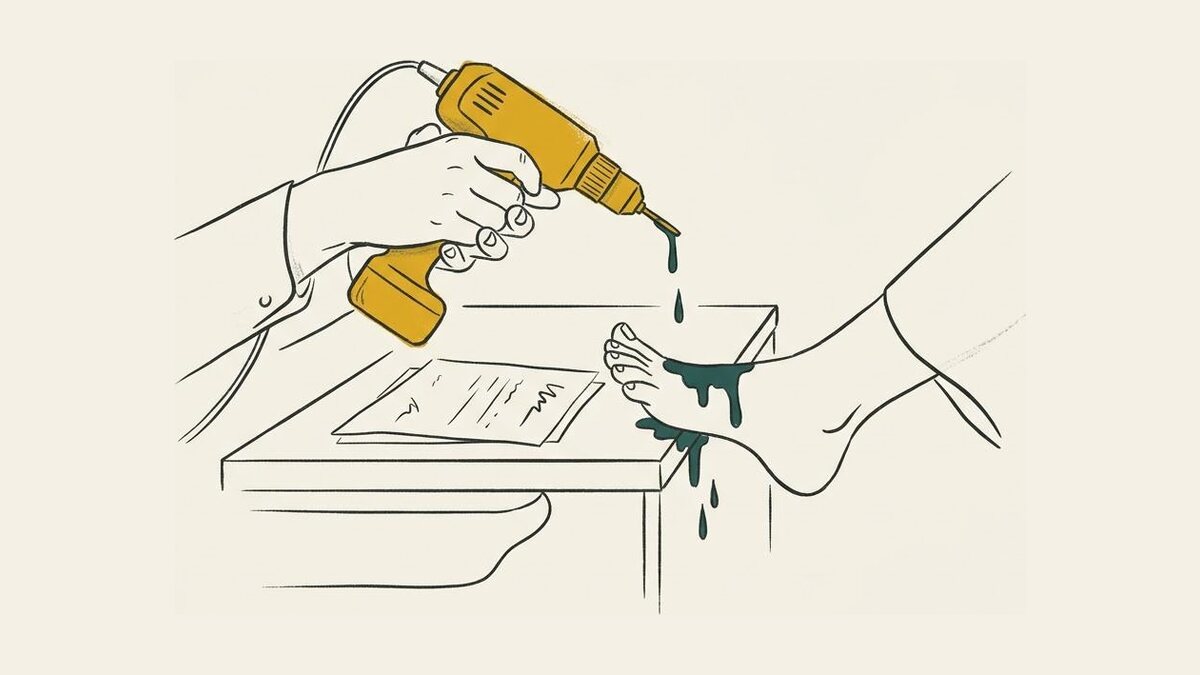
A deep dive into regulation, infection-control roulette, and why your “pamper day” might just be practicing medicine on the cheap.
Scene-Setter: When a Pedicure Turns Prescription-Strength
In 2000 more than 100 Californian women left a day-spa with months of painful boils rather than pretty toes, thanks to Mycobacterium fortuitum breeding in the salon’s foot-spas.(1) Two decades later podiatrists across Australia are still patching up fungal, bacterial, and chemical fallout from nail salons that work one pumice-stroke beyond their pay-grade.(2) So where’s the line between a cosmetic indulgence and the practice of podiatric medicine without a licence—and why is that line so blurry?
A $1.3-Billion Industry Built on a Regulatory Patchwork
Australia’s nail sector rides under state “personal-appearance” legislation designed for everything from ear-piercing to tattooing, not medical foot care.
NSW—salons performing “skin penetration” must follow the Public Health Regulation 2022 and an infection-control manual largely enforced by local councils.(3)
Victoria—similar requirements live inside the Public Health and Wellbeing Act 2008, but registration, inspection frequency, and penalties differ suburb-to-suburb.(4)
Queensland—classifies nail services as “non-higher-risk personal appearance”, meaning no mandatory licence or infection-control qualification unless blood is expected.(5)
Translation: an ingrown toenail accidentally “released” in Brisbane gets less scrutiny than the identical cut in Melbourne—yet both could seed cellulitis within hours.
Evidence of Harm: Not Just “A Few Horror Stories”
Infections You Can’t Un-see
Rapidly-growing mycobacteria: 97 % of foot-spas cultured in a US multi-salon survey carried NTM; whirlpool design, biofilm, and warm water are perfect incubators.(1)
Australian case-series: podiatrists report upticks in onychomycosis, paronychia, and aggressive pseudomonal “green nail” following salon visits, especially where rotary drills are used on broken skin.(2,6)
Chemical burns & cellulitis: inadequate temperature checks and reused callus blades have produced third-degree burns, secondary cellulitis, and even hospital admissions in negligence claims.(7)
Worker & Bystander Toxicology
A 2024 Environmental Pollution study measured organophosphate esters (OPEs) at 582 ng/m³ in salon air—levels associated with increased cancer risk for workers after a single shift.(8) Add ultraviolet lamps, acetone vapour, and awkward postures, and you have an occupational-health perfect storm that rarely features in glamour ads.(9)
Scope-Creep: When “Polish Change” Becomes Clinical Care
Callus debulking & heel fissures—debriding living tissue crosses into the Health Practitioner Regulation National Law definition of podiatry practice.
Ingrown nail “corrections”—splinter removal and lateral edge excision risk nerve damage and osteomyelitis.
Foot pain assessment—some salons sell “orthotics” or diagnose plantar fasciitis. That’s clinical judgement, not cosmetic service.
Yet technicians need no anatomy training; a quick Cert III in Nail Technology focuses on colour wheels, not capillary refill.
Why Podiatry’s Reputation Matters
The more the public equates nail care with mere aesthetics, the easier it is for regulators to leave it in the “beauty” bucket. Podiatrists follow AHPRA’s infection-control standard—the same framework binding surgeons—autoclaving to 134 °C, documenting every sterilisation cycle, and carrying malpractice insurance. A salon steriliser fails a spore test? There may be no legally required follow-up. Cutting prices means cutting corners, feeding the “cheap and cheerful” expectation that undermines respect for specialist foot care.
The Optics: Research Gaps and Media Spotlight
Academic literature still skims the surface: a handful of outbreak analyses(1,10) and toxic-exposure papers(8) sit beside worker-wellbeing reviews pleading for more data.(9) Meanwhile, consumer media runs periodic exposés (“Green nails ruined my holiday!”), but no national surveillance captures salon-linked infections the way hospitals audit surgical site infections. The absence of data is wielded as evidence of absence of risk.
Towards Safe, Evidence-Based Nail Care
The problems with nail salon regulation aren’t new—but they are fixable. Here’s what needs to happen:
First, regulatory consistency is essential. Right now, infection-control laws vary wildly across states. Australia needs nationally harmonised standards for all skin-penetration services, including mandatory audits—not just guidelines that gather dust in council filing cabinets.
Second, we must raise the bar for training. Nail technicians should be required to complete nationally recognised infection-control units like HLTINF005. That means proper understanding of sterilisation, single-use tools, bloodborne pathogens, and the risks of working on compromised skin. This training should be subsidised by governments and supported by the beauty industry.
Third, we need real data. Salon-acquired infections should be part of national notifiable disease reporting. If a toenail procedure leads to cellulitis, the public health department should know about it—just like it would for food poisoning or MRSA.
Fourth, there must be a clear scope of practice. National consumer safety agencies and professional groups (like the Australian Podiatry Association and the Beauty Industry Council) should co-develop a public list of permitted and prohibited procedures in nail salons. For example: no cutting live tissue, no treating ingrown nails, no foot drills on cracked heels.
Fifth, consumers need transparency. A public, searchable “Gold Standard Salon” scheme could empower clients to choose facilities that meet high infection-control and safety benchmarks. Think QR-coded stickers on salon windows that link to inspection histories.
These changes are doable—but they’ll only happen if we take foot care seriously. Until then, podiatrists will keep cleaning up the mess.
What You Can Tell Patients Tomorrow
Skip the jets—plain basins cleaned between clients beat whirlpool foot-spas.(3)
Look for sealed packs—sterile instruments come bagged with colour-change indicators.
Walk away from blood—any sign of skin penetration should trigger an immediate stop and a podiatry referral.
If it’s too cheap to believe, believe it’s too cheap.
Conclusion: Time for Regulation That Matches the Risk
Nail salons fill a genuine cosmetic niche, but when they drift into debridement, diagnosis, or invasive care without clinical training or infection-control parity, they are practising podiatric medicine without a licence. The cost lands on podiatrists, GPs, hospitals—and patients who just wanted pretty nails.
Until Australia treats every cuticle snip with the same public-health seriousness as a scalpel nick, we’ll keep scrubbing up the mess. The Footnote will be watching—because the real polish is in evidence-based, patient-centred foot care.
References
Vugia DJ, Jang Y, Zizek C, et al. Mycobacteria in nail salon whirlpool footbaths, California. Emerg Infect Dis. 2005;11(4):616-618. wwwnc.cdc.gov
Powell R. Podiatrists say you’re at “high risk” of infection when visiting nail salons. ABC News. 5 Feb 2020. ABC
NSW Health. Cleaning and disinfection of foot spas [fact sheet]. 2022. NSW Health
Department of Health Victoria. Infection prevention and control guidelines for hair, beauty, tattooing and skin penetration industries. Updated June 2020. Health Victoria
Queensland Health. Infection Control Guidelines for Personal Appearance Services 2024. Queensland Health
Leading Edge Podiatry. Risks of nail salons and foot health. 2025. Leading Edge Podiatry
Expert Institute. Alleged negligence in nail salon safety leads to severe burns and infection [case study]. 2023. Expert Institute
Jia T, Keller AA, Gao L, et al. Organophosphate ester exposure in nail salons: health implications for workers. Environ Pollut. 2024;362:125013. eScholarship
Quach T, et al. Interventions targeting health and wellbeing among nail salon workers: a scoping review. Ann Work Expo Health. 2022;66(7):827-845. Oxford Academic
Winthrop KL, Albridge K, South D, et al. Clinical management and outcome of nail salon-acquired Mycobacterium fortuitum infection. Clin Infect Dis. 2004;38(1):38-44. Oxford Academic