Author attribution not recorded
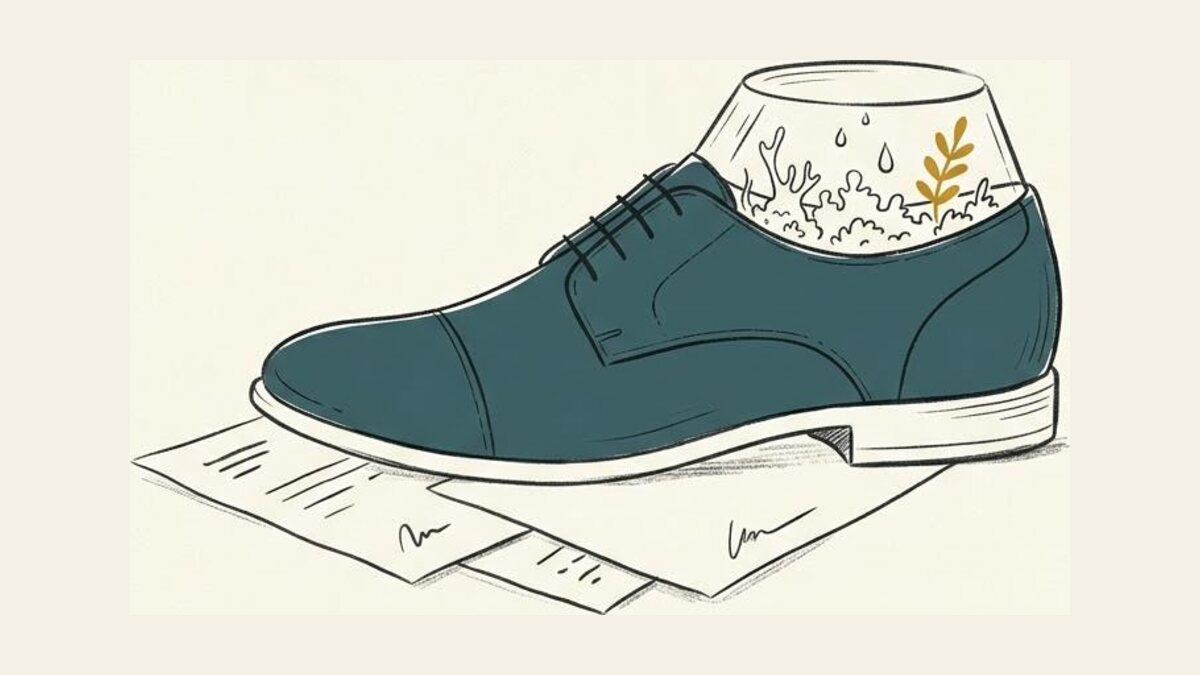
I did an undergraduate degree in genetics, which sounds impressive until you read the fine print: it came bundled with compulsory units in microbiology.
I hated microbiology.
Not casually. Not selectively. Completely.
Endless Latin names. Endless diagrams. Endless lectures delivered with the emotional tone of a laminated instruction sheet. So, in a moment of academic integrity that should probably disqualify me from all future teaching roles, my mates and I made a pact:
We would never attend a microbiology lecture sober.
And for the most part, that worked.
Except for one lecturer.
There’s always one.
He stood there with a piece of chalk (yes, I'm that old) and quietly dismantled the entire narrative I didn’t realise I’d absorbed: that pathogens exist for us. That they are designed, somehow, to invade humans as their primary purpose.
He argued the opposite.
Many so called pathogens, he said, don’t have a lifecycle in humans at all. Their real home is the soil. Their real function is to break down environmental proteins. Humans are incidental. We just happen to carry proteins that look similar to what they were built to digest.
We are not the main character.
We are a coincidence.
And that idea has followed me far more faithfully into podiatry than anything I learned while half listening with a hangover. Because once you see microbes that way, you stop asking, why is this organism attacking me, and start asking something much more useful: what does this organism normally do, and why does my foot look like the perfect place to do it?
Take dermatophytes.
The villains of the foot. The cause of tinea. The explanation for thick, discoloured nails. The thing lurking in communal showers waiting to ruin your life.
That’s the story we tell.
But what if it’s the wrong story?
Dermatophytes are not, primarily, foot organisms. They are keratin digesting organisms. In nature, that makes them recyclers. They break down tough structural proteins, hair, skin, nails, organic debris, and return them to the system.
That’s their job.
Human keratin just happens to be a convenient version of the same material.
So when we say fungal infection, what we’re often really describing is an organism doing exactly what it evolved to do in a microclimate we’ve carefully engineered inside a sock and shoe.
Warm. Dark. Moist. Stable.
A perfect little terrarium.
And this is where the language quietly misleads us.
We call it a fungal infection. But much of what we see in clinical practice is more accurately described as fungal colonisation.
That distinction matters.
Colonisation is when an organism lives on a surface, feeding, persisting, existing, without invading living tissue or triggering a meaningful host response.
Infection is different. Infection requires tissue damage and or an immune response. Redness. Pain. Swelling. Breakdown. The body recognising a threat and reacting to it.
A thickened, yellowed, crumbly nail that has been slowly changing over five years, with no pain, no inflammation, no systemic response?
That’s not a battlefield.
That’s a habitat.
The fungus isn’t invading your bloodstream. It’s sitting in a slab of keratin, doing what fungi do to keratin.
Which doesn’t make it trivial. But it does make it different.
In medicine, we’re taught the classic trilogy of disease: host, environment, pathogen. Disease occurs when these three align. It’s a useful model. But in podiatry, it’s incomplete.
Because feet don’t just exist biologically.
They exist mechanically.
So for fungal presentations, particularly nails, we need to add a fourth pillar: biomechanics.
Because colonisation doesn’t just appear out of nowhere. It is often preceded by a change in the substrate. And that change is frequently mechanical.
Onychomycosis rarely begins with a pristine nail suddenly infected out of the blue.
More often, it begins with trauma. Microtrauma from footwear. Repetitive loading. Running. Steel caps. Toe deformity. Forefoot equinus. Digital crowding. The nail thickens. Lifts. Distorts. Separates slightly from the nail bed. Blood supply changes. The architecture is no longer smooth, compact, and resistant.
In other words, the keratin becomes easier to digest.
Only then does the fungus arrive. Or more accurately, only then does it thrive.
The sequence matters:
Biomechanical stress leads to nail dystrophy, then fungal colonisation.
Not the other way around.
Which is why you can treat the fungus perfectly and watch it come back.
Because the environment didn’t change.
The host didn’t change.
And the biomechanics certainly didn’t change.
Then there’s the host.
We often reduce this to are they diabetic or not, but it’s broader than that. Diabetes alters immune response, vascular supply, and skin integrity. Peripheral vascular disease reduces tissue resilience. Ageing changes nail growth and structure. Male sex is consistently associated with higher rates of onychomycosis, likely in part due to testosterone, which appears to support fungal growth and sebum production in ways that favour colonisation. Obesity and sweating alter the local environment. Medications can shift immune balance and skin health.
None of these things cause fungus in isolation.
But they tilt the playing field.
They make colonisation easier to establish and harder to shift.
Then there’s the environment, the one we literally put on every morning.
Shoes are not neutral.
They are controlled ecosystems.
Ten hours in a work boot is not the same as ten minutes barefoot on grass. Moisture accumulates. Heat rises. Evaporation is limited. Keratin softens. Skin macerates.
We don’t just have feet.
We curate fungal habitats.
And then act surprised when something moves in.
So what are we actually treating?
When you zoom out, most so called fungal infections of the foot are not a simple pathogen problem. They are a convergence of host, environment, pathogen, and biomechanics. Biology, immunity, hormones, systemic health. Moisture, occlusion, footwear. A keratin digesting organism doing its job. Trauma altering the substrate.
And within that system, much of what we see is colonisation of altered tissue, not aggressive infection of healthy tissue.
That reframes everything.
Because if you only treat the pathogen, you’re treating one quarter of the problem.
And it’s often not the dominant one.
This is where the clinical shift happens.
If you see fungus as an enemy, you reach for stronger weapons.
If you see it as an ecological outcome, you start asking better questions. Why is this nail easy to colonise? What mechanical forces created this shape? What is happening inside the shoe for ten hours a day? What does drying the feet actually look like in real life? What host factors are quietly supporting persistence?
And the goal changes.
Not always eradication.
Often control.
Reduce thickness. Reduce pain. Reduce skin breakdown. Reduce recurrence. Shift the environment just enough that the organism no longer dominates.
Because you can’t keep a swamp and be shocked when you get frogs.
The patient who says, I’ve had a fungal infection for years, is not necessarily someone who has failed treatment.
They are often someone living in a stable ecological loop.
Biomechanics creates the substrate. Environment maintains it. Host allows it. Fungus occupies it. Round and round.
And the language we use, infection versus colonisation, determines whether we blame them for it or help them understand it.
That microbiology lecturer probably had no idea that a room full of semi-intoxicated genetics students would carry anything forward.
But he gave me something useful.
A way to step out of the human centred story.
Because the fungus isn’t here for you.
It’s here for keratin.
You just happen to be carrying it around inside a warm, well-designed, slightly damp ecosystem that we call a shoe.