Author attribution not recorded
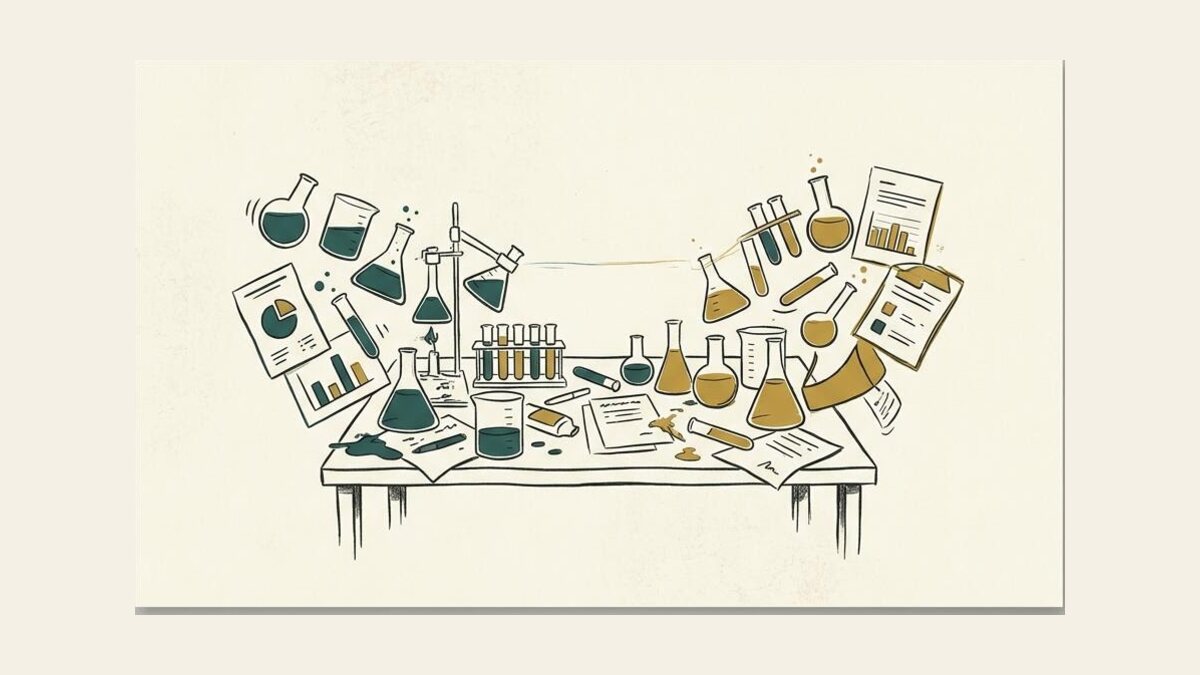
Medicine Was Never as Rational as We Pretended
A fact is just what your tribe allows you to say, and nowhere is that easier to see than inside healthcare.
Medicine likes to imagine itself as a cathedral of reason. White coats, systematic reviews, guidelines, hierarchies of evidence. We speak as though the profession escaped the ancient machinery that governs every other human institution. The comforting fantasy is that clinicians arrive at conclusions through pure detached analysis, untouched by status, identity, fear, tribe, ambition, politics, economics, ego, or belonging.
But anyone who has spent real time inside healthcare knows this is not true.
I do not say this cynically. I say it as a witness.
I have watched clinicians defend weak arguments with the emotional intensity of a threatened religion. I have watched professional titles invoked as though they were evidence themselves. I have watched patients reject information not because it was incorrect, but because accepting it would exile them from the community they trusted. I have watched multidisciplinary meetings where disagreement was treated less as inquiry and more as betrayal. The data was often secondary. Belonging came first.
This is uncomfortable because medicine tells a story about itself that most clinicians desperately want to believe. The story says that healthcare escaped tribal cognition through science. That evidence displaced hierarchy. That modernity purified us of the ancient human tendency to organise reality around identity and affiliation.
But humans do not stop being human because they enter a hospital.
The same primate brain that once navigated tribal survival now navigates professional survival. The machinery did not disappear when we built universities and hospitals. It simply changed clothes.
In practice, facts inside healthcare often function socially before they function scientifically. A clinician does not merely hold an opinion. They hold membership inside a professional culture. A treatment approach can become fused with identity, reputation, mentorship, income, tribe, or worldview. To challenge the idea is sometimes experienced as challenging the person.
This is why certain debates in healthcare generate heat wildly disproportionate to the evidence involved. The argument is rarely just about orthotics, barefoot running, prescribing rights, surgery, pain science, vaccines, obesity, scope of practice, or rehabilitation protocols. Beneath the surface, the conflict is often about status, legitimacy, hierarchy, identity, and who gets to belong inside the circle of the credible.
I have seen clinicians dismiss criticism with a title instead of an argument. I have seen appeals to authority masquerading as evidence based medicine. I have seen intelligent professionals become almost completely incapable of separating professional identity from objective inquiry. And I have seen this across every layer of healthcare, from alternative wellness communities to elite specialist circles.
The human mind tends to seek affiliation and coherence above dispassionate truth. Medicine is not exempt from this. If anything, the stakes inside healthcare can intensify it. Careers, income, reputation, social standing, and moral identity all become attached to particular beliefs and frameworks. Once that fusion occurs, changing your mind no longer feels like intellectual growth. It feels like social death.
That is why genuine epistemic humility is so rare in medicine.
Not because clinicians are uniquely arrogant, although some are. It is because the system quietly punishes uncertainty while rewarding confidence. The clinician who speaks with absolute certainty is often perceived as more competent than the one who openly wrestles with ambiguity. Patients want reassurance. Institutions want efficiency. Social media rewards clarity and confidence over nuance. And so the machinery selects for people willing to perform certainty even when reality remains stubbornly unresolved.
The result is a profession that often speaks the language of science while behaving like a collection of competing tribes.
This does not mean evidence is meaningless. Far from it. Science remains one of the greatest corrective tools humans have ever developed. Antibiotics work whether your tribe approves of them or not. Fractures heal according to biology, not ideology. Reality still constrains us eventually.
But the interpretation, application, communication, and defence of facts remain profoundly human processes. And humans are not neutral creatures. We are social organisms navigating status hierarchies, institutional incentives, fear, exhaustion, and belonging.
I think about this every time I watch an online healthcare debate collapse into moral theatre. You can often predict a clinician’s position before they even speak, not by analysing the evidence, but by identifying the tribe they belong to. The facts frequently arrive after the affiliation.
I have sat in rooms where a contested clinical opinion changed the emotional temperature instantly. Faces tightened. Voices sharpened. People stopped hearing and started defending. A disagreement about treatment suddenly became a referendum on competence, intelligence, loyalty, or morality. The evidence never stood a chance.
And patients are not outside this machinery either.
A patient searching desperately for answers is not simply evaluating data like a machine. They are searching for meaning, safety, coherence, and hope. That is why online health communities become so powerful. They offer belonging before they offer truth. Sometimes they save people from isolation. Sometimes they radicalise them into conspiratorial thinking. Often they do both simultaneously.
The modern healthcare environment has intensified all of this. Algorithms reward outrage. Professional branding rewards certainty. Institutions reward throughput. Clinicians are exhausted. Patients are frightened. Everyone is drowning in information while starving for meaning.
And underneath it all sits the ancient machinery of the human mind, still searching for tribe, still seeking coherence, still mistaking belonging for truth.
I do not think the answer is cynicism. And I do not think the answer is pretending humans can transcend human nature entirely. The machinery was always there.
But maybe the beginning of wisdom is finally admitting it exists.
Because once you see it, you start noticing how often people are not defending evidence at all. They are defending identity. They are defending belonging. They are defending the fragile social architecture that allows them to feel coherent in a world that increasingly is not.
And medicine, for all its brilliance, is not standing outside that human story.
It is inside it with the rest of us.