A few weeks ago I ran a simple LinkedIn poll:
Author attribution not recorded
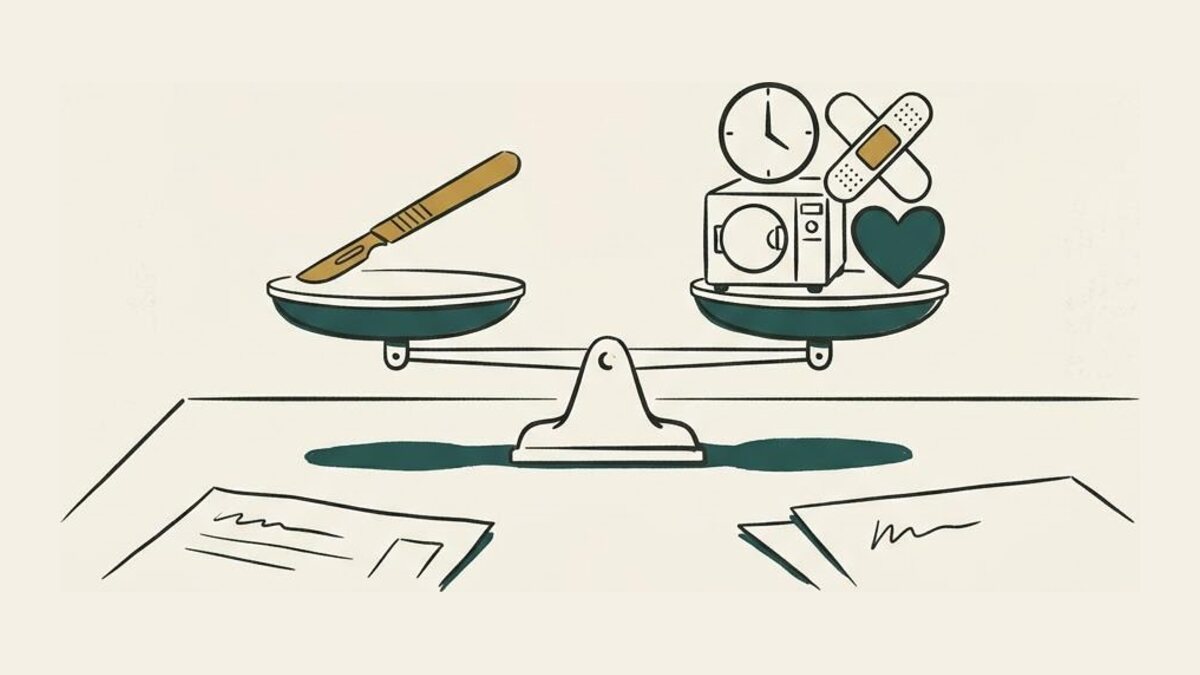
The poll that poked the bear
A few weeks ago I ran a simple LinkedIn poll:
“What do you charge for a single-sided partial nail avulsion (PNA) under local anaesthetic (1 edge, 1 toe), excluding post-op reviews?”
Eighty-one podiatrists clicked. The results weren’t just interesting; they were loud:
AUD $200–$299 — 15%
AUD $300–$399 — 25%
AUD $400–$499 — 20%
AUD $500+ — 41%
If you sketch an average using band mid-points and a conservative “$500+”, you land around $440–$450. But the headline isn’t the average. It’s the spread. For the same procedure, performed by the same profession, we are pricing at more than 2.5× from bottom to top.
Imagine walking into four neighbouring bakeries to buy the same loaf of sourdough and seeing $4, $7, $9, and “market price”. You’d wonder what’s going on in bread-land. Our poll suggests that for PNAs, podiatry is bread-land.
This article is a guided walk through that spread—why it exists, why it’s not a sign of greed or chaos (necessarily), why fee drift has lagged reality, and how to price and explain a PNA in a way that honours your patient, your craft, and the dull but inescapable physics of running a modern clinical room.
“Why is podiatry so variable?” (Or: we are not all running the same clinic)
Podiatry’s price variance is not a moral failure. It’s an ecosystem reality. Four forces drive it:
(a) What’s “included” isn’t standardised
Some clinics bundle the whole episode—pre-op assessment and consent, LA, the avulsion, chemical matrixectomy (phenol or NaOH), dressing packs, redress kits, and two reviews—into one number. Others unbundle like a tapas menu: a procedure fee plus distinct charges for sterile packs, phenolisation, dressings, and each review.
Patients don’t care about our chart of accounts. They care about the total they’ll pay to stop an angry nail sawing into their flesh. If your $320 excludes reviews and my $520 includes two of them and a take-home pack, the sticker prices are apples to oranges.
(b) Different operating models
A solo clinician in a satellite town doing one PNA between routine care sessions wears cost differently to a multi-chair metro clinic running back-to-back sterile cycles with a nurse, strict turnover times, and a surgical-grade room. Rent, wages, case length, instrument logistics, and clinical waste all move the dial.
(c) Risk and “warranty”
Some practices price in complication cover—after-hours advice, redressings, an early re-treat policy for regrowth within a defined window. Others sell the “event” only. Patients experience both as price; what they’re actually buying is service design and risk absorption.
(d) The Medicare mirage
Chronic Disease Management rebates help some patients attend—but they don’t define, let alone cover, a surgical service with the overheads we shoulder. Many clinics therefore price PNAs as private procedures and use CDM to subsidise reviews when appropriate. The lack of a procedure-specific allied health item invites… creativity.
Put simply: same profession, many micro-economies.
The bigger problem: fee inertia in an inflationary world
A surprising number of colleagues told me, “I’ve charged roughly the same for years.” That sounds kind. It’s often untrue in a practical sense. Over the last half-decade, Australia has ridden an unmistakable wave: practice rent, wages, sterilisation inputs, consumables, insurance premiums, electricity, and waste contracts have all climbed—often faster than general inflation. If your PNA fee is still where it was in 2019, you’ve quietly given yourself a pay cut.
This isn’t about “charge more because you can.” It’s about not subsidising your own clinic from your future. Indexation isn’t greed; it’s maintenance. It keeps the roof on, the autoclave certified, and the best people in the room.
Price is not the cost of a gauze swab
Patients sometimes look at a PNA and mentally price it as “a sterile pack, a bit of lignocaine, and a bandage.” If only.
A fair PNA fee covers:
Clinical time and judgement: triage, history, exam, differential diagnosis (including not missing the infected nail in the immunosuppressed patient), informed consent, anaesthesia, the procedure itself, documentation and safety-netting.
Asepsis & sterilisation: instrument sets, pouches, chemical and biological indicators, tracking and logs, autoclave validation/servicing, spore tests, and the time to run compliant cycles.
Consumables & pharmaceuticals: LA, syringes and needles, tourniquet, antiseptics, drapes, sterile gloves, phenol/NaOH, irrigation, dressings, tapes, and the privilege of paying someone to take your contaminated waste away and burn it properly.
Risk and aftercare: the cost of being reachable, of bringing someone back when a toe looks angry on day three, of holding inventory for redress kits, and of carrying indemnity insurance.
Facility overheads: room time, chair depreciation, lights, HVAC, cleaning, accreditation costs, software, EFTPOS fees, admin wages, and the fact that electricity apparently runs on truffle oil now.
Outcome value: durable relief from pain, fewer antibiotics, fewer ED trips for paronychia flares, faster return to sport and work, less parental stress for a child who’s been avoiding shoes for months.
The price of a PNA is the architecture of safe, definitive care, not “the cost of the blade plus the bandage.”
What should a fair fee look like? (Build, don’t guess)
Here’s a pragmatic way to set (or sanity-check) your PNA fee. Steal this, adapt it, and make it your clinic’s policy.
Step 1: Know your fully-loaded hourly cost
Add wages + on-costs (super, leave loading, payroll tax where relevant) for everyone who touches the case (clinician, nurse/assistant, admin portion), then layer overheads (rent, utilities, software, cleaning, accreditation, marketing, accounting, bank fees, insurance) and capital depreciation (chairs, autoclaves, scopes, IT), divided by the clinical hours you actually sell.
If this number scares you, good. It’s supposed to. It’s also the only number that tells the truth.
Step 2: Time the episode honestly
Clock the whole journey: room setup, the consult, consent, anaesthesia time, avulsion, phenolisation (if used), patient education, digital notes, post-op instructions, room turnover/sterile reset. Many clinics sit at 40–60 minutes of actual room occupation per single-sided PNA when the whole truth is counted.
Step 3: Add direct costs
Instrument set (including sterilisation per set)
Consumables (LA, syringes, needles, gloves, drapes, pack, swabs, phenol/NaOH, saline, dressings, tapes)
Clinical waste disposal per case
Take-home redress kit (if supplied)
Step 4: Add risk/aftercare margin
If you include after-hours advice, a day-3 redress, or a defined re-treat policy for early regrowth, price that probability-weighted cost into the fee up front. (Nothing erodes goodwill like surprise “extras” that were predictable.)
Step 5: Apply a margin for sustainability and reinvestment
This is the profit that funds staff development, new equipment, research projects, and the rainy day. You are not a charity; you are a clinical service with growth and resilience responsibilities.
Step 6: Index annually—automatically
Pick an index (general CPI, or a blended CPI/Wage Price Index) and review every July. Publish the policy so no one is surprised.
When clinics do this on paper, many are startled to see their true number sitting comfortably in the $450–$650 range depending on geography, case length, and inclusions. That’s not a provocation; it’s arithmetic.
To bundle or not to bundle? (And how to stop confusing patients)
Bundling (one number that includes the procedure + chemical matrixectomy + pack + a fixed number of reviews) has two superpowers:
Clarity: Patients can compare total episode costs.
Behaviour: You control the aftercare pathway (e.g., day-3 and day-10 reviews), which reduces complications and surprise drop-ins.
Unbundling (a lower procedure fee + itemised extras) can work in clinics with highly variable patient needs or where not everyone requires phenolisation or multiple reviews. But it risks sticker-shock drift (“I thought it was $320; how did it become $480?”) and decision fatigue at reception.
A hybrid often wins: a core PNA package (procedure + phenol + one review + take-home kit) with an add-on follow-up bundle if the case warrants it (e.g., infected toes, immunosuppressed, complex comorbidity).
Whatever you choose, write the inclusions in plain English and train the whole team to sing the same song.
“Can you just cut it back today?”—scripts that protect value
Patients will absolutely ask for “just a quick trim” when what they need is a PNA. This isn’t stinginess; it’s normal human uncertainty. Meet it with compassion and clarity.
Script 1 — Value of definitive care “Conservative trimming can help for a few days, sometimes weeks. The problem is the nail edge is still growing into the skin, and with your infection risk we’ll end up chasing it again. The PNA removes that spicule at the root so it doesn’t keep returning. It’s a minor surgical procedure, done sterile and numb, with a short recovery and a very high success rate.”
Script 2 — What the fee includes “Our fee includes your anaesthetic, the procedure with phenolisation to lower regrowth risk, sterile packs and dressings, a take-home redress kit, and your day-3 review. If we need extra visits beyond that, we’ll talk together first so there are no surprises.”
Script 3 — On rebates “There isn’t a Medicare item that covers this surgical service in allied health. If you have a GP management plan, that rebate can help with your review visits, but the procedure itself is private. We keep our pricing transparent and outcomes high—that’s what you’re paying for.”
These scripts are not sales patter. They are education: accurate, kind, and protective of your clinic’s standards.
Quality: measure it or you’ll under-price it
Price should track value, and value is best evidenced.
Consider capturing:
Complication rate (infection, bleeding, delayed healing)
Unplanned review rate
Early regrowth rate (within 6–12 months)
Patient-reported pain relief (0–10 scale from baseline to two weeks)
Return-to-work/return-to-sport timelines
Antibiotic usage (courses pre- and post-PNA)
High-quality clinics should feel good about fees that fund that quality. Data lets you show it—internally to keep standards tight, and externally when explaining why your package costs what it costs.
Rural vs metro: different constraints, same dignity
Yes, rural rents may be lower. So are appointment densities, sterilisation batch sizes, and access to contractors. Travel to outreach sites can convert one PNA into half a day of logistics. Metro clinics may benefit from economies of scale—but they also carry higher wages, rent, and opportunity costs.
The point isn’t to equalise prices across Australia. It’s to equalise clarity: locally rational, publicly stated, defensible.
Students, new grads, and the “I don’t feel worthy” tax
Early-career podiatrists often under-charge because they feel they’re “still learning.” That humility is healthy; the math is not. Your patient is not purchasing your imposter syndrome; they are purchasing a safe clinical room. That room—its processes, sterility, mentoring, insurance, and escalation pathways—costs the clinic the same regardless of the clinician’s stage. Use supervision, double-checks, and longer slots to protect safety and learning, but do not price a PNA at $220 because you’re new. You’ll carry that anchor for years.
The ethics of fair pricing
“Fair” is not “lowest possible.” Fair is:
Transparent: inclusions/exclusions written down.
Consistent: everyone gets the same offer for the same clinical scenario.
Evidence-informed: phenol when indicated; a plan for aftercare.
Sustainable: covers costs today and invests in tomorrow.
Patient-centred: finances explained without shame; options laid out without pressure; genuine hardship pathways available where possible.
Charge with integrity. Treat with excellence. Sleep at night.
A sample PNA pricing policy you can adapt
Procedure: Single-sided partial nail avulsion under local anaesthetic, with chemical matrixectomy (phenol)
Fee: $___ (includes LA, sterile pack, phenolisation, dressings, take-home redress kit, day-3 review)
Optional Add-on: Follow-up bundle—two additional redress visits within 14 days ($)
Re-treat policy: If early regrowth occurs within 6 months despite phenolisation, re-treat fee reduced to $
Rebates: No Medicare item covers this procedure in allied health. Patients with GP Management Plans may claim a rebate on review visits (not the procedure).
Why we price this way: We operate sterile rooms, validated sterilisation, low complication rates, and same-day access for concerns. Your fee supports safe, definitive care.
Put it on your website. Train your team. Watch the “how much is it?” calls become calmer and shorter.
What the poll tells us about the profession
Three takeaways from those 81 clicks:
Variance is normal—but we can make it legible. The spread reflects different models and inclusions. We owe patients clear packaging so they can compare on value, not just sticker shock.
There’s a confidence gap around indexation. Many clinics haven’t moved fees with inflation, wages, or sterilisation costs. That’s a solvable problem: adopt an annual index and publish it.
The upper end is not villainy. In many clinics, $500+ is simply the honest number once everything is counted. The goal isn’t to drag high performers down; it’s to help under-pricing clinics stop setting themselves on fire to keep everyone else warm.
Frequently asked (and quietly worried) questions
Q: Will a higher fee scare patients away? A small number, yes. A larger number will appreciate candour when you explain inclusions, aftercare, and success rates. Clear payment plans help. What truly scares patients is surprise add-ons.
Q: My competitor advertises $299 “all in.” Should I match? Only if you can deliver the same quality, inclusions, and aftercare at that price without cutting corners or underpaying your people. If not, say: “We’re probably not the cheapest. We are very proud of our outcomes and the clarity of what’s included.”
Q: Should I offer a “no phenol” cheaper option? Sometimes—e.g., at certain podiatric surgeon practices that can offer definitive wedge resection. But don’t use it as a decoy price that produces higher regrowth and more total cost for the patient. Align the option with evidence and explain the trade-offs.
Q: How do I handle true hardship? Have a policy. Keep it quiet, dignified, and consistent. One surgical pro bono case per quarter may change a life and a town’s memory of your clinic.
A note to educators and professional bodies
Podiatry would benefit from national fee benchmarks with clear inclusion definitions (not mandates—benchmarks). A living document, updated annually, showing typical ranges for bundled and unbundled models, rural and metro modifiers, and outcome standards, would lift the whole tide. If you’re keen, The Footnote is happy to help convene the dataset and the debate.
The call to action
Audit your PNA today. Map time, costs, and inclusions honestly.
Decide your packaging. Bundle, unbundle, or hybrid—but write it down.
Set your indexation rule. July, every year. Publish it.
Teach your team the scripts. Calm, kind, clear.
Measure outcomes. If you’re excellent, prove it; if you’re not sure, find out and improve.
Our poll didn’t “out” greedy clinics. It outed a profession that’s been too quiet about the real price of safe, definitive care. Let’s stop apologising for doing surgery properly. Let’s price with integrity, deliver with excellence, and show our patients that podiatry isn’t the cheap seat of minor surgery—it’s the comfortable seat, the clean seat, and the seat where problems are solved the first time.
Charge fairly. Care fiercely. That’s the whole toe.