Author attribution not recorded
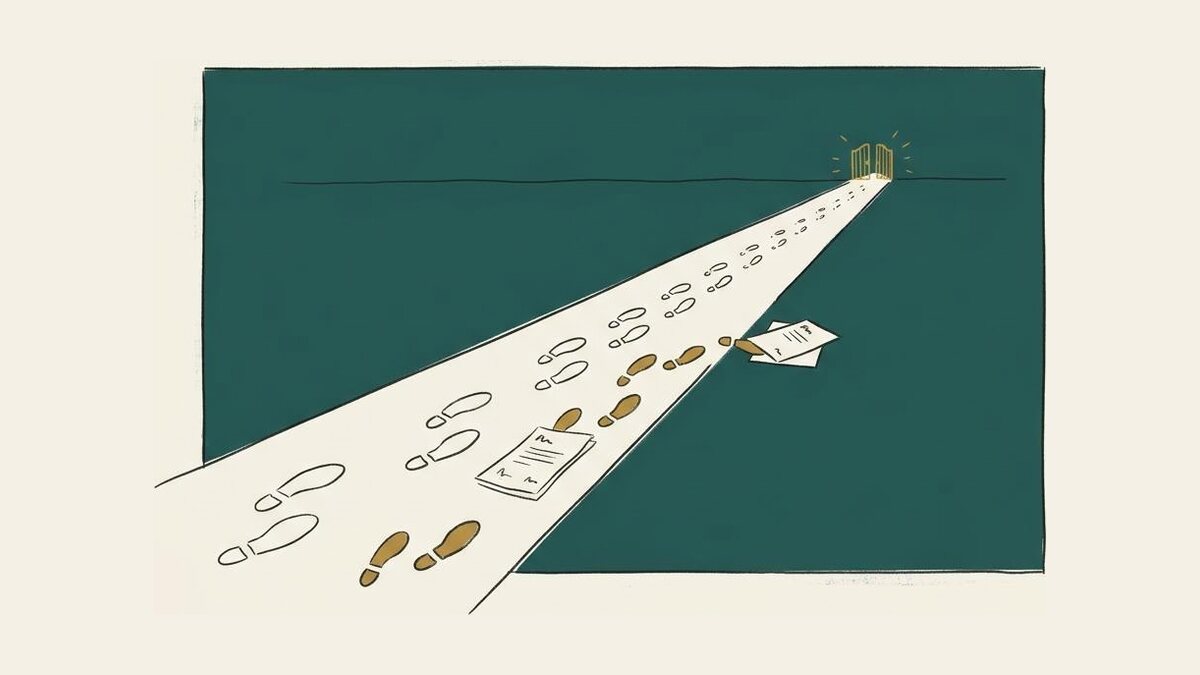
Two of the most capable podiatrists in my clinic have just resigned. They are leaving to pursue medicine.
It is a familiar story, one spoken quietly across clinics, universities, and professional corridors. If I look back at my own cohort, almost everyone had, at some point, planned to do medicine, applied to medicine, or described podiatry as a stepping stone rather than a destination. The unspoken truth in many undergraduate health degrees is uncomfortable but persistent: for a sizeable proportion of students, podiatry was not the dream. It was the contingency.
And yet the irony is profound.
If people were truly honest about why they say they want to become doctors—about the values they claim motivate them—they would often be better served by podiatry.
If your reasons are to help people in tangible ways, to build long-term therapeutic relationships, to work autonomously, to practise deeply embodied clinical medicine, to prevent disease rather than endlessly manage its downstream consequences, you do not need a stethoscope or a white coat. You need clinical judgment, time with patients, and a profession that allows you to practise without industrialising care.
Podiatry, at its best, offers exactly this. And yet we continue to bleed our brightest minds to medicine.
The Prestige Pipeline
Medicine remains Australia’s most powerful professional brand. It carries with it a form of institutional reverence that no other health discipline enjoys. Income ceilings are higher. Job security is stronger. Political influence is entrenched. Authority is assumed rather than earned. The word “doctor” still functions as cultural currency.
Podiatry, by contrast, occupies an uneasy paradox. It is indispensable to population health and chronically undervalued at the same time. We sit on the frontline of diabetes, vascular disease, ageing, disability, paediatrics, sport, and complex chronic care. We prevent amputations. We preserve mobility. We keep people independent.
And yet we remain underfunded, under-remunerated, and persistently misunderstood. We are framed as ancillary rather than essential. Our scope is policed rather than supported. Our autonomy is conditional rather than trusted.
The casual joke about “toenails” is not benign. It is the cultural signal of a system that refuses to take the profession seriously, even while relying on it to quietly hold the line.
Structural Containment, Not Accident
This situation is not an accident of history. Nor is it simply a failure of public understanding.
Podiatry in Australia operates within a tightly constrained legislative and political framework. Prescribing rights exist, but they are heavily restricted, fragmented, and slow to access. Advanced practice pathways are narrow, opaque, and inconsistently supported. Surgical careers are possible, but remain structurally difficult, underfunded, and perpetually vulnerable to turf protection.
These constraints are often framed as issues of “safety” or “standards,” but the pattern is too consistent to ignore. Other professions with comparable or broader scopes have been granted autonomy through political advocacy and institutional power. Podiatry has not.
The result is professional containment. A discipline prevented from expanding naturally in response to demonstrated competence, workforce need, and patient demand. Not because podiatrists are incapable, but because power decides scope more than evidence does.
The Human Cost
When talented, thoughtful, empathetic podiatrists leave for medicine, it is often described as individual ambition or career progression. But it is more than that.
It is a moral loss.
We lose clinicians who could have become exceptional long-term carers. Skilled diagnosticians. Leaders in biomechanics, wound care, paediatrics, geriatrics, public health, and complex chronic disease. Innovators who understand patients not as episodes, but as people embedded in lives.
Instead, many are absorbed into a system that increasingly rewards speed over depth, throughput over reflection, hierarchy over continuity. Medicine contains extraordinary practitioners, but it also contains structural incentives that compress care into transactions and privilege authority over relationship.
Those who leave podiatry for medicine will often become excellent doctors. That is not the question. The question is what never gets built in podiatry because the conditions for staying were never made viable.
Permission, Not Purpose
I chose podiatry deliberately. Many of us did. Not because medicine was unavailable, but because we recognised the rare opportunity this profession offers: to practise grounded, relationship-driven healthcare without the full industrial machinery of modern medicine.
But purpose alone does not sustain a profession. People also need permission. Permission to grow. Permission to specialise. Permission to be recognised, remunerated, and respected in proportion to responsibility.
As long as podiatry remains economically sidelined and structurally constrained, we will continue to lose our most capable clinicians—not because medicine offers more meaning, but because it offers more permission.
A Profession Worth Staying For
It does not have to be this way.
A rational health system would recognise podiatrists as leaders in foot and ankle medicine. It would support clear, funded advanced practice pathways. It would treat prescribing competence as a function of training and governance, not professional hierarchy. It would integrate podiatry fully into multidisciplinary care, research, and policy.
This is not utopian. It is pragmatic. It is morally necessary.
Because societies that claim to value preventative care, chronic disease management, and functional independence cannot afford to marginalise the profession that delivers them daily.
When two of my best podiatrists left to study medicine, I felt proud of them. I also felt the weight of a profession that continues to be undervalued despite its impact.
They will become excellent doctors.
But the loss to podiatry is real.
And every time a system allows talent to leave not because it must, but because it failed to make staying viable, the people who need care lose something too.