As a final-year podiatry student I spent four weeks shadowing a practitioner I’ll call Dr R. His rooms felt like a comedy club: patients laughed, relaxed, and walked out lighter. Yet his toolbox—massage, dry-needling, shock-wave, orthotics—was identical to every clinic I’d rotated through. The difference was him. One woman with long-standing complex regional pain syndrome (CRPS) squeezed my arm on
Author attribution not recorded
The day I saw “nothing” work
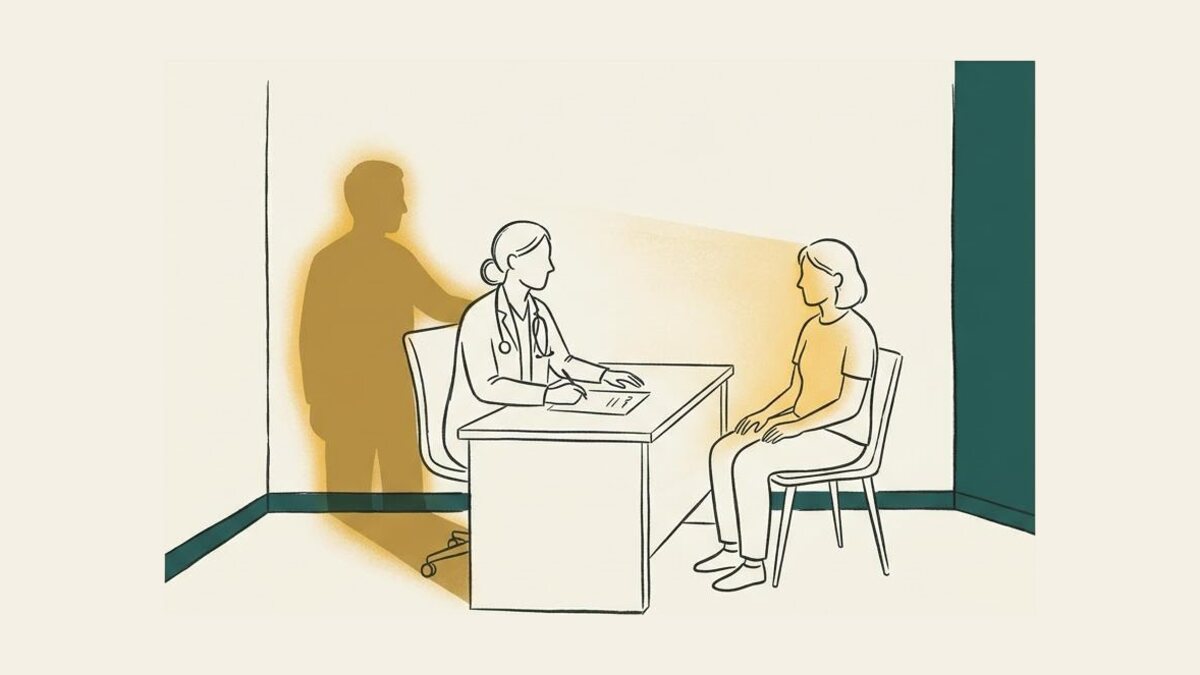
As a final-year podiatry student I spent four weeks shadowing a practitioner I’ll call Dr R. His rooms felt like a comedy club: patients laughed, relaxed, and walked out lighter. Yet his toolbox—massage, dry-needling, shock-wave, orthotics—was identical to every clinic I’d rotated through. The difference was him. One woman with long-standing complex regional pain syndrome (CRPS) squeezed my arm on the way out: “I’ve tried it all, but when he does it, it works.”
That placement convinced me that sometimes the clinician becomes the treatment.
Beyond pills & protocols
Placebo effects are no longer dismissed as statistical noise; they are psychobiological responses triggered by context, expectation, and the patient–provider relationship.¹ When those contextual forces are delivered through the body of a confident, empathic clinician, the placebo becomes embodied—lived in gestures, tone, eye contact, and professional ritual.¹
Neuroimaging demonstrates that positive therapeutic context activates endogenous opioid and dopaminergic pathways, dampening pain and anxiety.² This is not “all in the mind” but rather a whole-brain, whole-body cascade that alters inflammatory signalling, motor output and even immune function.³
The therapeutic alliance—measurable & moveable
Randomised trials in physiotherapy show that enhancing the therapeutic alliance—longer eye contact, active listening, explicit reassurance—reduces pain even when the physical intervention is a sham.⁴ A 2020 systematic review across musculoskeletal trials confirms the effect with moderate pooled effect sizes.⁵ Prospective cohort work suggests alliance quality mediates roughly one-third of the variance in low-back-pain recovery.⁶
Translation for podiatrists: sharpening your scalpel is necessary, but sharpening your social skills is an evidence-based pain modulator.
Warmth + Competence = Clinical charisma
Researchers boil clinician impact down to two qualities:
Competence – clear explanations, visible expertise, decisive planning.
Warmth – eye-level posture, humour, empathy, remembering personal details.
Patients who simultaneously perceive both qualities generate the largest neurobiological placebo responses.¹ Charisma, then, is not mystique but the unmistakable signalling of skill and humanity.
Expectation engineering
Open-label placebo studies—where patients knowingly swallow inert pills—still improve irritable-bowel symptoms.⁷ If positive expectancy alone can help IBS, imagine what skilful clinicians can achieve while delivering bona-fide therapy. Dr R’s running joke—“This will feel like magic science”—was expectation-setting disguised as banter.
Words and rituals act as verbal placebos that shift symptom perception via top-down modulation.⁸ Even brief statements such as “most people feel better after this” raise endogenous opioid tone and reduce nociceptive signalling.²
CRPS, catastrophising & the charisma safety switch
Complex Regional Pain Syndrome is notoriously refractory, yet a minority respond dramatically to conservative care. One plausible mechanism is expectancy-driven down-regulation of central pain networks—the very networks that amplify CRPS.⁹ Expert consensus now urges clinicians to maximise placebo and minimise nocebo through communication training.¹⁰
Caution: charisma can cut both ways. Oversell outcomes and trust erodes when biology fails to co-operate. The ethical pivot is honesty married to optimism.
Embodiment: the body talking to the body
Contemporary cognitive science argues that healing is enactive: our sensory-motor systems shape meaning and memory.¹¹ Therapies pairing movement with reassuring dialogue—guided weight-bearing post-fracture, progressive loading for plantar fasciitis—may harness this embodied placebo.¹²
Every time Dr R tapped a patient’s shoulder as they stood up, he delivered somatic punctuation, silently announcing “You’re fixed.” That tactile cue, paired with confident tone, closed the sensorimotor loop and updated the brain’s prediction of threat.
Five take-aways for tomorrow’s clinic
Front-load warmth. A genuine 30-second greeting seeds the alliance.
Narrate competence. Explain why every step matters; authoritative clarity calms uncertainty.
Stand and move with confidence. Upright posture and deliberate actions prime expectations of success.
Invite micro-successes. Ask the patient to walk, hop or laugh during the session so they feel change in real time.
Reflect deliberately. After each consult, rate your own warmth and competence; charisma is a skill that grows with practice.
Ethical guard-rails
Harnessing contextual healing is not a licence to abandon evidence-based care. Pair proven modalities with placebo optimisation, disclose uncertainty honestly, and avoid paternalism.¹⁰ The art lies in honest optimism: “These techniques work for many people; let’s see how your body responds.”
Closing thought
My month with Dr R taught me that the clinic chair can rival any orthotic lab. The science now backs that intuition: skillful deployment of warmth and competence can transform “ordinary” modalities into extraordinary outcomes. The next frontier for podiatry education may not be another gadget but a syllabus in human connection.
In short, sometimes the most potent instrument in the treatment room is the human wielding it.
References
Howe LC, Leibowitz KA, Crum AJ. When your doctor “gets it” and “gets you”: the critical role of competence and warmth in the patient–provider interaction. Front Psychiatry. 2019;10:475.
Tracey I. Getting the pain you expect: mechanisms of placebo, nocebo and reappraisal. Pain. 2010;149(2):154-5.
Colloca L, Barsky AJ. Placebo and nocebo effects. N Engl J Med. 2020;382(6):554-61.
Fuentes J, Armijo-Olivo S, Funabashi M, et al. Enhanced therapeutic alliance modulates pain intensity and muscle pain sensitivity in chronic low-back pain: an experimental controlled study. Phys Ther. 2014;94(4):477-89.
Kinney M, Seider J, Beaty AF, et al. Impact of therapeutic alliance in physical therapy for chronic musculoskeletal pain: a systematic review. Physiother Theory Pract. 2020;36(8):886-98.
Bishop F, Al-Abbadey M, Roberts L, et al. Direct and mediated effects of treatment context on low-back-pain outcome: a prospective cohort study. BMJ Open. 2021;11:e044831.
Kaptchuk TJ, Friedlander E, Kelley JM, et al. Placebos without deception: a randomised controlled trial in irritable bowel syndrome. PLoS One. 2010;5:e15591.
Colloca L, Finniss D. Nocebo effects, patient-clinician communication, and therapeutic outcomes. JAMA. 2012;307(6):567-8.
Sterling M, Goebel A, Birklein F, et al. Complex regional pain syndrome: mechanisms, diagnostics, and clinical implications. Lancet Neurol. 2021;20(7):559-70.
Evers AWM, Colloca L, Blease C, et al. Implications of placebo and nocebo effects for clinical practice: expert consensus. Psychother Psychosom. 2018;87:204-10.
Varela FJ, Thompson E, Rosch E. The Embodied Mind: Cognitive Science and Human Experience. MIT Press; 2016.
Fugate JMB, Macrine SL, Hernandez-Cuevas EM. Therapeutic potential of embodied cognition for clinical psychotherapies: from theory to practice. Cogn Ther Res. 2024;48:574-98.