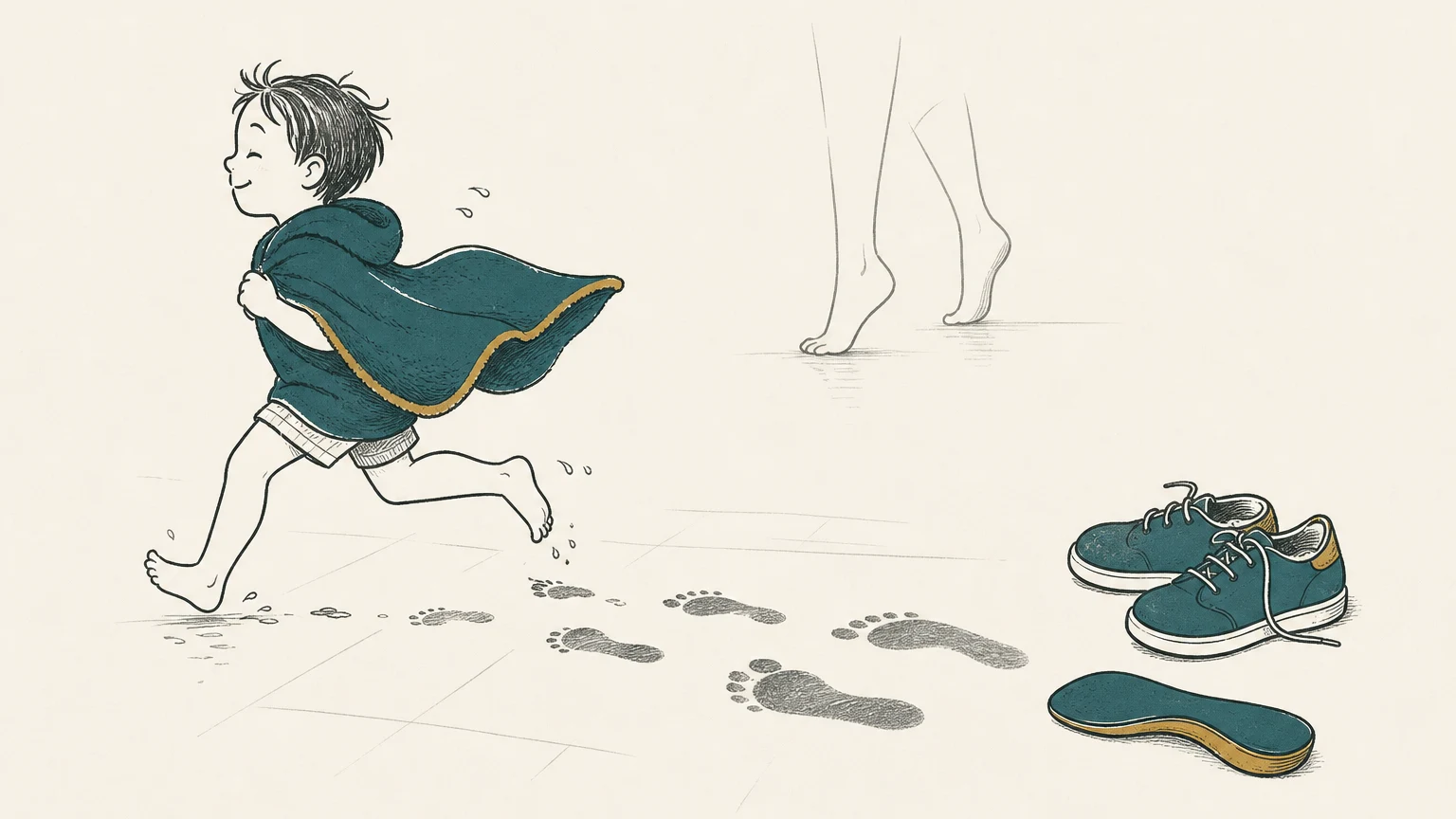
A wet footprint on the bathroom tiles has probably caused more parental concern than whoever designed the bathroom ever anticipated. Your child gets out of the bath, makes a run for it before you can get the towel around them, and leaves behind a row of little footprints. Heel, toes, and a great solid splat through the middle where you thought there was supposed to be a gap.
Once you’ve noticed it, you start looking. Their arches disappear when they stand. Their ankles seem to roll in. Then a grandparent mentions that Uncle Dave had feet exactly like that and wore special boots until he was twelve. Nobody remembers whether the boots helped. Everyone remembers the boots.
So, does your child need treatment? If both feet are flexible, your child is comfortable, and they can run, jump and play happily, you can usually leave those feet alone. rch.org.au
The question behind the question, though, is usually a little more interesting. What if they’re fine now, but there’s something I should be doing while they’re still growing? That’s a perfectly reasonable thing to ask. Parents know there are childhood conditions where picking something up early makes a real difference. It takes a bit more than “they’ll grow out of it” to explain why this particular pair of feet can carry on about its business.
For a start, young feet have quite a bit going on beneath the surface. In babies, a pad of fat fills out the inside of the foot and hides the developing arch. Young children also tend to have more flexible joints. Put their body weight through those feet and the arch can settle close to the floor. As they grow, it often becomes more visible. Some people keep low arches into adulthood and spend their lives walking around quite comfortably. Your child’s future happiness does not depend on developing a photogenic gap beneath their instep. rch.org.au
There’s something you can look at next time they’re barefoot. If they’re old enough to follow the instruction, ask them to stand on tiptoe and reach up as tall as they can. Watch the inside of the foot. An arch that seemed to have gone missing a moment ago will often reappear. You might notice the same thing when they’re sitting with their feet dangling off a chair. This is what a podiatrist means by a flexible flat foot. The same foot takes a different shape depending on what your child is doing with it. If the foot hurts, that still deserves attention, however impressive its party trick. rch.org.au
Which brings us to the school shoe shop. Your child needs new shoes because, despite having acquired the last pair approximately fifteen minutes ago, their toes are already at the end. Someone looks at those feet and suggests a shoe with more arch support. Perhaps an insert as well. And now a straightforward shopping trip has become a decision about whether you’re willing to invest in your child’s future knees.
Here’s what I’d want you to know before you get your wallet out. A shoe insert can support a foot while the child is standing on it. That’s quite a different proposition from claiming it will build an arch that stays there when the shoe comes off. In healthy children with painless flexible flat feet, there’s no convincing evidence that buying orthotics will prevent future pain. Comfortable shoes that fit well are a perfectly sensible purchase. You can let your child choose the ones with the flashing lights if you’re prepared to live with the consequences. Cochrane
Pain changes the conversation. Imagine two children who leave almost identical footprints. One plays the whole game of footy, runs back to the car and wants to know whether there’s time to stop at the playground. The other comes off at half-time for the third week running because the inside of one foot aches. I’d like to know where that second child hurts, when it starts, what makes it settle and whether they’ve begun avoiding things they used to enjoy. “They both have flat feet” gets us remarkably little distance towards understanding why one of them is sitting on the bench. rch.org.au
If your child has recurring pain, is limping, or is starting to sit out ordinary activities because of their feet, book an assessment with your GP or podiatrist. It’s also worth getting them checked if only one foot has become noticeably flatter, or if a foot seems stiff and the arch stays flat even when they’re sitting or up on tiptoe. If your child can point with one finger to the spot that hurts, let them do it. That small detail can be far more informative than a photograph of their feet taken from behind. rch.org.au
And if someone does recommend orthotics for a child who has symptoms, there’s a question I’d encourage any parent to ask: “What should my child be able to do more comfortably if these are helping?” Getting through footy training, walking home from school, or enjoying a family day out gives everyone something meaningful to judge. It also gives you a reason to go back and reconsider the plan if the promised improvement never arrives.
As for the child who left the wet footprints and is currently doing laps of the house wearing a towel as a cape? If those feet are comfortable and flexible and take them everywhere they want to go, let them get on with it. The most pressing problem those footprints have identified is that somebody still needs to dry the floor.
Also in The Footnote patient library: When Children’s Feet Point Inwards: Why Most Don’t Need Fixing.